
Activating Vacancy: 10th StreetStorytelling
DALLAS, TX
2012 - 2015
Activating Vacancy explored how design and art can re-imagine the forgotten or neglected spaces in the Tenth Street community as part of a dialogue about what the neighborhood is, was, and could be. [bc] commissioned collaborators to immerse themselves in the community, working with residents and stakeholders to develop and execute six projects. Together, these works challenged common public perceptions of vacancy in Tenth Street and critically considered historic preservation, among other urban conditions, as they related to the neighborhood.
Over 1000 individuals attended Activating Vacancy events and community meetings throughout the course of this project. These events provided occasions for residents of the neighborhood to reimagine vacant spaces in the community as sites for gathering and reflection in support of community unity. The project encompassed six art installations and events, including our first public space audit and pop-up neighborhood arts markets. In collaboration with the Susu Cultural Business Incubator, the Show Hill Biz Market, for example, provided economic opportunities for local arts practitioners and a channel for residents to invest back into the community.
Partners:
National Endowment for the Arts
Tenth Street Residents
Numerous commissioned artists, storytellers, and makers
[bc] Contributors:
Thomas Simpson
Evan Todtz
Mark Lea
Isaac Cohen
Craig Weflen
Lizzie MacWillie
UPDATES
The Second Annual Ark Festival: The History, Present & Future of Tenth Street
May 7, 2015
Last year, as part of our Activating Vacancy initiative, artist Christopher Blay and [bc] collaborated with the Tenth Street Historic District community to produce the Ark on Noah Street. The Ark is a sculpture, a gallery, a museum and a symbol. When Christopher Blay created the concept of the Ark, a fundamental facet of the project was that it be reproduced yearly to keep art and culture active in the Tenth Street Historic District and to create an opportunity to celebrate, share and reflect on the neighborhood's history and the changes of the year.
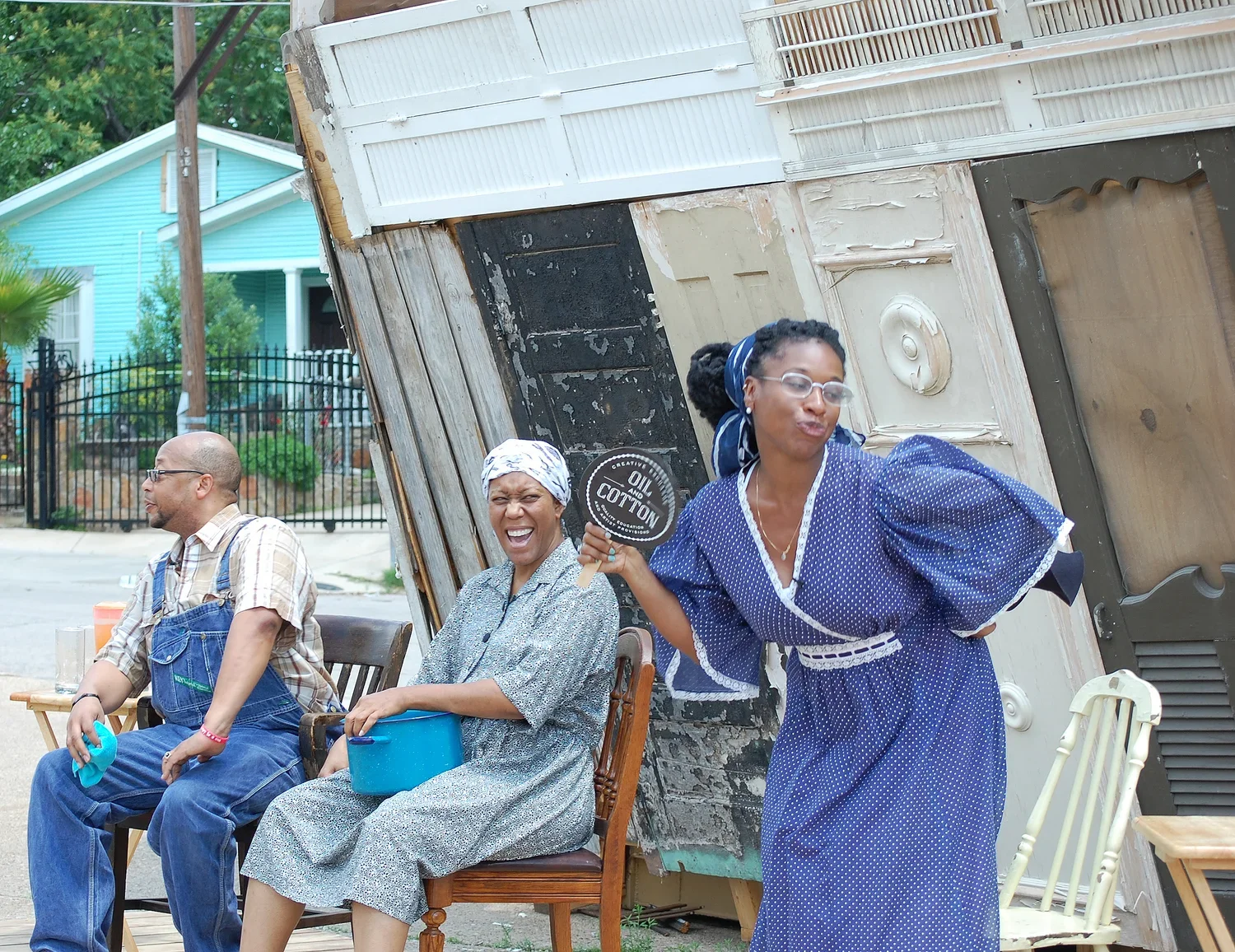
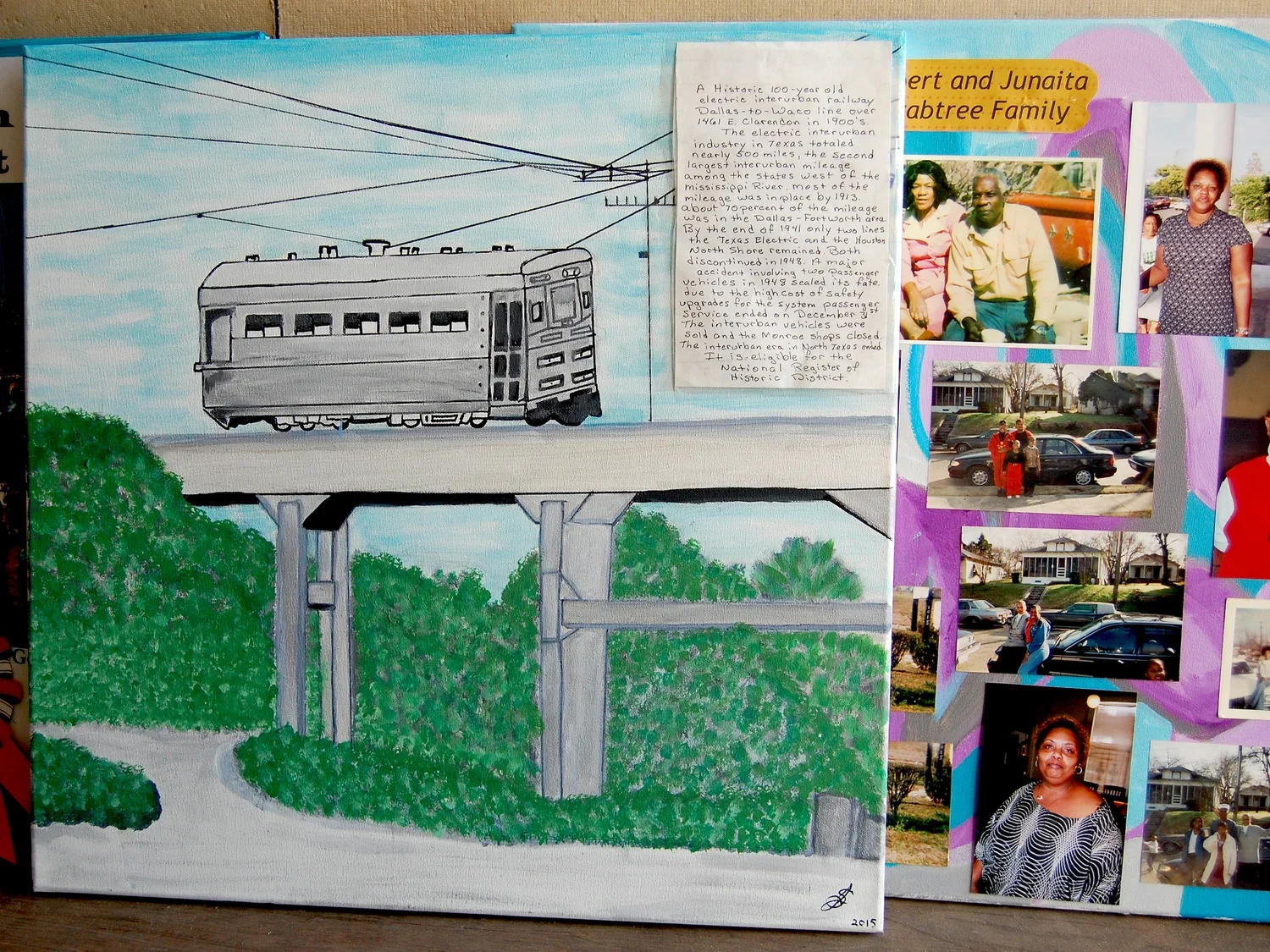
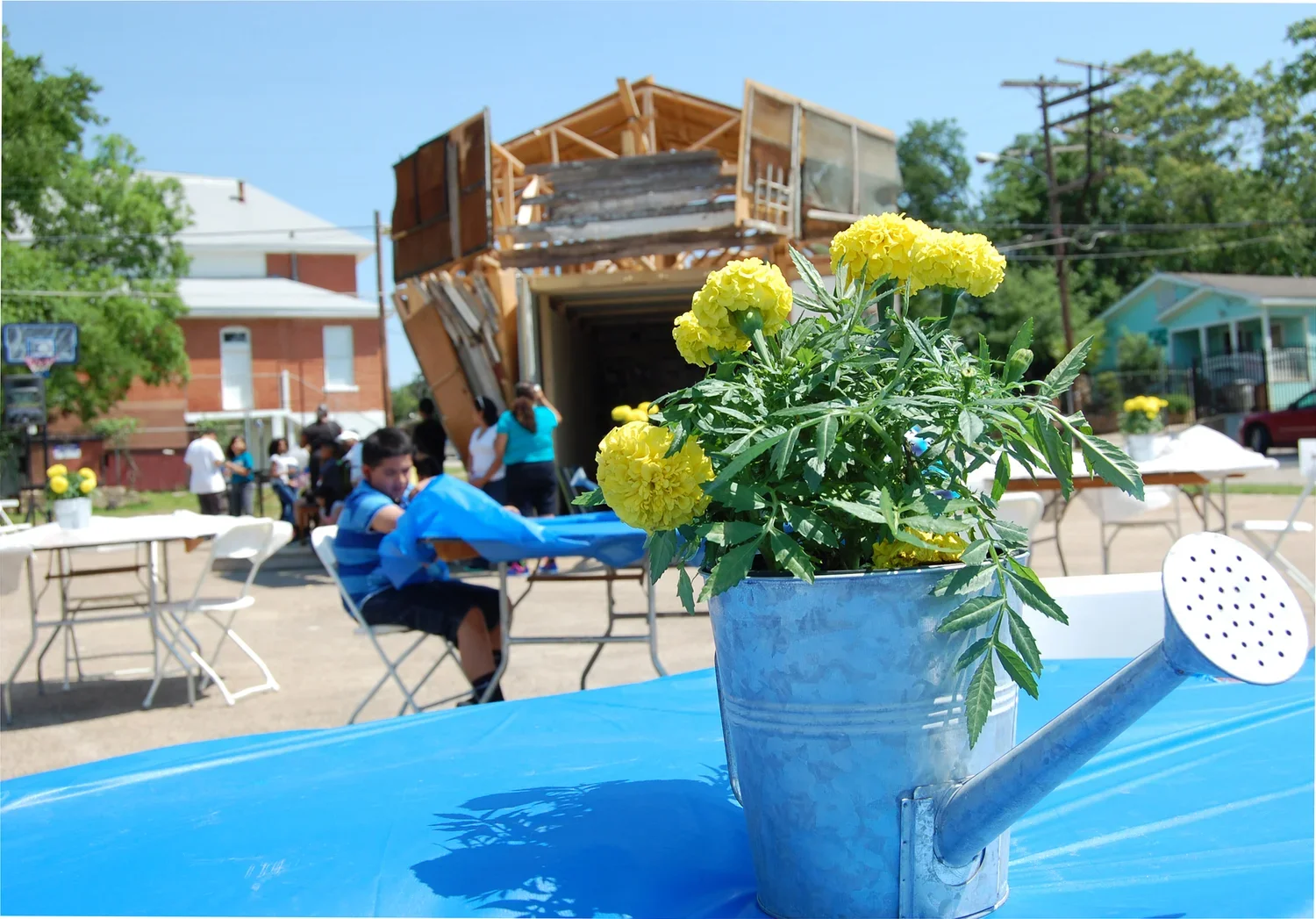
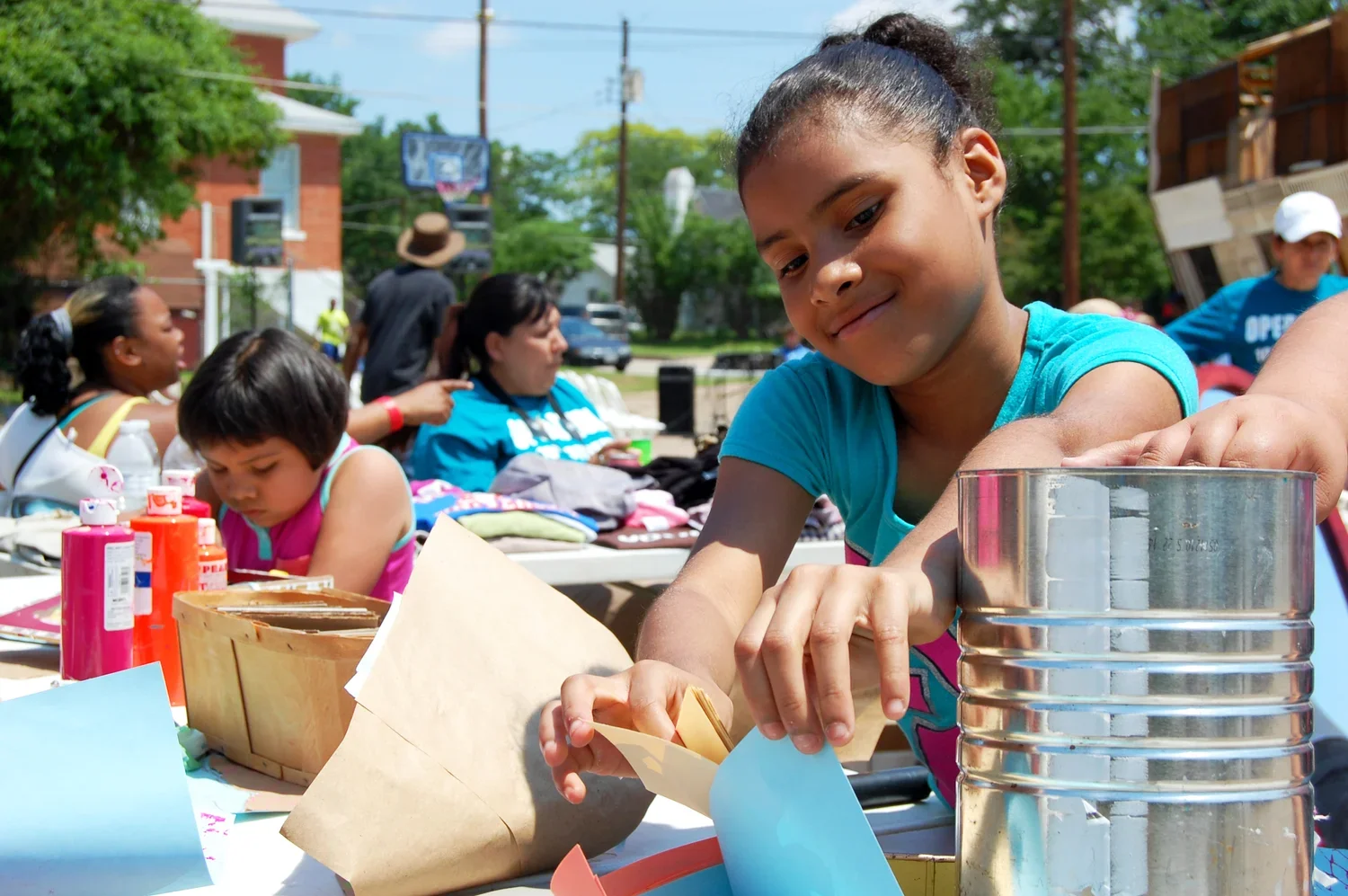
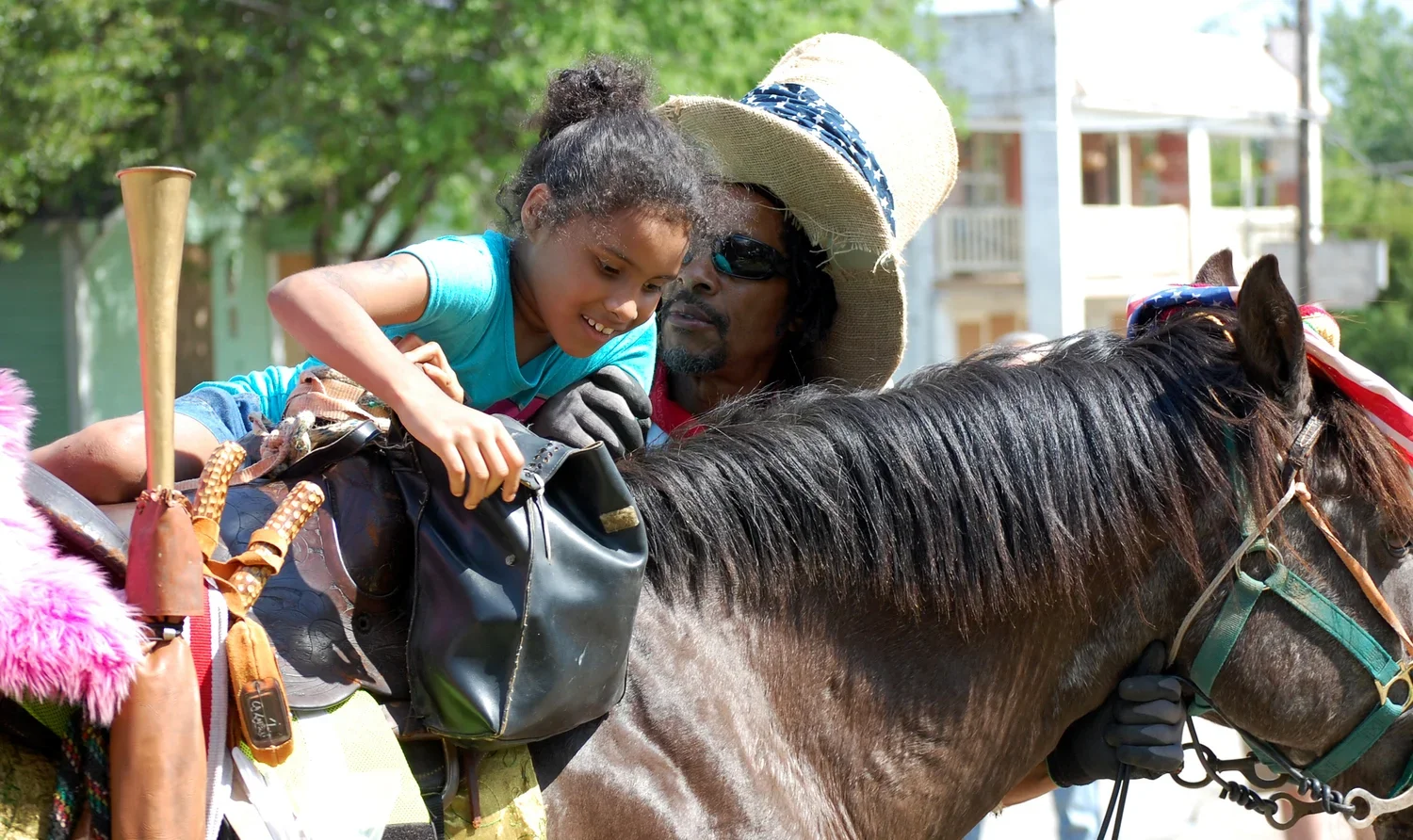
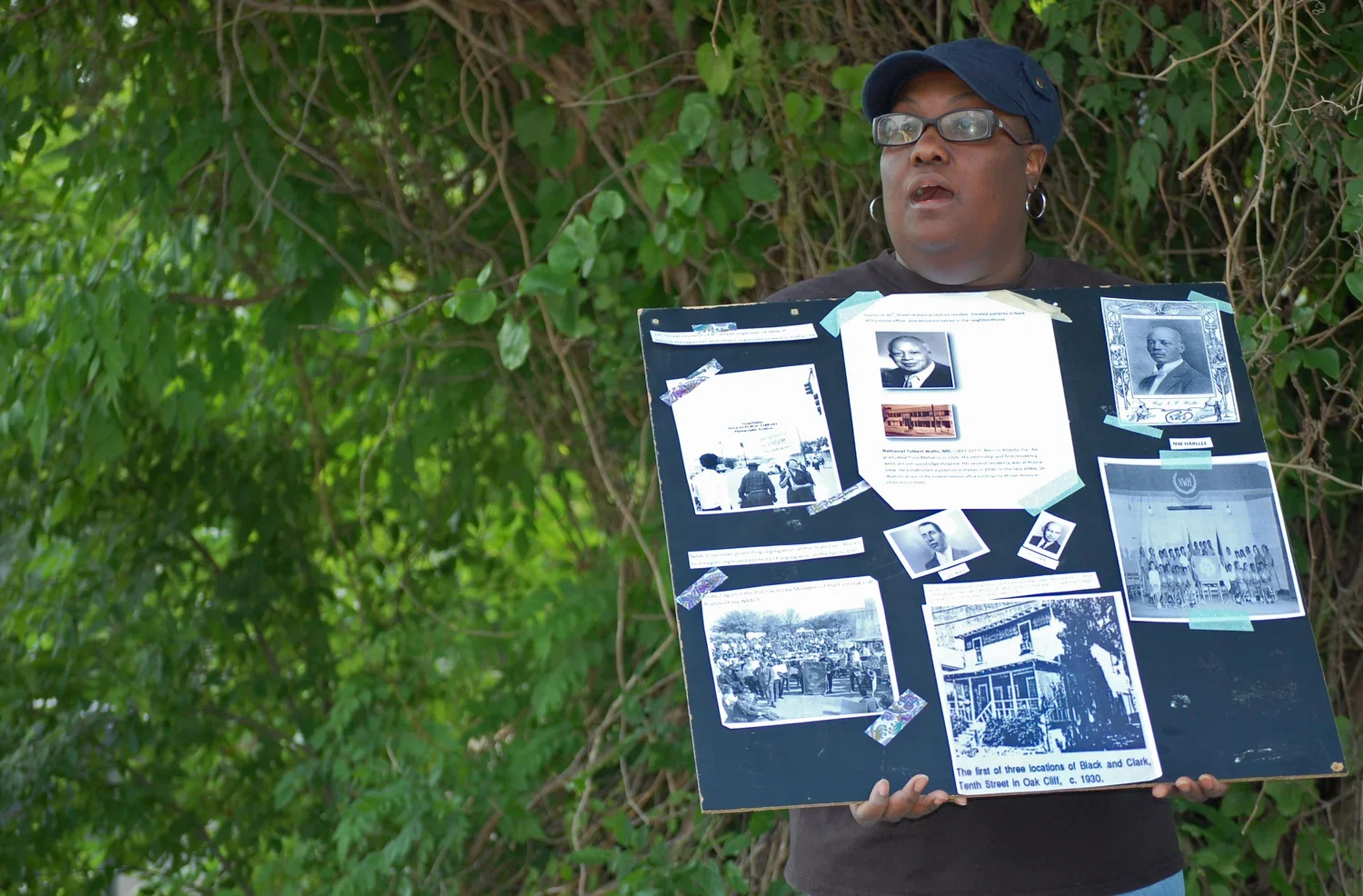
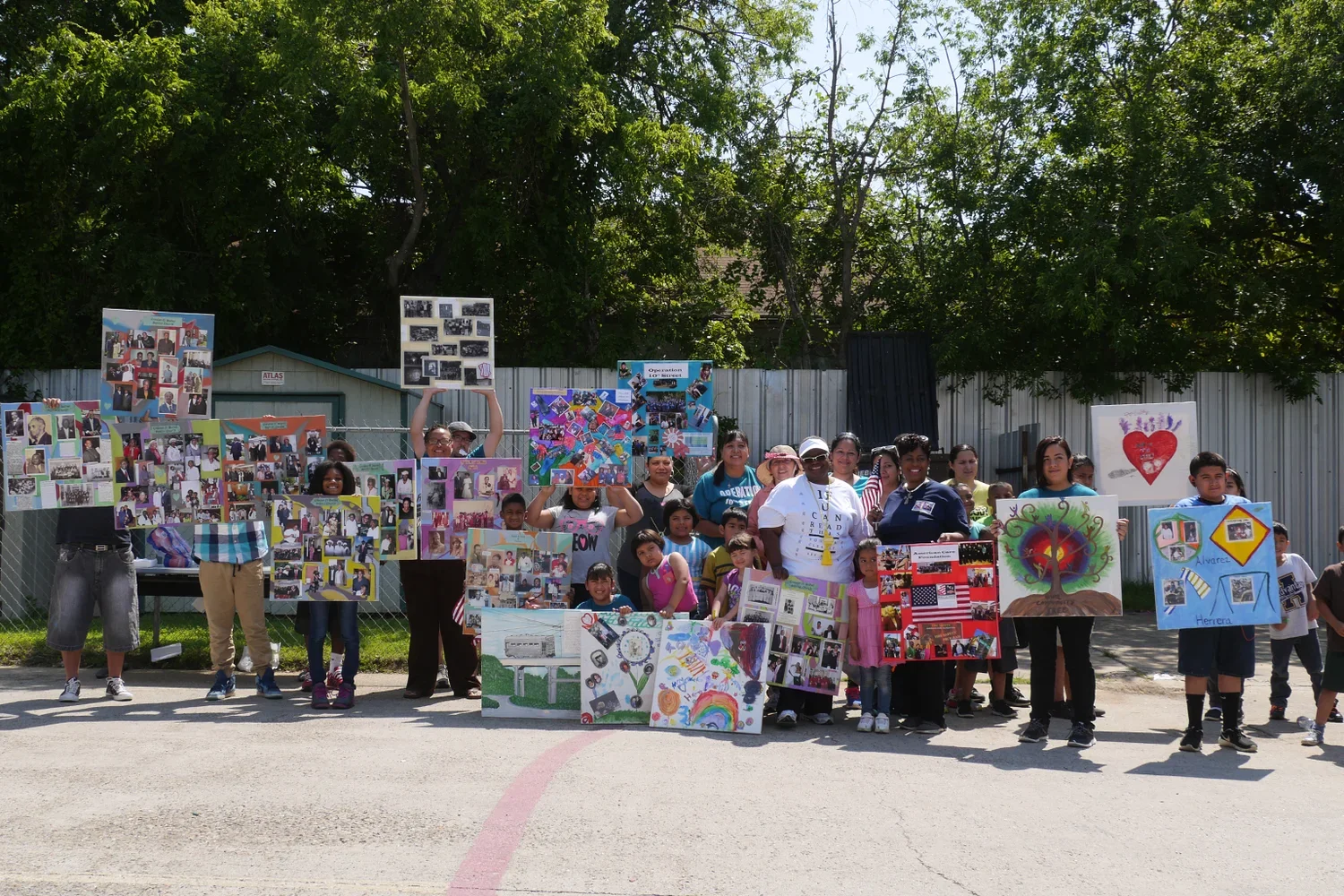
On May 2, 2015, the Ark was again commemorated during the Second Annual Ark Festival, a gathering of the Dallas arts community and the Tenth Street Historic District that was even bigger and better than before! The festival featured a processional of residents with original artwork depicting the neighborhood's history and its growth since the Ark was last seen, a performance of the original Story Corners play "A Freeman Cries for the Future," a visit from the Dallas Zoo, and the return of the Neighborhood Stories: Tenth Street exhibit. There was also a small marketplace for neighbors and arts activities led by Oil and Cotton.
The Tenth Street Historic District is one of Dallas’ oldest neighborhoods and one of its few remaining freedmen’s towns, communities built by freed slaves following the Civil War. Despite being designated a landmark district by the City of Dallas in 1993 and being listed on the National Register of Historic Places in 1994, the neighborhood has lost population and housing stock at a rapid pace. It has also experienced a growth in crime and a deteriorating public image. In response to these challenges, [bc] initiated Activating Vacancy to encourage residents to reshape the vacancy in their neighborhood from blight to opportunity through a series of public art activities, beginning with the Ark on Noah Street.
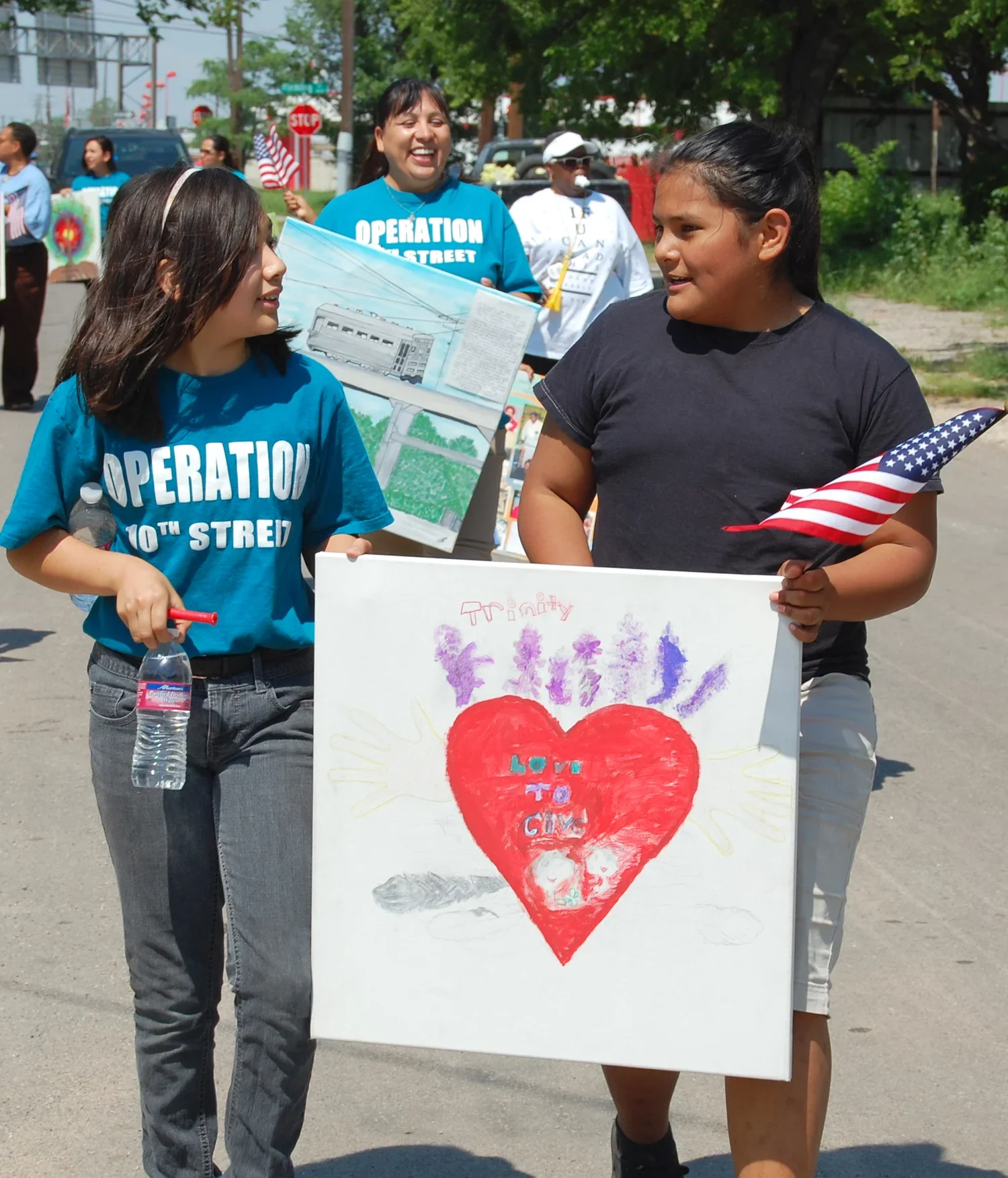
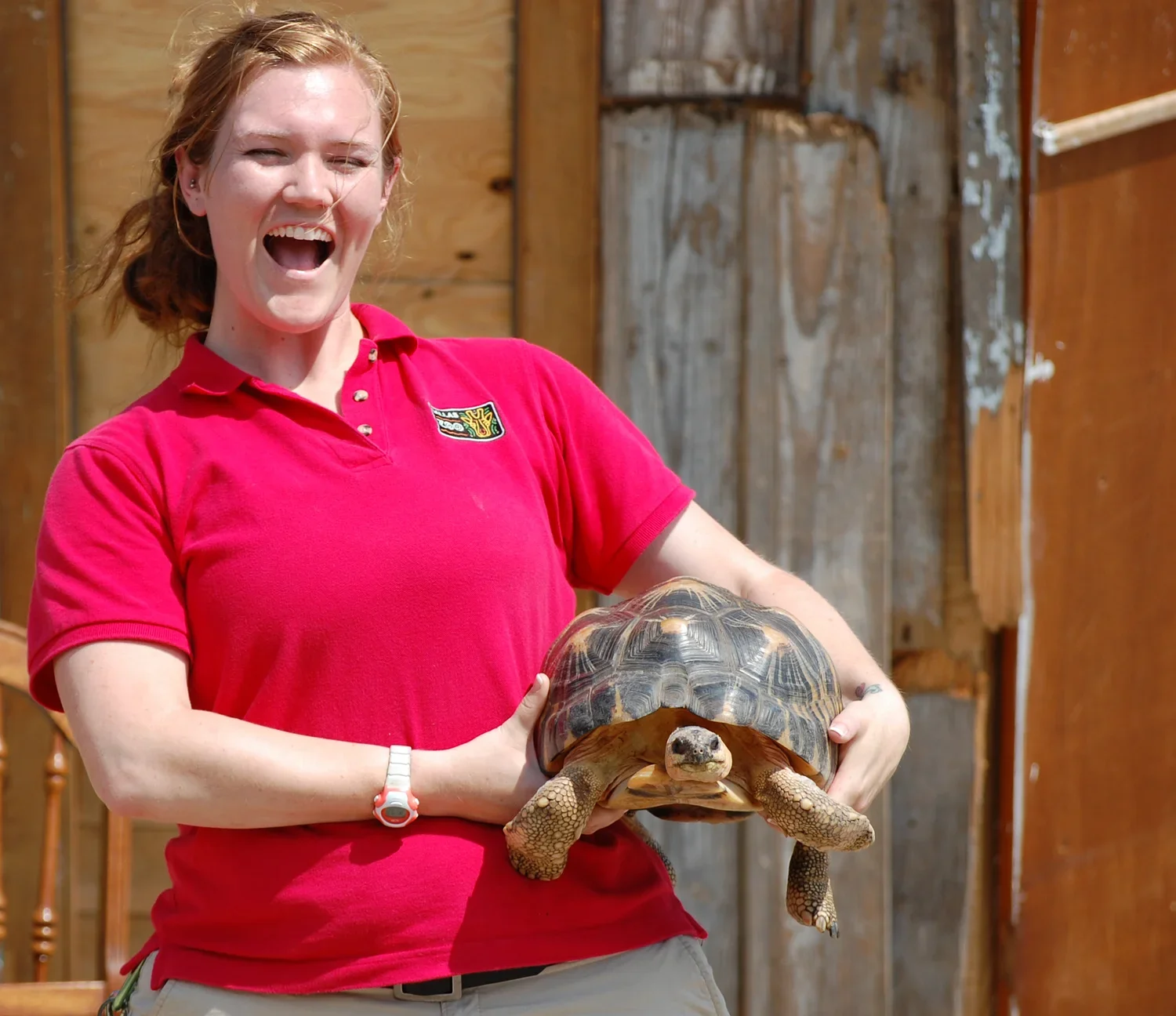
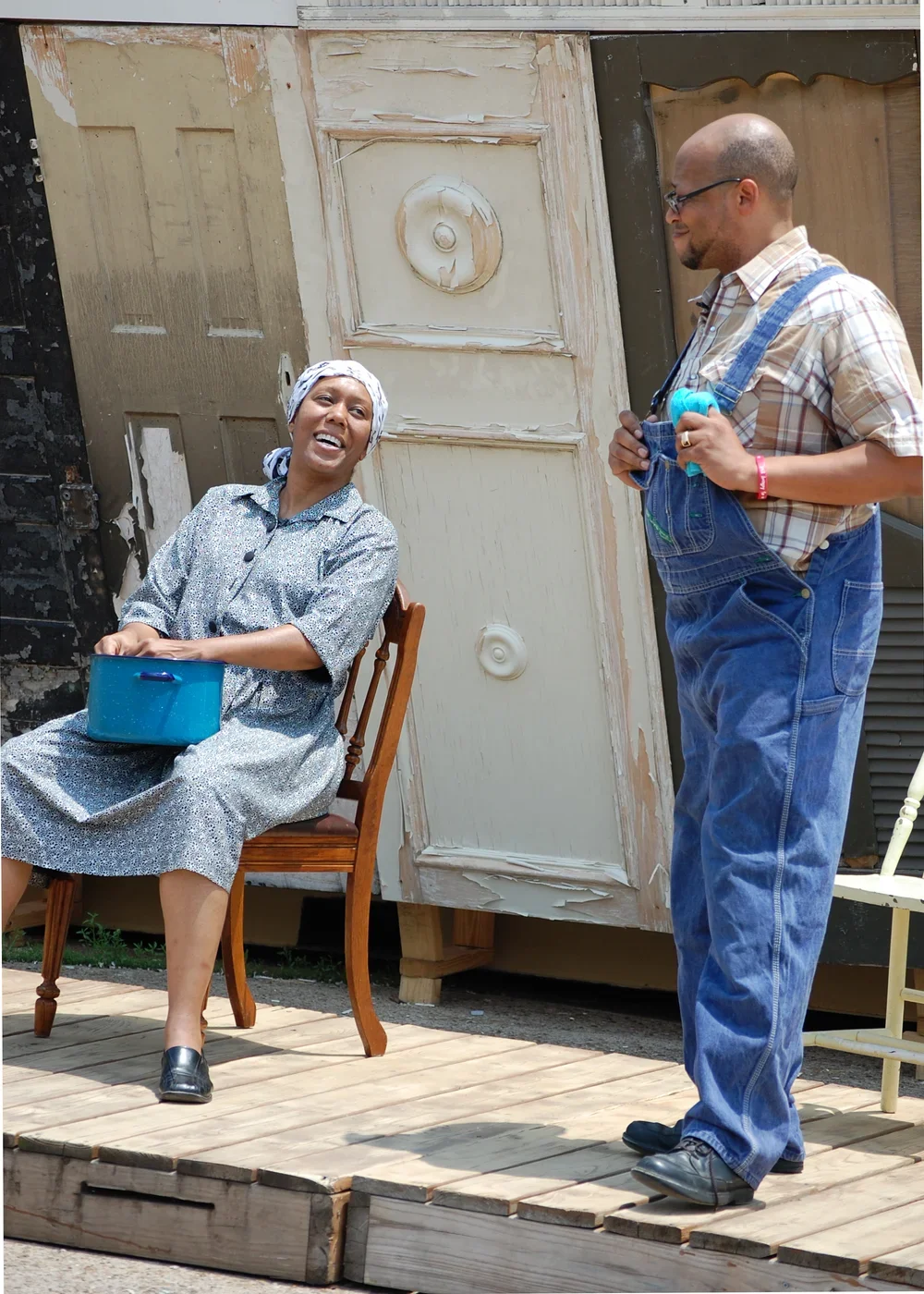
Activating Vacancy existed at a nexus of creative placemaking, public art and community organizing. Inspired by similar initiatives such as the Heidelberg Project in Detroit and Project Row Houses in Houston, Activating Vacancy sought to set in motion the revitalization of an important historic community, provide commentary regarding an array of urban issues such as vacancy and historic preservation and encourage a democratization of exceptional art in Dallas in terms of audiences, geographies and producers. The Ark on Noah Street was an excellent first step towards achieving these goals. The Ark as a gallery featured artwork produced by neighborhood residents. The Ark as a sculpture artfully repurposed discarded materials from Tenth Street's historic homes into a monument and testament to its history. The Ark as a festival brought neighbors, artists, critics and art consumers together to meet each other, rediscover an often forgotten part of Dallas and imagine a city where any neighborhood can be recognized as a source of valuable cultural producers.
At the Second Annual Ark Festival, it was made clear that the Tenth Street Historic District still faces tremendous challenges. Homes have been repaired, while others have been demolished. Crime is tempered, but it persists. There is also evidence of renewed action in the neighborhood: dozens of attendees wore Operation Tenth Street t-shirts, representing a new, forward-thinking neighborhood organization that has secured grant funding for neighborhood improvement projects. The Greater El Bethel Missionary Baptist Church has been repaired and again opens its doors to song and prayer on Sunday morning. And, the Ark has been rebuilt, fuller and more refined than its previous iteration.
In addition to the above challenges, there are a bevy of questions that have yet to be answered about the neighborhood that will help illuminate how sustainable its recent burst of energy is. Will Tenth Street be able to continue its revitalization with reduced non-profit activity? What will it take for Tenth Street to develop market interest in rebuilding its historic ground? Have recent efforts sufficiently demonstrated the neighborhood's value to the city at large to insist on its survival, whether through ongoing preservation efforts or through continued nurturing of its unique identity and role as cultural producer? Perhaps some of these questions will be answered and shared at the Third Ark Festival.
Show Hill Biz Park
June 23, 2014
The Tenth Street Historic District was once a self-sufficient place, with a thriving micro-economy that supplied the community with jobs and goods. An intersection between art and economic development, the Show Hill Biz Park activated Show Hill, a streetcar stop and important retail site at 1401 E 8th Street, now vacant, with a pop-up market. The market featured vendors selling locally crafted goods. Vendors had previously completed a certification program designed to develop a small business model that will enable them to successfully bring their goods to market. In addition, the Show Hill Biz Park featured musical and sculptural tributes to the neighborhood’s cultural history. Show Hill Biz Park reinvigorated the latent economic potential of the neighborhood, exploring how local talent can demonstrate the potential for different kinds of commercial and cultural activity in the Tenth Street Historic District.
Check out Photos from the event!
Many of the local vendors had short videos created as part of the program as well. Watch them below!
Ghost Bridges
June 23, 2014
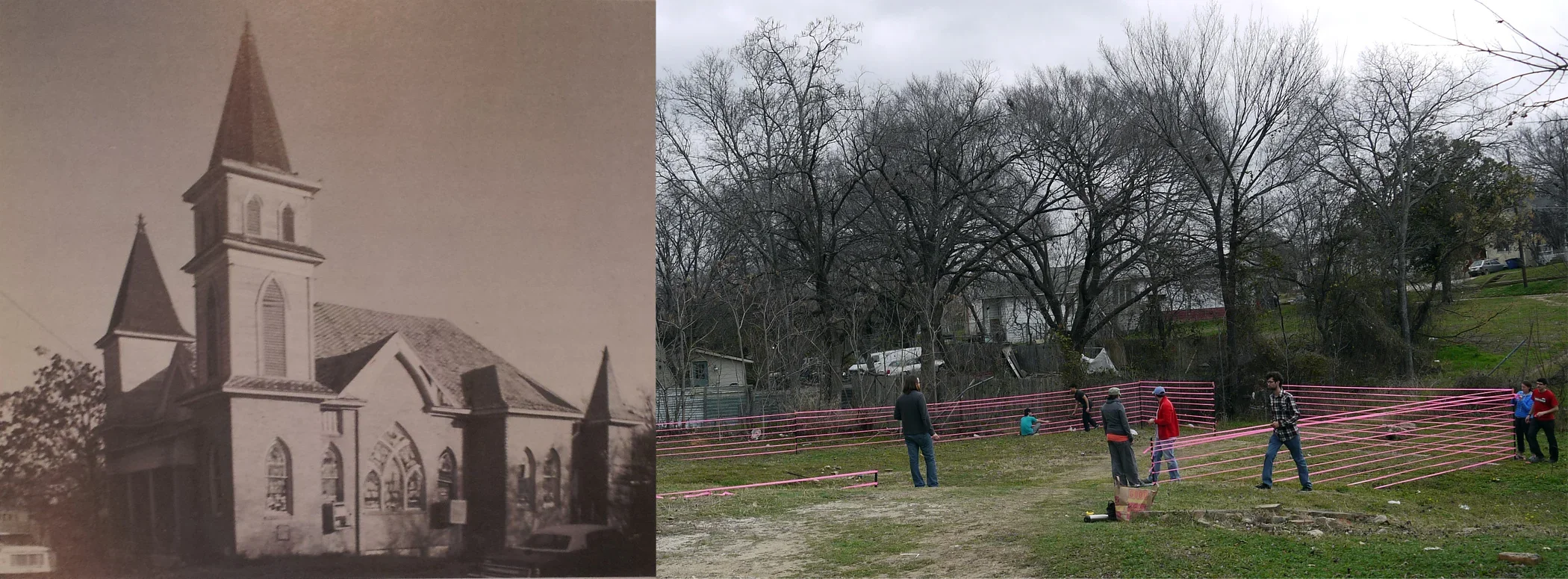
The fourth project of Activating Vacancy, entitled Ghost Bridges, took place on June 20th and 21st and was composed of three parts. The event took place on the block bounded by I-35, Tenth Street, Clarendon Drive and Betterton Circle in the center of the neighborhood. A branch of Cedar Creek, now dry, cuts through it, flanked by trees and sloping topography. Paths worn into the ground indicate the desire for a way to traverse this block where currently no roads or trails exist. The lost creek, the footbridges that once crossed it, and a platted street that has only ever existed on paper form the inspiration for Ghost Bridges.
Two site specific installations, one on public land and one private land, remember historic land use and structures, including the now demolished Sunshine Elizabeth Chapel. The works created spaces for the community to gather and reflect on how vacant property is used in the neighborhood and what its future may hold. The third portion of the event was a pop-up gallery around the theme of ORIGINS: Wild Urban Spaces which invited artist from the neighborhood and around the city to display work. A Friday evening tour and gallery opening gave residents and visitors the opportunity to view art and explore the neighborhood in a new way. Tours were also given throughout the day on Saturday. Despite the heat and mosquitos a great time was had by all.
Dear House
May 19, 2014
Dear House, the third public art project in bcWORKSHOP’s Activating Vacancy initiative in the Tenth Street Historic District, was held on Saturday, May 17, from 7:00-9:00pm at 1319 E Eighth Street.
Dear House explored vacancy as a state, rather than an end, for structures. Through a myriad of artistic actions, Dear House transformed how we, as community residents, understand and engage with vacant structures. Artistic representations were inspired by a series of public writing workshops hosted at local neighborhood institutions including American Care Academy daycare, Eloise Lundy Recreation Center, and Townview Magnet Center. Excerpts from these writings were artistically projected onto the walls of the home via light, video, and other installations, as well as performed as original oral pieces by neighborhood residents during the exhibition opening. Letters and mail art received from both near and far were also featured throughout the home, allowing visitors to open envelopes containing messages of hope and renewal for the vacant structure. Together, these activations challenged the status quo of how vacant structures are cared for, encouraged dialogue and expression with a wide audience about abandoned and vacant spaces, and empowered the community to take ownership of beautifying the house, all while making the surrounding area a safer and more vibrant place to live.
Story Corners
April 14, 2014
Story Corners, the second project of Activating Vacancy, was an afternoon of open-air storytelling, performances, and a neighborhood fish fry that celebrates the past, present, and future of the historic Tenth Street District. In many of America’s inner cities, there are street corners and vacant lots, porch steps and ‘elder’ trees that have long served as informal gathering places for sharing stories, playing games, socializing and entertaining among residents. But those locations, especially in neighborhoods that suffer from blight and neglect, have also become breeding grounds for drug dealing, prostitution and other criminal activities. In an effort to reclaim the street corner as a site for gathering, Story Corners worked with local residents to record, rehearse and perform their own stories in the Tenth Street Historic District.
On Saturday, April 12th from 1pm to 6pm at the intersection of S. Cliff and E. 11th Streets, current and former residents of the Tenth Street district used their creativity to reinvigorate their community through poetry, prose, spoken word and music. Under the guidance of the Story Corners team of artists and designers, the residents performed materials that they produced from writing and theater workshops on stages that they helped to build.
Check out photos from the event!
Watch the performances below:
The Ark on Noah Street
March 3, 2014
We built an ark in the Tenth Street Historic District. Inspired by Noah Street, named for Noah Penn, one of the neighborhood’s pioneers and a founder of Greater El Bethel Baptist Church, the Ark consists of a superstructure of reclaimed and salvaged materials from the neighborhood built around a 20-foot shipping container and displayed at 1127 E 10th St (at the corner of Noah St and Cliff St behind Greater El Bethel Baptist Church). The Ark on Noah Street was the first project completed as a part of Activating Vacancy in the Tenth Street Historic District. Envisioned by artists Christopher Blay and constructed with help from neighborhood residents, the Ark was opened during a festival on March 1st, 2014.
During the festival commemorating the Ark, its interior was transformed into a gallery of collages of family and institutional narratives created by local community members, brought in a processional to the Ark. Following the festival, the Ark will remain on display for 40 days and 40 nights. When disassembled, the Ark will be stored within the container to be resurrected as part of a yearly ritual. The metaphor of the Ark represents the neighborhood and its families and institutions as a vessel for culture and memory and its annual resurrection as a means for celebrating the place’s journey across the years.
Activating Vacancy Kickoff
February 10, 2014
After several months of engagement and planning Activating Vacancy in the Tenth Street Historic District is ready to launch. The 16 artists originally selected for the initiative have taken part in three engagement activities lead by members of the community; the first was a social and bbq intended to get people talking and sharing stories, the second was a neighborhood tour lead by community members to important historical sites including the Oak Cliff Cemetery, Greater El Bethel Baptist Church, and the N.W. Harllee Elementary School, and the final was a neighborhood launch where artists started to share their ideas. Following these engagements 11 artists continued and create project proposals with input from the community and curatorial committees.
In the end teams of artists proposed 6 projects including; the Ark on Noah St., Story Corners, Dear House, Ghost Bridges, the Show Hill Biz Park, and the Tenth Street Sweep. Over the next 6 months check back to get details on the events and how you can participate! Many workshops, build days, and celebrations are sure to follow and will result in an amazing series of projects. We hope to see you there!
Learn more about the selected artist through our Artist Profile Videos!
Announcing Activating Vacancy
August 1, 2013
Activating Vacancy will explore how design and art can re-imagine the forgotten or neglected spaces in the Tenth Street community as part of a dialogue about what the neighborhood is, was, and could be. Up to six collaborators will be commissioned by bcWORKSHOP to immerse themselves in the community, working with residents and stakeholders to develop and execute six projects. Together, these works will challenge common public perceptions of vacancy in Tenth Street and critically consider historic preservation, among other urban conditions, as they relate to the neighborhood.
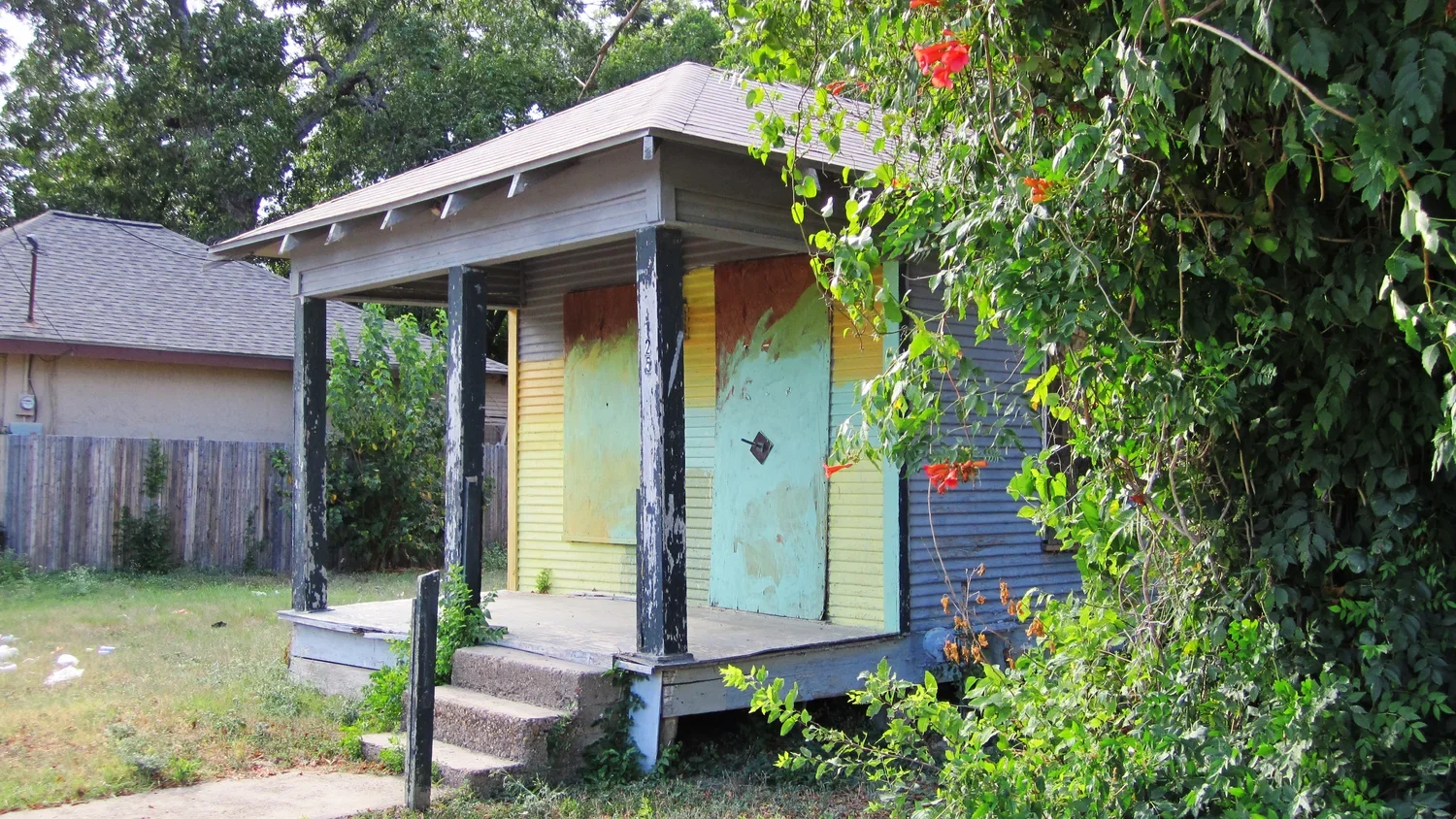
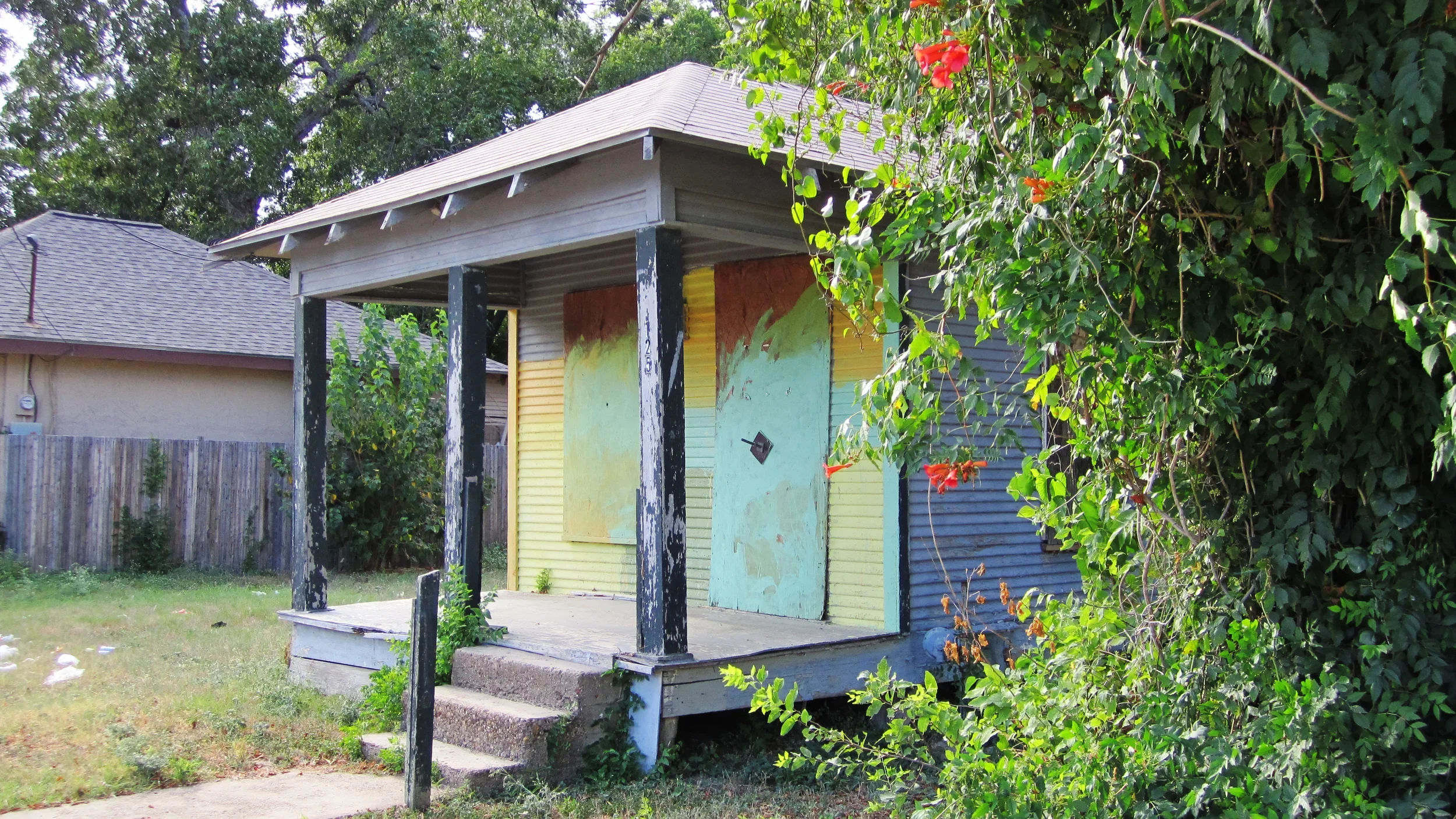
A vacant shotgun house retains some of Tenth Street's history
Diverse artistic media will be applied throughout Tenth Street, exploring sites and issues critical to the neighborhood’s past and future. Through creative interpretation, Activating Vacancy will enable both community members and the larger city to rediscover this culturally and historically significant place. Artists, designers, and arts educators are encouraged to respond to an open Call for Collaboration and submit qualifications to be a part of Activating Vacancy.
Recognized by both the National Register of Historic Places and the City of Dallas Landmark Districts, Tenth Street was founded as a freedman’s town shortly after the Civil War. As a result of segregation, the neighborhood was driven to self-sufficiency, and African-American businesses, churches, and families thrived. When integration opened opportunities in newer suburban areas and South R.L. Thornton Freeway (I-35E) was forced through the heart of the area, the aging Tenth Street neighborhood began to decline. Today, it is both one of Dallas’s oldest and most culturally significant neighborhoods, and one whose history is at greatest risk.
The Initiative begins Fall 2013 and is produced and curated by bcWORKSHOP, a Dallas-based community design center, in partnership with the Dallas CityDesign Studio who will be developing a policy framework and guide for future development for the historic district. Based on this partnership, Activating Vacancy will be part of a unique environment where art can influence, not respond to, policy creation.
Activating Vacancy is made possible through generous funding by the National Endowment for the Arts, the Trinity Trust Foundation, the Dorothea L. Leonhardt Foundaiton and local arts patrons.
NEA Awards bcW Our Town Grant
July 16, 2012
The National Endowment for the Arts (NEA) announces 80 Our Town grant awards totaling $4.995 million and reaching 44 states and the District of Columbia. bcWORKSHOP will receive $50,000 for Activating Vacancy, a collaborative effort to engage residents in the positive development of Dallas’s Historic Tenth Street District. Through Our Town, the NEA supports creative placemaking projects that help transform communities into lively, beautiful, and sustainable places with the arts at their core. The grantee projects will improve quality of life, encourage creative activity, create community identity and a sense of place, and help revitalize local economies. All Our Town grant awards were made to partnerships that consisted of a minimum of a nonprofit organization and a local government entity.
Dating back to the post-Civil War era, the Tenth Street District of Dallas, Texas, is the city’s most intact Freedman’s Town—between 1865 and 1867, a group of former slaves were deeded ten acres of land each. Today the area has a high level of vacancy and many deteriorating buildings.
The local not-for-profit buildingcommunityWORKSHOP (bcWORKSHOP), together with Dallas CityDesign Studio and Preservation Dallas, is creating the project Activating Vacancy to engage Tenth Street District residents and artists to design a series of temporary design installations that illustrate a potential framework for future development, including priorities for preservation of the unique historic structures. The project will result in six temporary art installations and a comprehensive framework document for the future of the area. The project will also enhance the cultural heritage of the Tenth Street Historic District, benefiting the neighborhood's 440 residents, 80 percent of which are considered low to moderate-income.
"Cities and towns are transformed when you bring the arts – both literally and figuratively – into the center of them,” said NEA Chairman Landesman. "From Teller, Alaska to Miami, Florida, communities are pursuing creative placemaking, making their neighborhoods more vibrant and robust by investing in the performing, visual, and literary arts. I am proud to be partnering with these 80 communities and their respective arts, civic, and elected leaders."
The NEA received 317 applications for Our Town that were assigned to one of three application review panels based on their project type; arts engagement, cultural planning and design, or non-metro and tribal communities. Activating Vacancy received a cultural planning and design grant award. With only 80 grants emerging from the 317 applications, or a success rate of 25 percent, competition was strong, a testament to the artistic excellence and merit of Activating Vacancy.