
La Hacienda CasitasArchitecture
BROWNSVILLE, TX
2012 - 2013
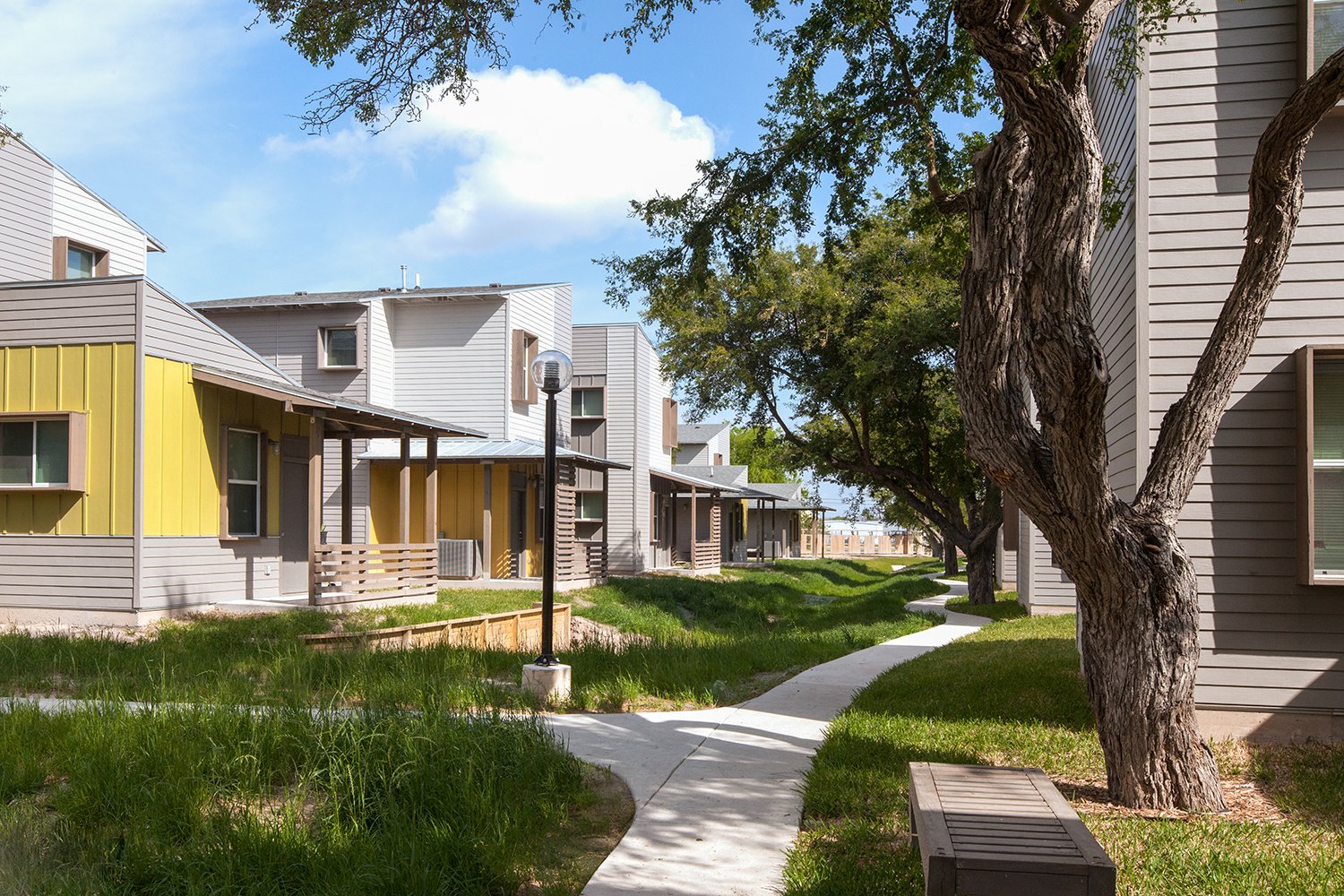
La Hacienda Casitas is a housing reconstruction project designed to provide affordable housing that supports livable and viable communities, in harmony with its natural and cultural context. Located in the Texas Lower Rio Grande Valley (LRGV), La Hacienda provides much needed affordable housing, serving a population with a severe lack of housing choices. The 56 units and six community buildings are laid out across the site, taking advantage of existing tree cover and creating outdoor gathering spaces which connect residents to community amenities and to each other. Located in a flood plain, the site is designed to filter and drain runoff using a series of bioswales and planting zones that clean and move water across the site to reduce the impact of storm water that often floods the region.
UPDATES
La Hacienda - Final Phase
May 29, 2013
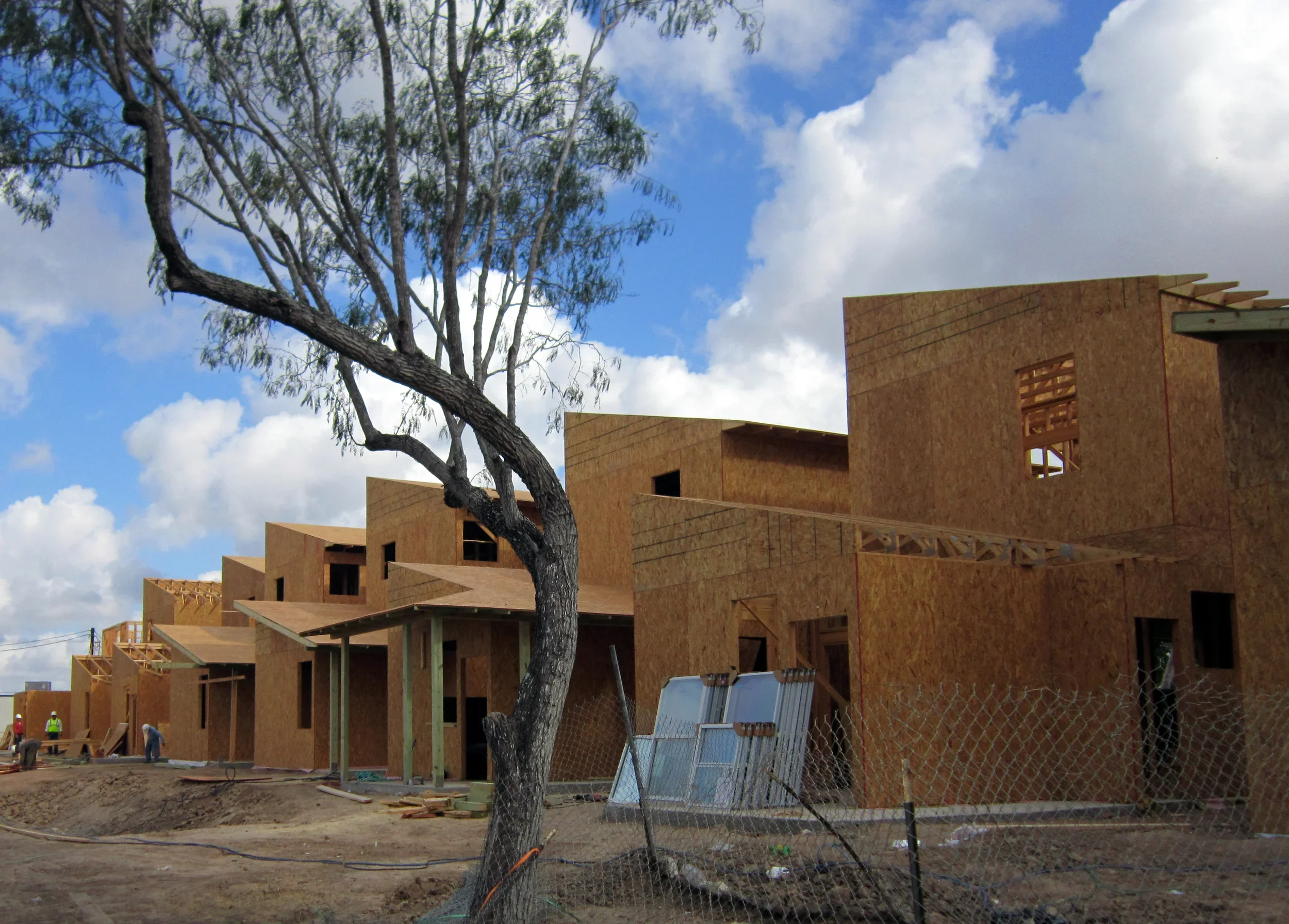
The last set of homes will wrap up at LaHacienda Casitas next month, July 2013. Contractors are working hard to keep up the pace as a waiting list for homes has already started filling up!
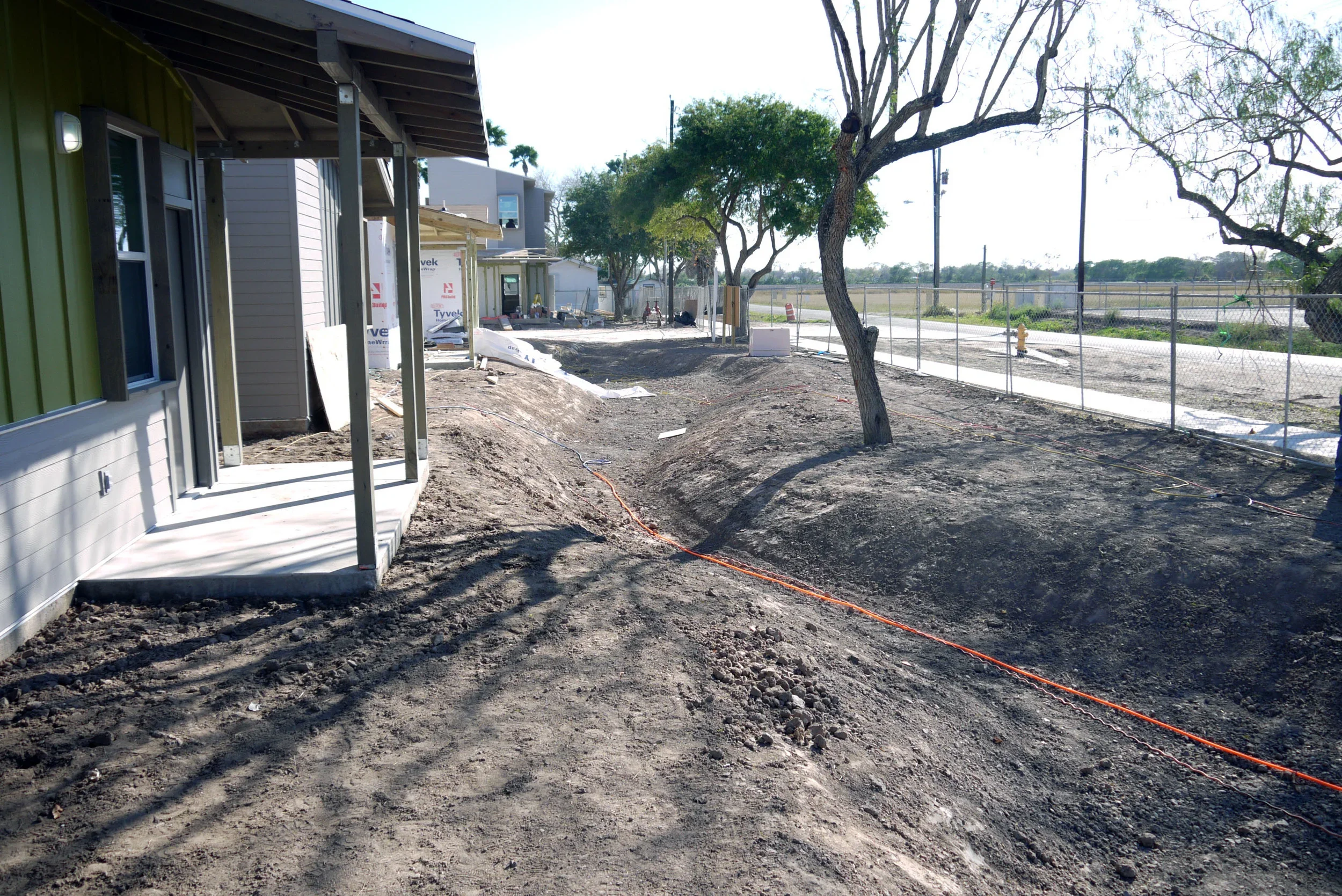
Alongside the residential construction, site work is underway. The Community Development Corporation Brownsville (CDCB) YouthBuild team is in full swing and landscape contractors are installing native plants, trees, and grasses as well as hardscape elements like sidewalks, pathways, and bridges.
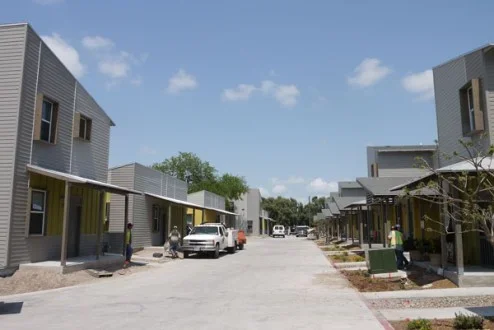
Homes on Bailey Blvd getting their final touches with landscaping and utility connections.
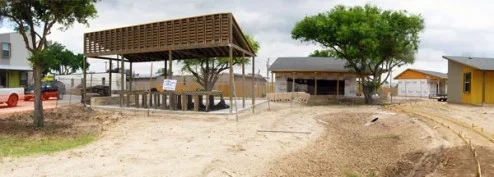
Park spaces have been shaped and are ready for landscape and pathways. An important part of this project was its ability to manage storm water in a way that is both positive for the environment and creates an asset to the people that live here. Swales have been shaped engage public spaces and planted with native grasses and wildflowers species to encourage water filtration and absorption.
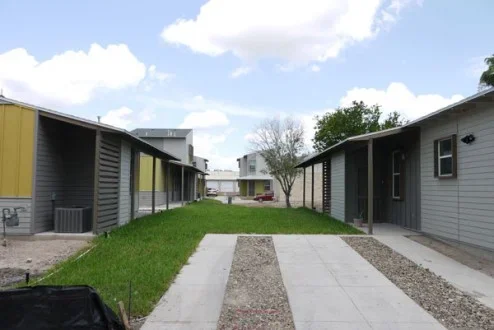
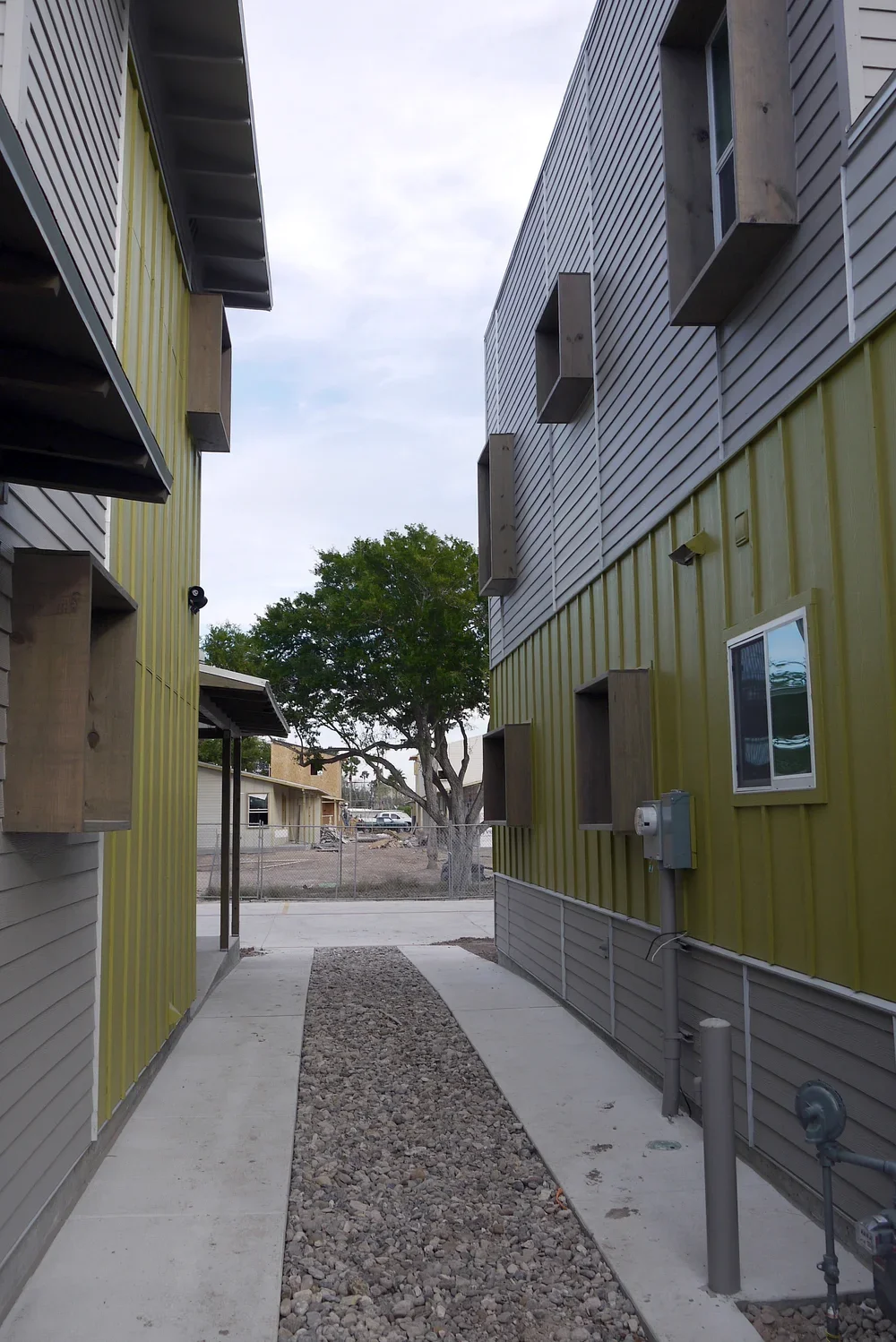
Homes have been sited throughout the development to create courtyards defined by porch spaces.
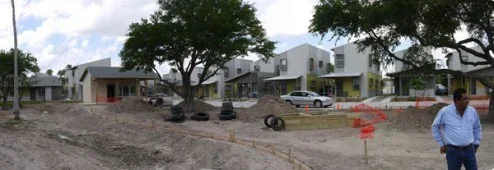
In the community playground, the Youthbuild team has laid out the body of the dragon snake and is working on its head, slides, and crawl spaces. Here, Eddie Salazar, CDCB’s construction manager oversees some of the site construction.
La Hacienda - Midway
February 15, 2013
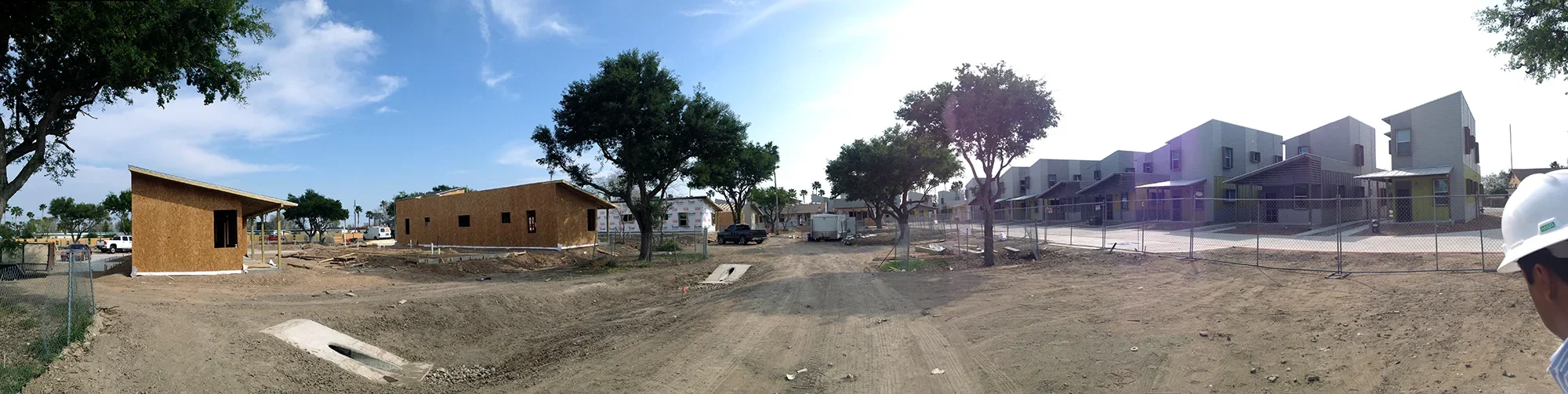
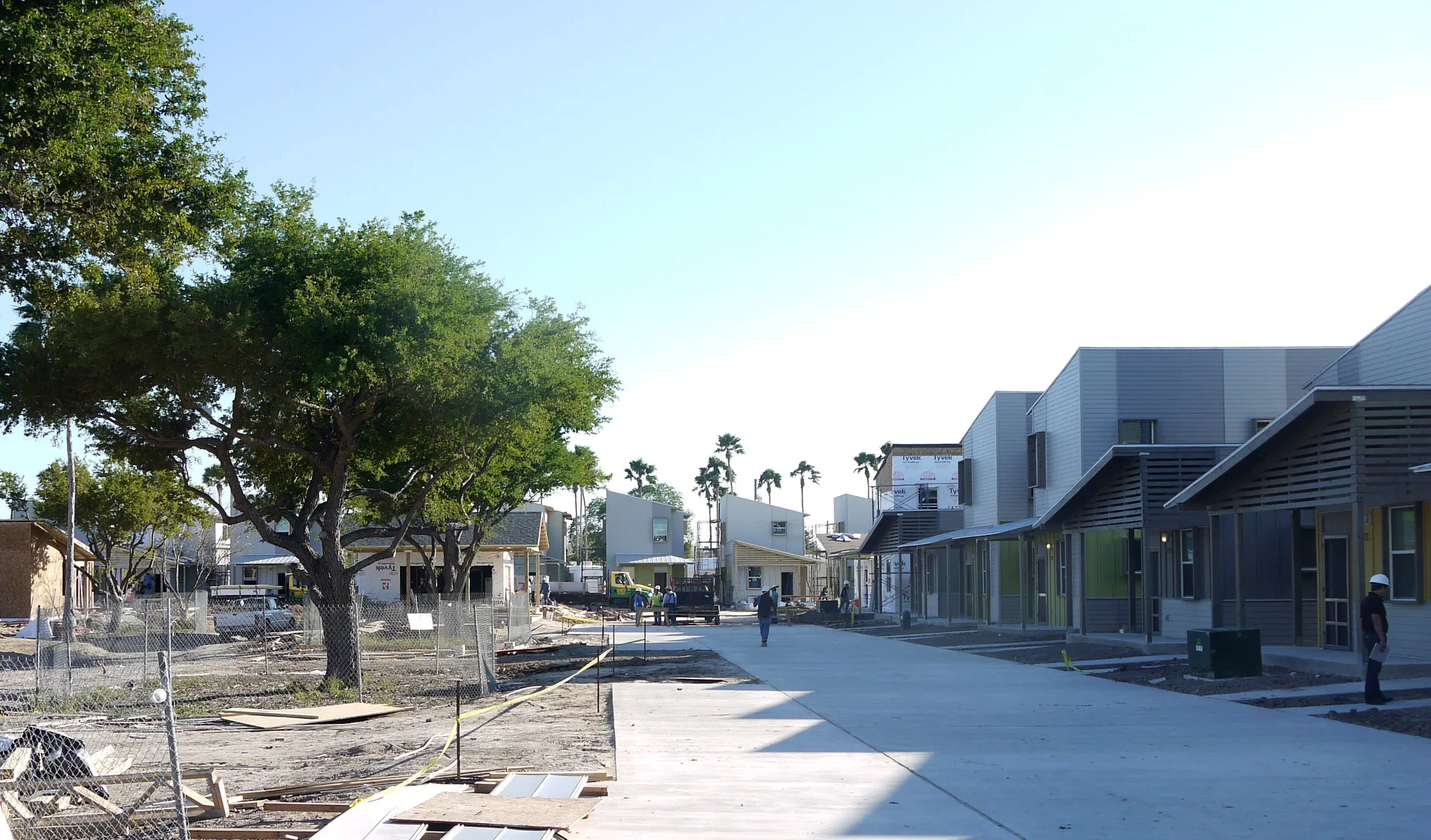
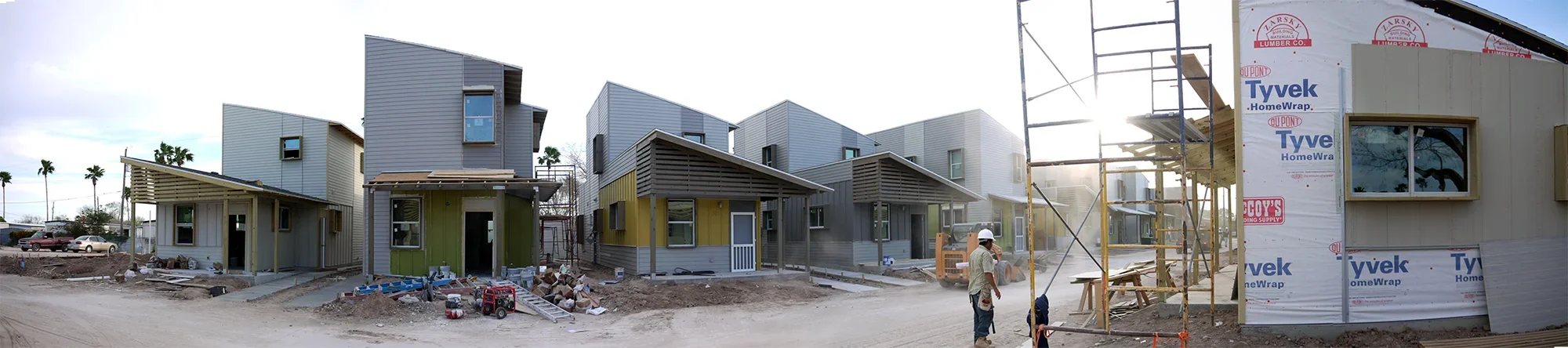
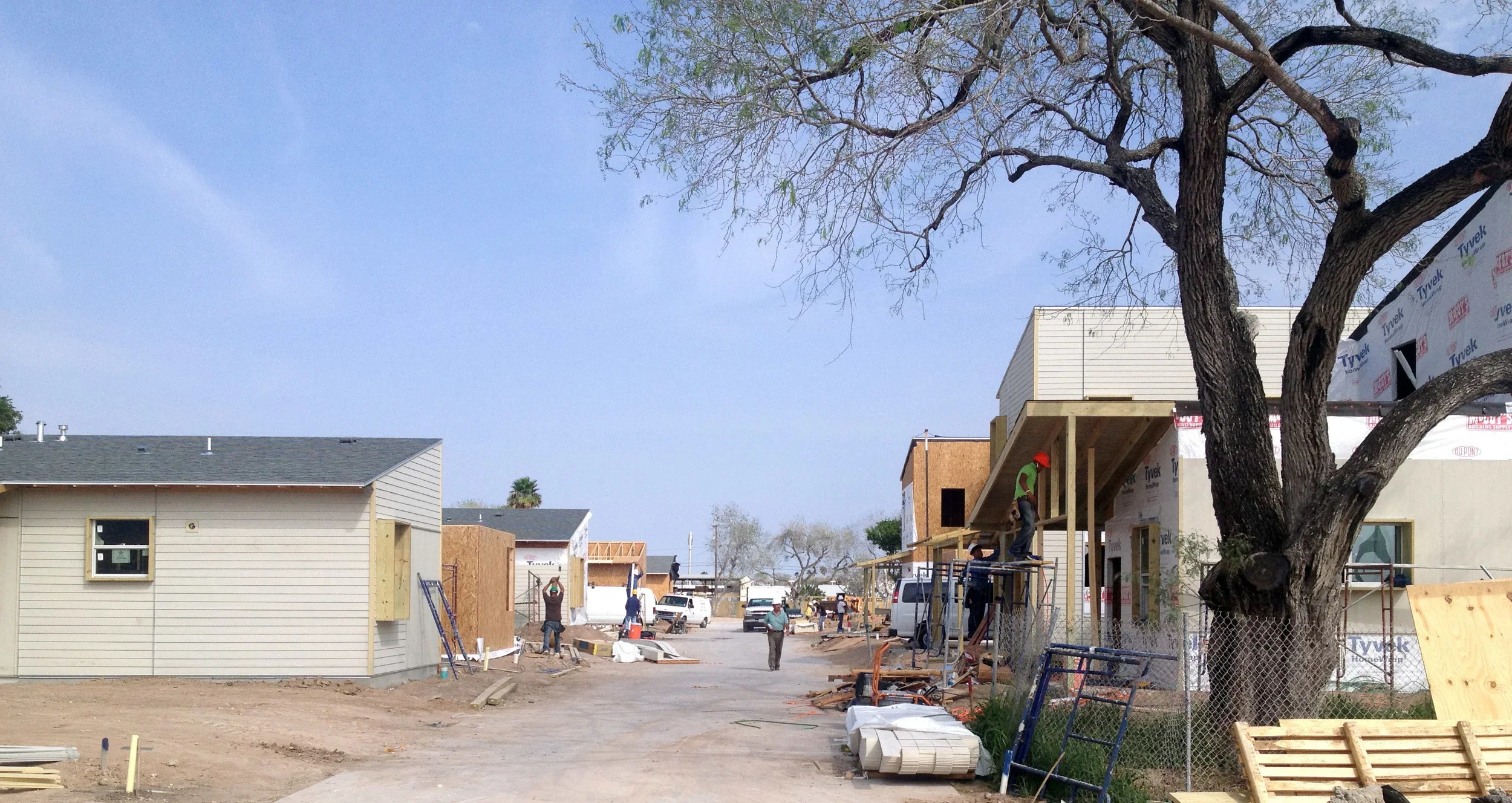
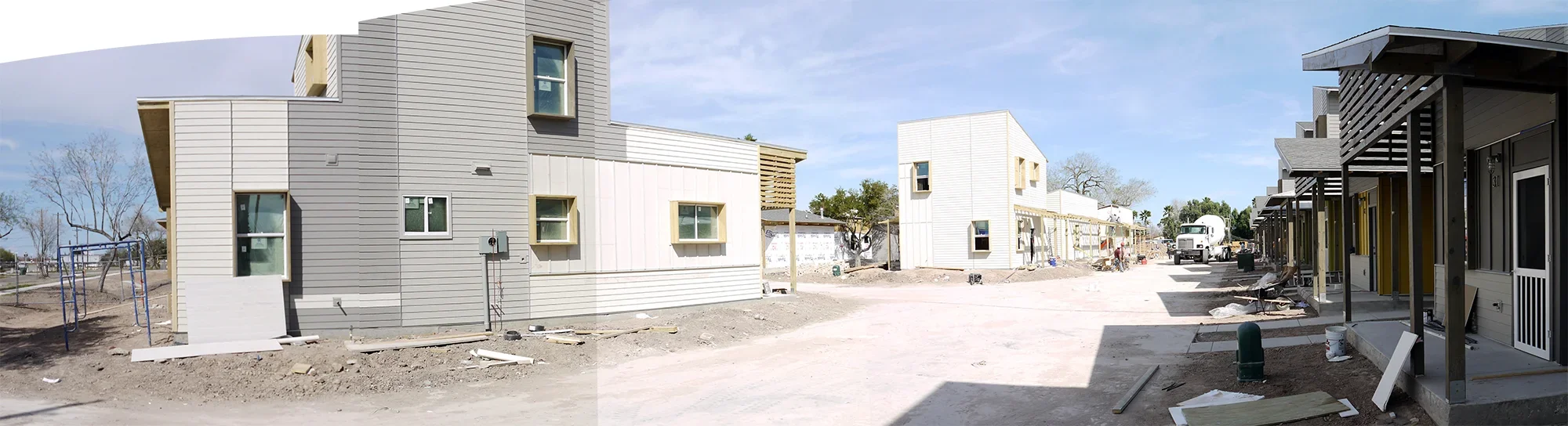
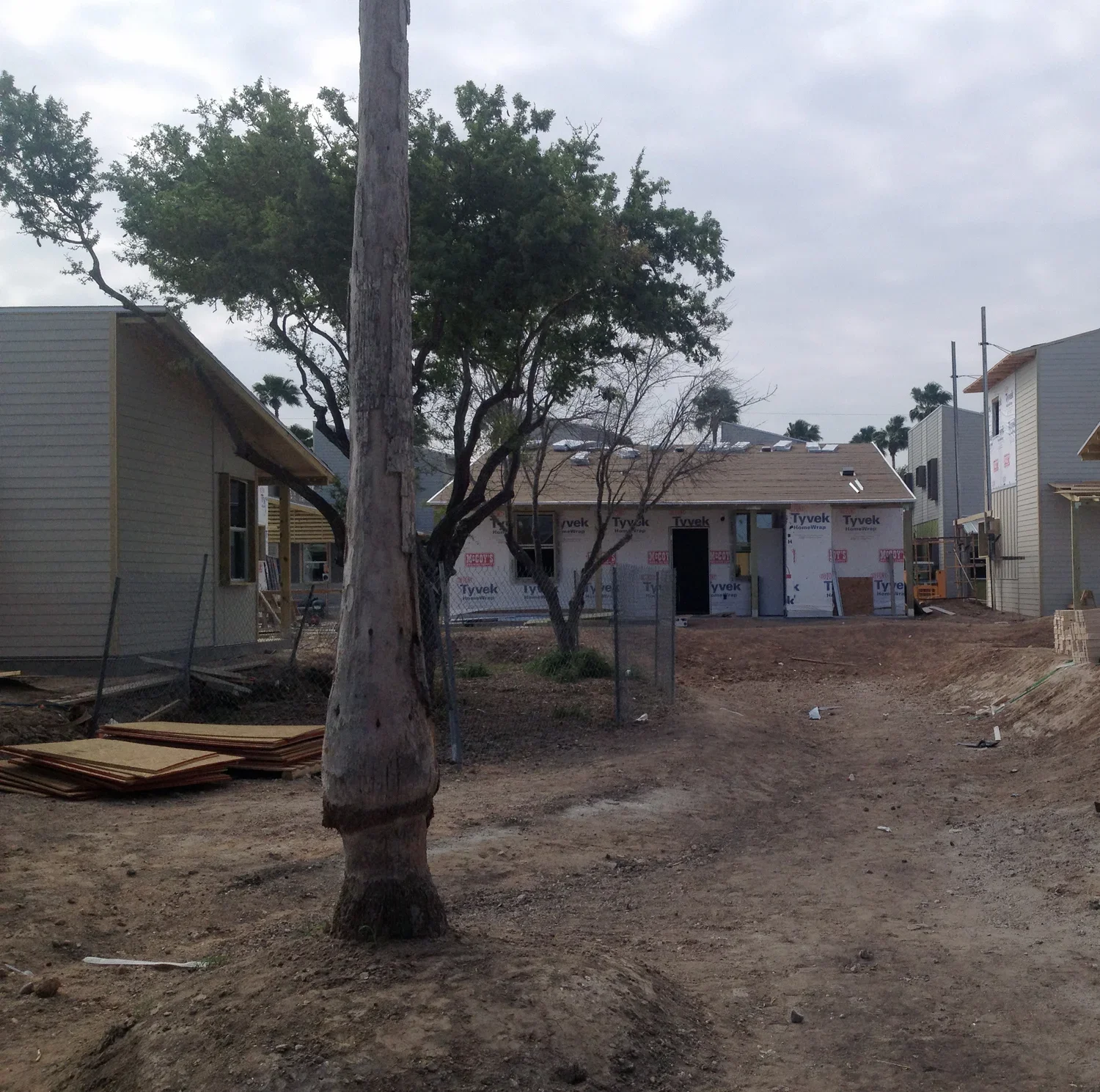
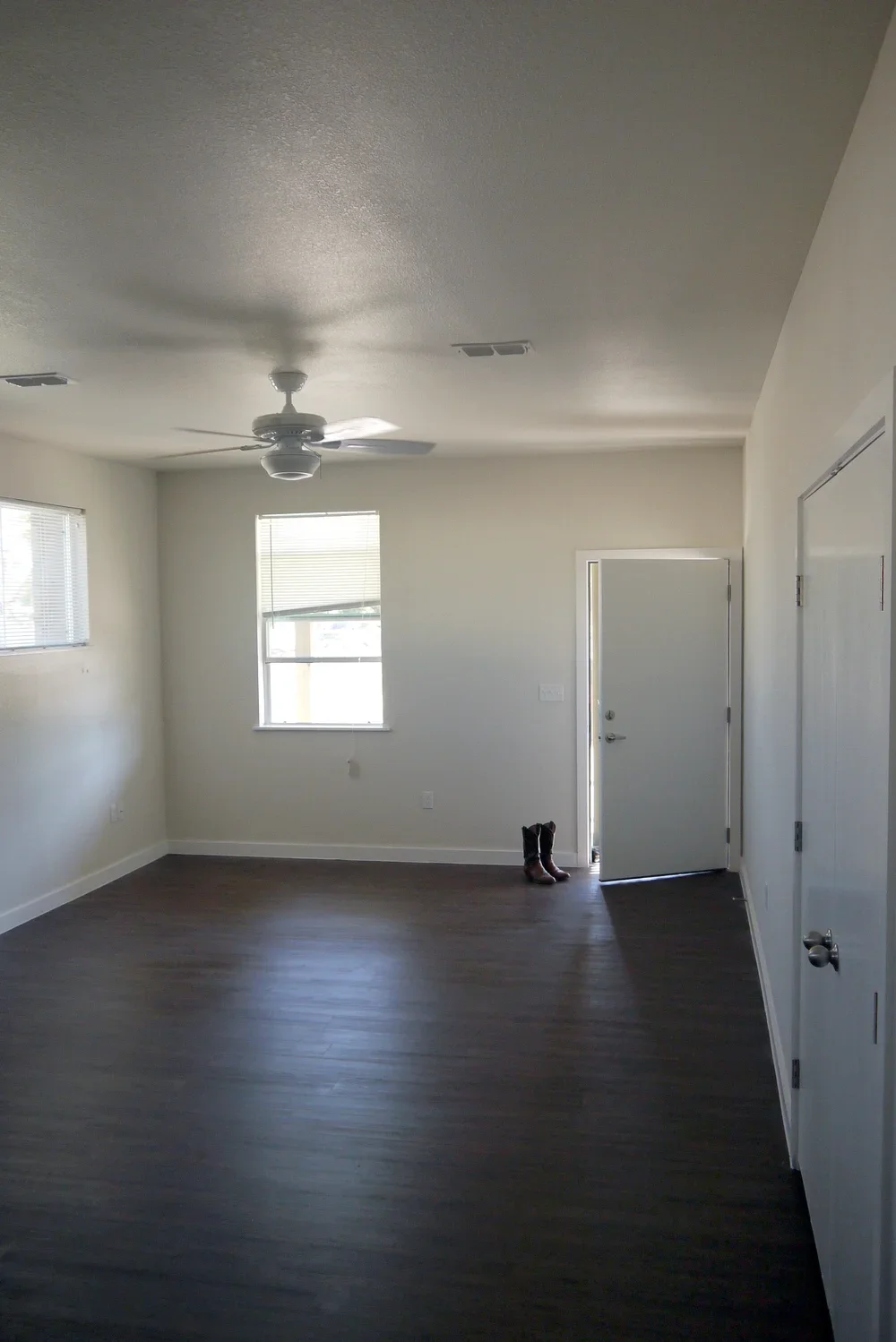
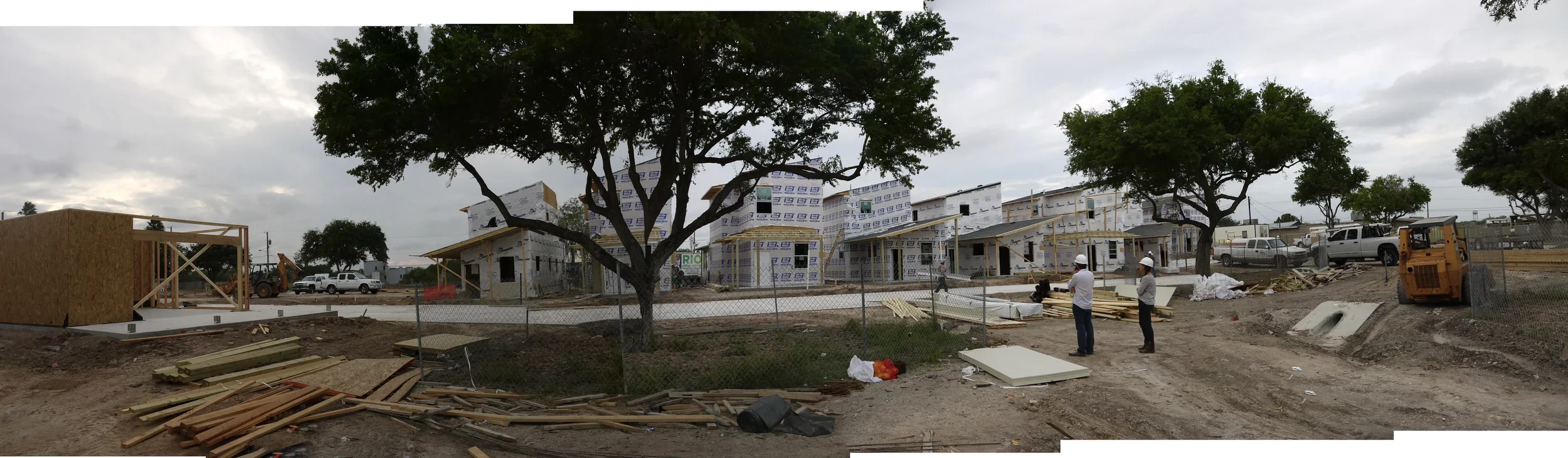
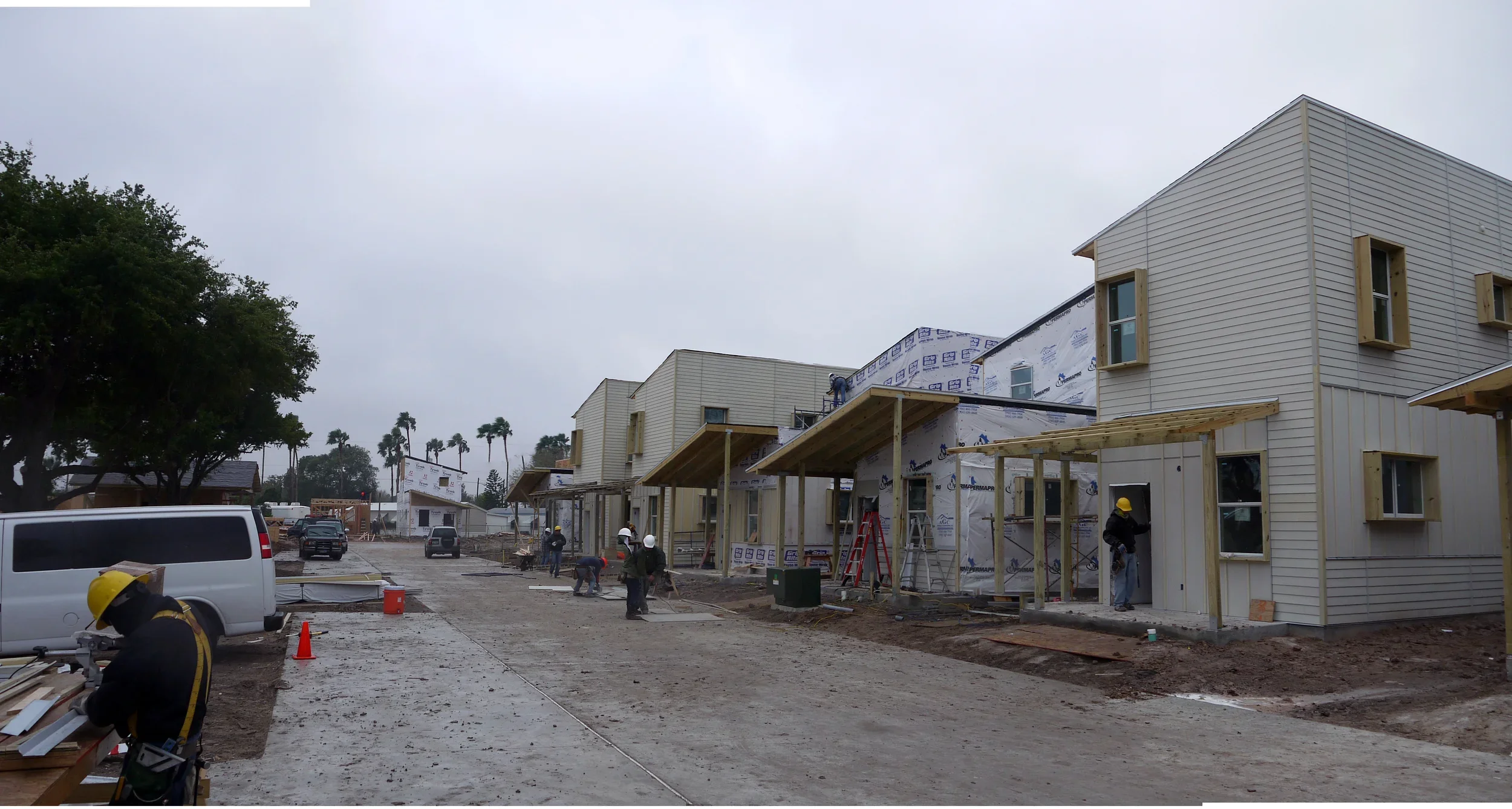
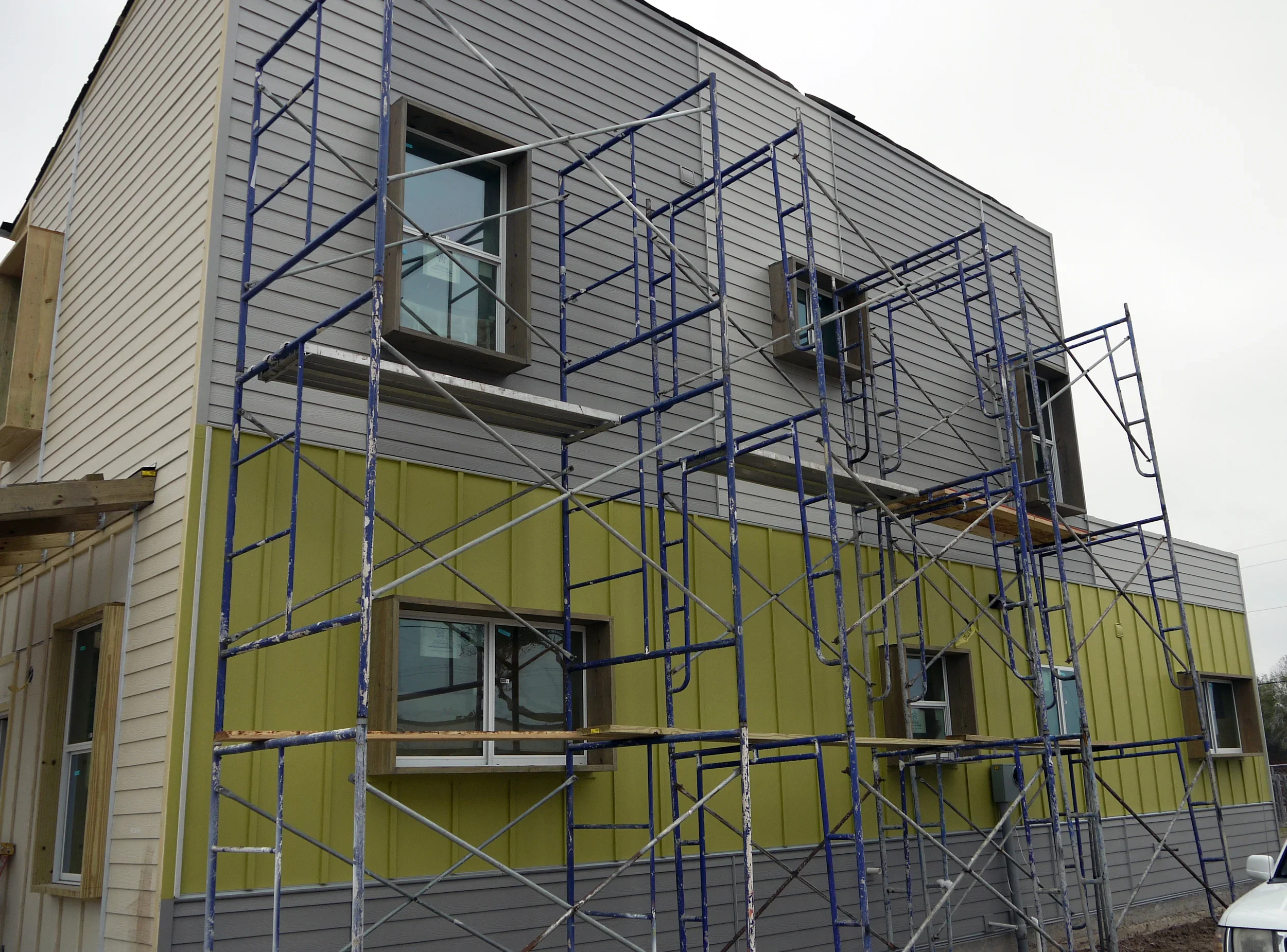
The La Hacienda Casitas are quickly moving along with over half of the 56-units underway. Once the first eight homes were completed, work began on the remaining structures, consisting of eight different housing types, as well as on laundry facilities and other community buildings. Throughout this process care was taken to preserve existing trees across the site, providing need shade and a sense of age in the place. With construction scheduled to be complete in June 2013, the first five families have moved in, already filling this new community with life.
La Hacienda - Midway
January 10, 2013
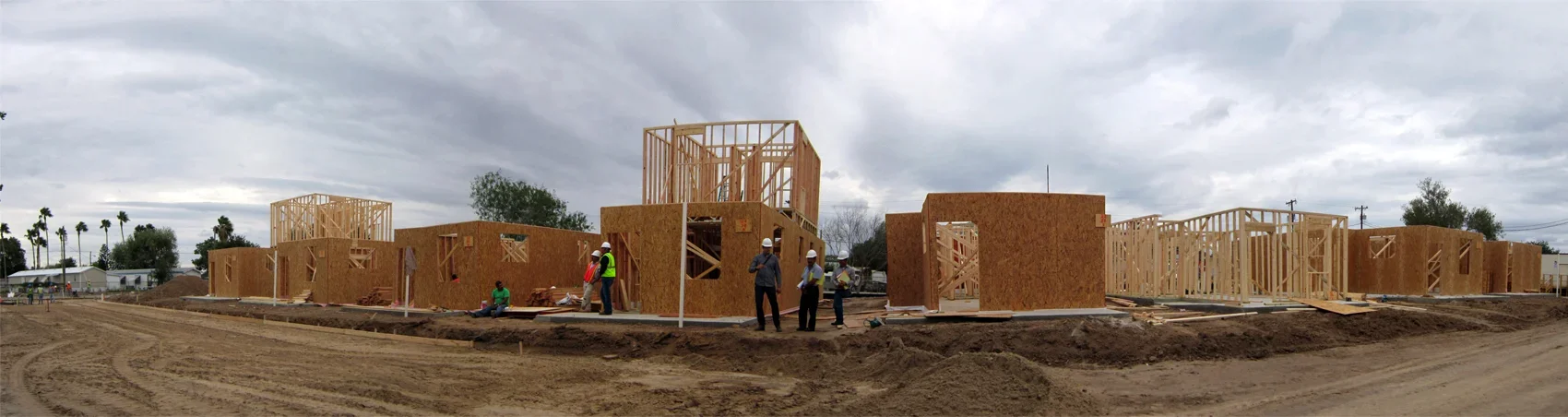
Back on the La Hacienda Casitas site, the construction crews are in full swing wrapping up the first phase of homes, which are slated for completion in February 2013 and have already started the second phase, which are due in March 2013 . By phasing the construction, the project team is able to work though details before proceeding with the remainder of the 56-unit development. As the next batch of homes are being framed, the laundry (the first of four community buildings) is also under way and the roadways have been completed. Once these initial houses are complete, the first residents of La Hacienda will be moving in to call this place their home.
Casitas Foundations 101
November 13, 2012
By Emily Axtman
Phase 1 of La Hacienda Casitas is underway! Site work has been going on for a few months now and the streets are beginning to take shape, as seen below. Up until now, the site progress has been horizontal: dirt has been moved around and wet/dry infrastructure has been installed. Although I've seen some pretty high mounds of dirt, nothing as vertical or as exciting as a house has started...until now!
Thus far, a total of 8 foundations have been poured. So what has been involved in this process?
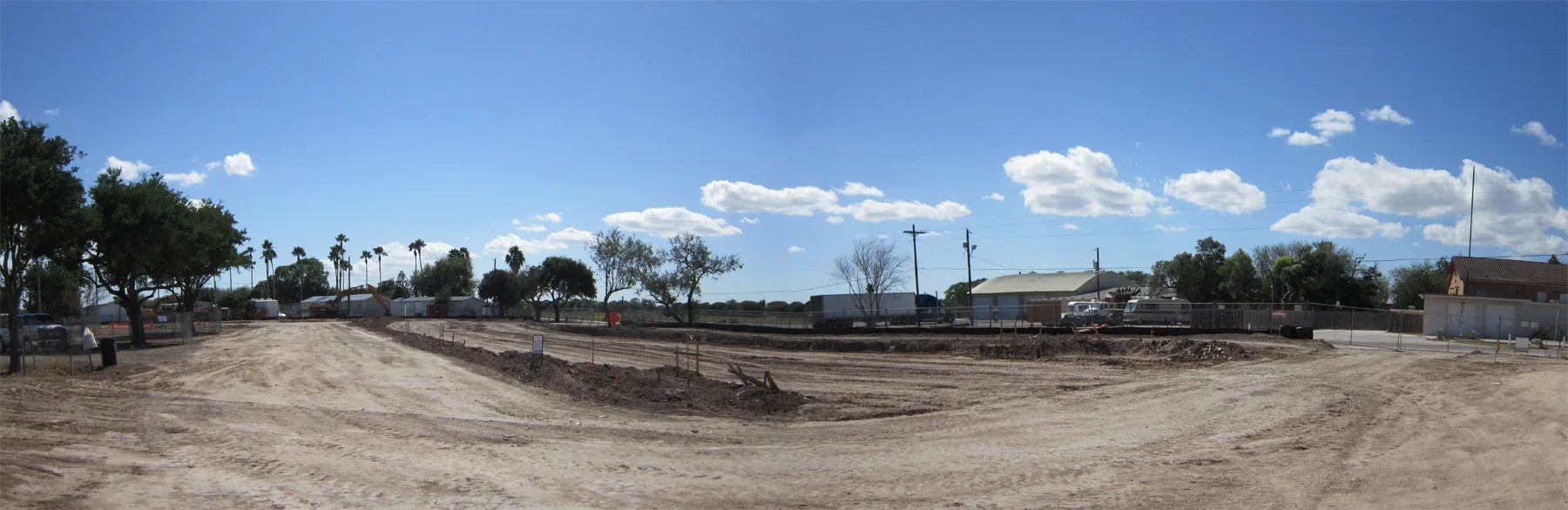
Standing at the northwest street corner facing the building pad of the first 10 houses.
Preparing the site:
In order to prep the site for the foundations, the Phase 1 area was first cleared 3', seen again in the photo above.
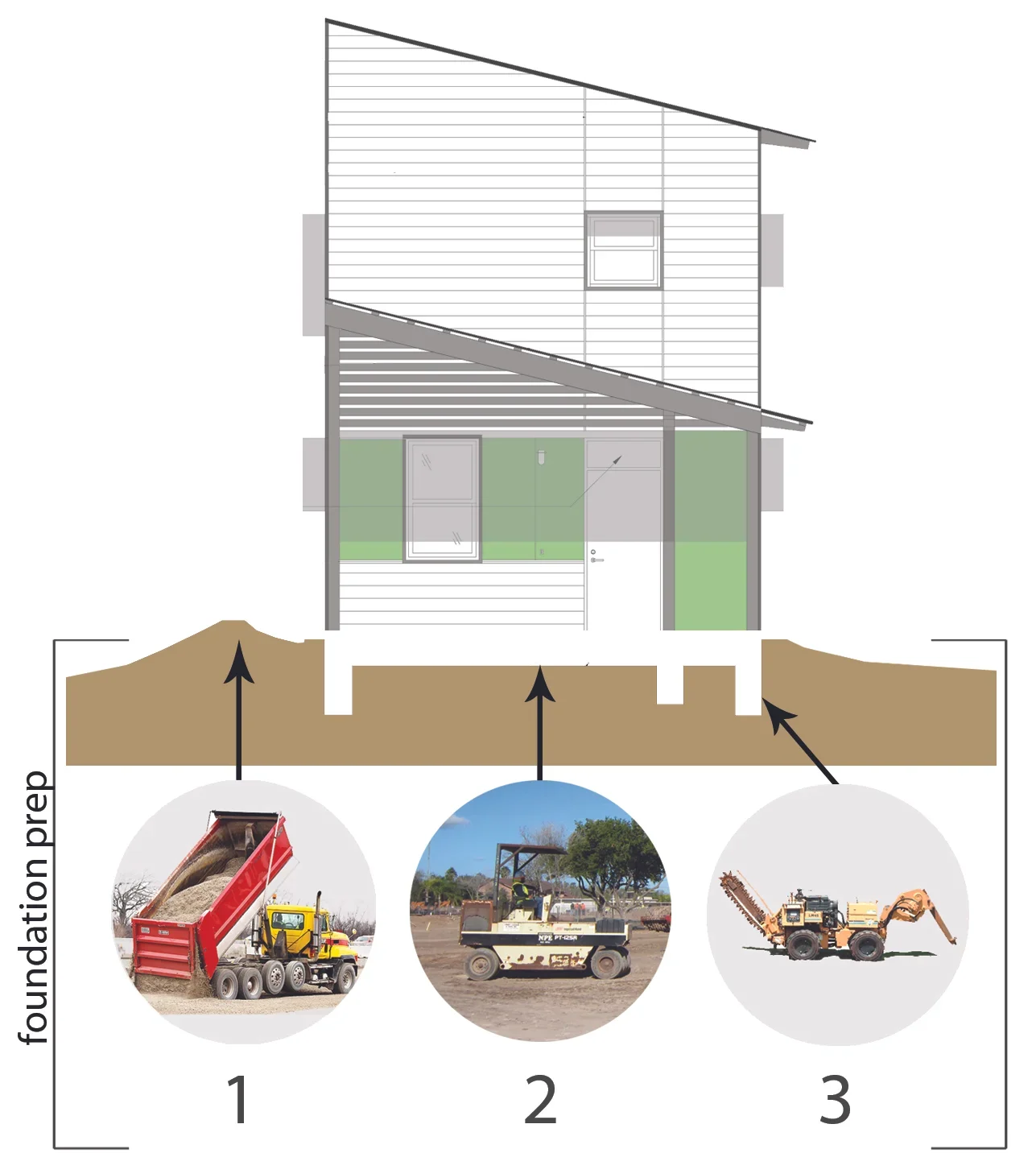
Preparing the pad:
(1) Due to soil instability in the Valley, 3' of select fill was required under each unit to ensure proper density and compaction ability. Select fill is used when native soils are not capable of adequately bearing the weight of the structure that will be built in that location.
(2) The select fill was then compacted in 6" deep increments, referred to as lifts. This process further ensures proper density and compaction.
(3) Once the fill was tested and the form-work constructed, a trencher was used to cut out the foundation lines. At this point, it looked like this:
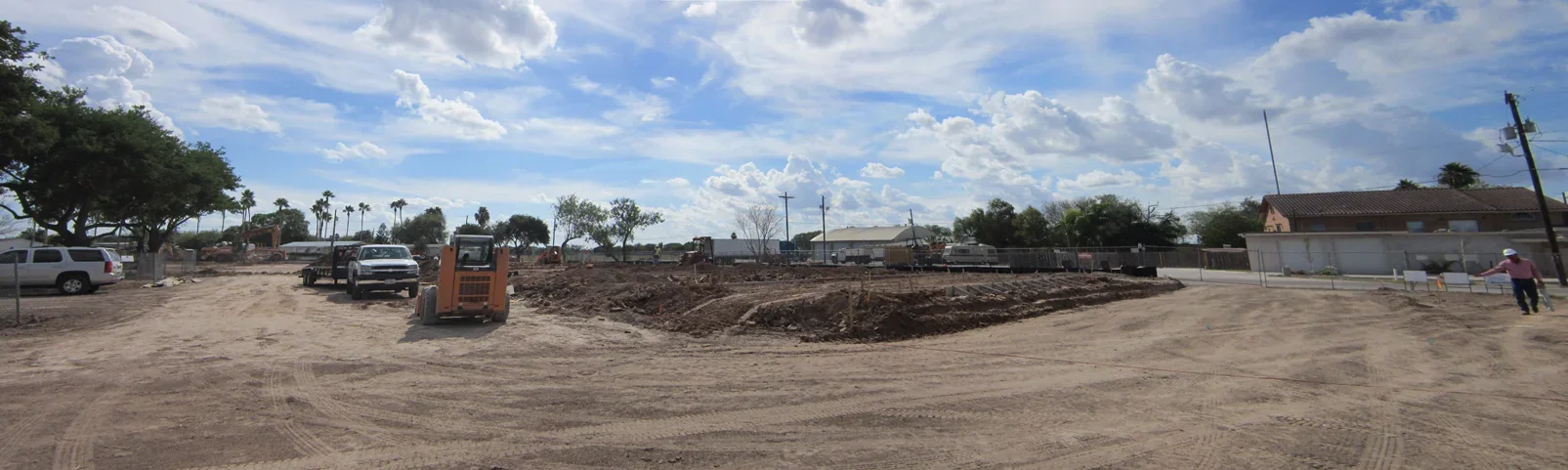
I know what you're thinking. This photo looks the same as the last picture! If you look more closely you'll notice the built-up select fill and the beginning of the form-work.
Preparing the foundation:
The the select fill is piled high from the trenching while perimeters of the foundation are edged with form-work. After the form-work and trenching are complete, plumbing for the kitchen, bathroom, and utilities is roughed in. A plastic vapor barrier is then laid over the padding, tucked into the trenches and then stapled to the form-work. It is very important that the concrete be cast in a dry protected barrier and kept away from the soil. Continuous exposure to water and moisture can cause cracking in the concrete, leading to structural instability.
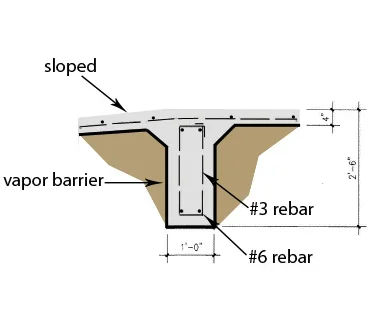
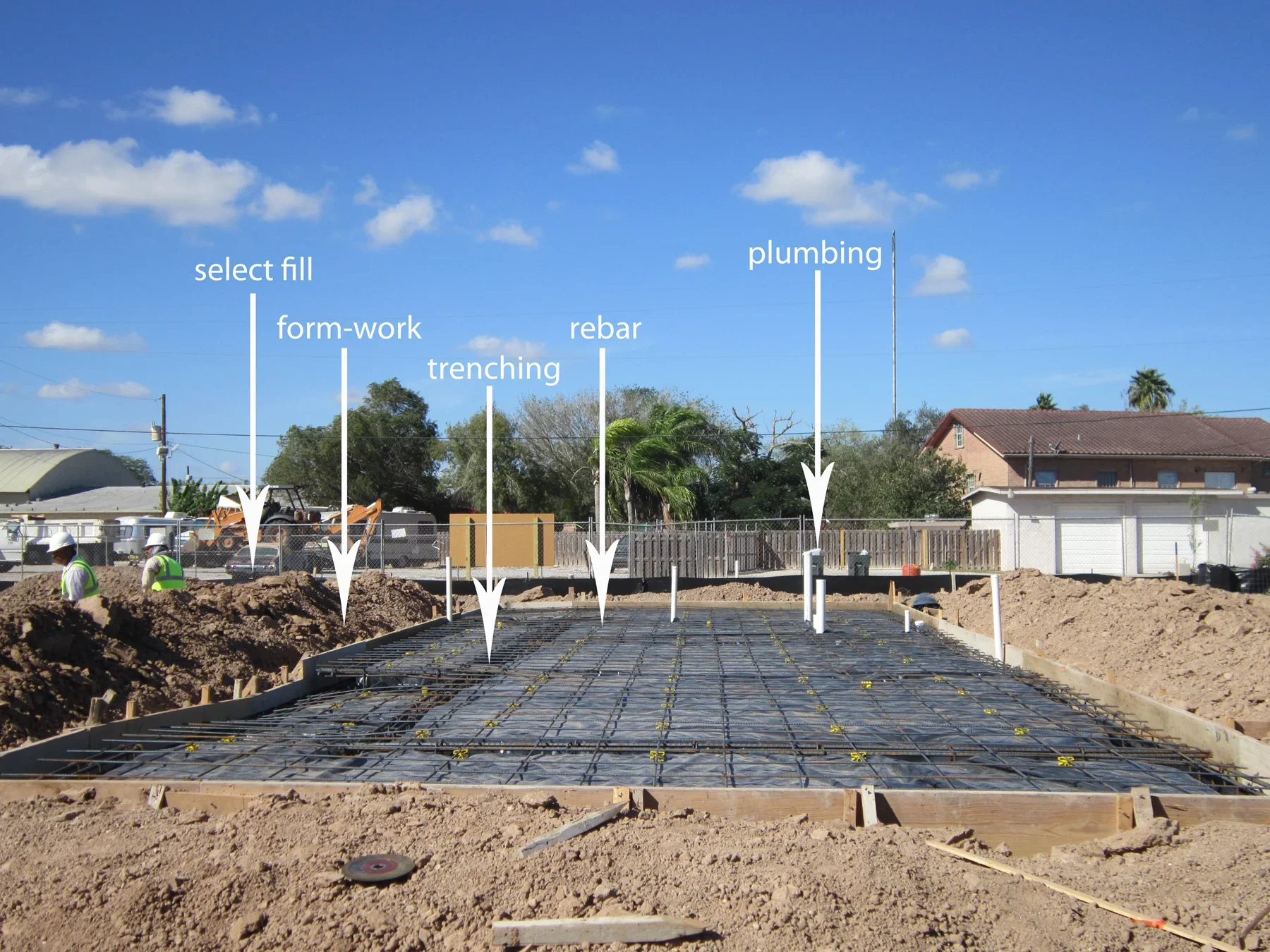
The rebar is assembled in stages onsite and set into the trenches first, then laid in a grid pattern on top of the padding. Because concrete has low tensile strength, reinforcement must be used that is high in tensile strength, such as steel rebar. Chairs, the dots in yellow above, are used to raise the rebar 2-3" above the padding. This ensures that the concrete will adhere to the rebar properly and surround it evenly. Once the rebar is inspected, it's time for the fun part... CONCRETE!
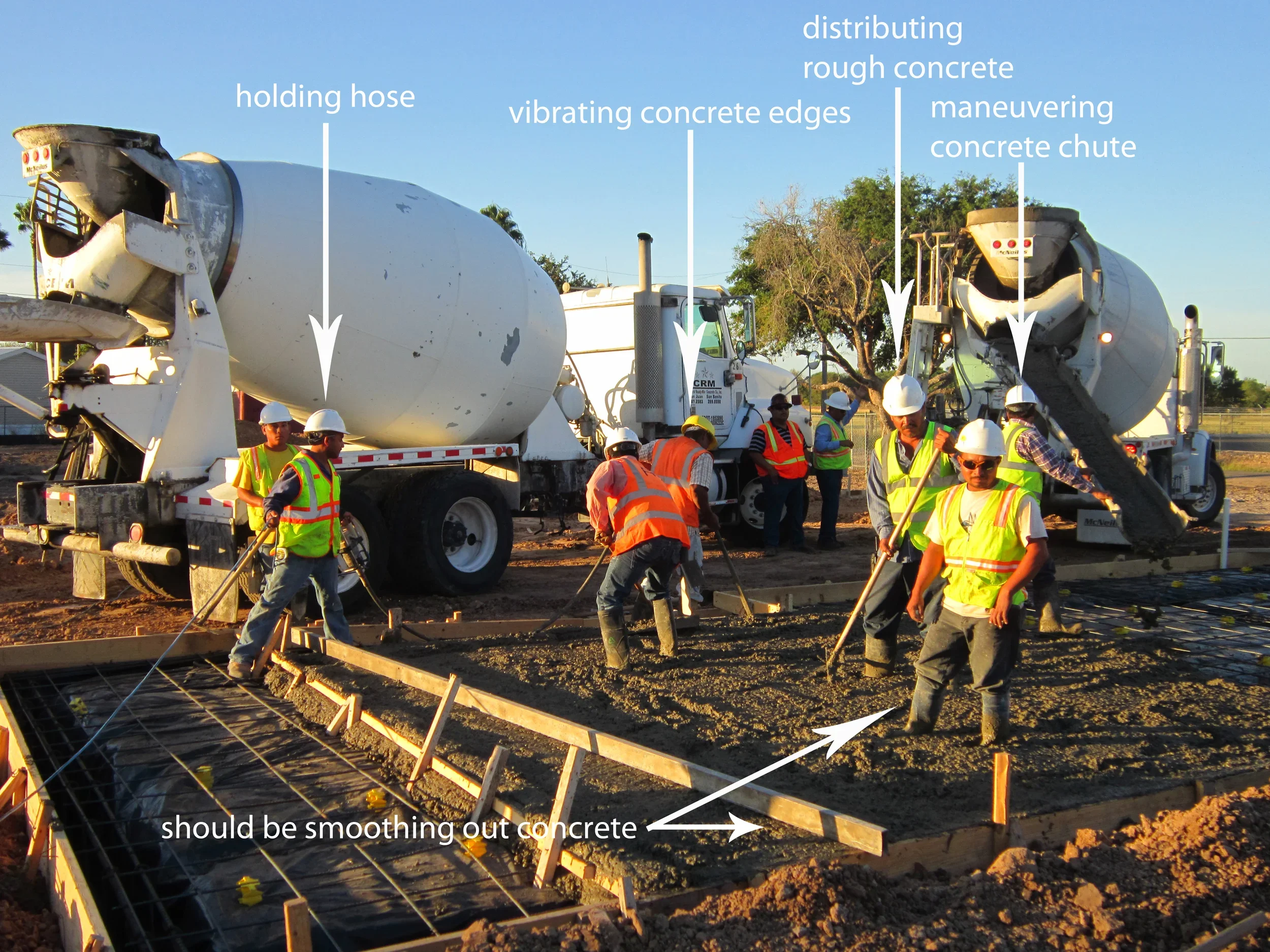
The concrete is spread evenly over the padding and into the trenches, then vibrated at the form-work edges to help the aggregate settle and release any air pockets.
Concrete is a composite material made up of an aggregate (such as stone), cement and water. When water is mixed with the dry aggregate and cement, a chemical process called hydration occurs, enabling the mixture to be molded and formed before hardening.
The timing and craft of pouring the foundation is key to the accuracy of the houses. Speaking to one of the foremen on-site, he said, "Pouring the foundations is the most stressful part of the process. Once we pour, it's final; so everything has to be right."
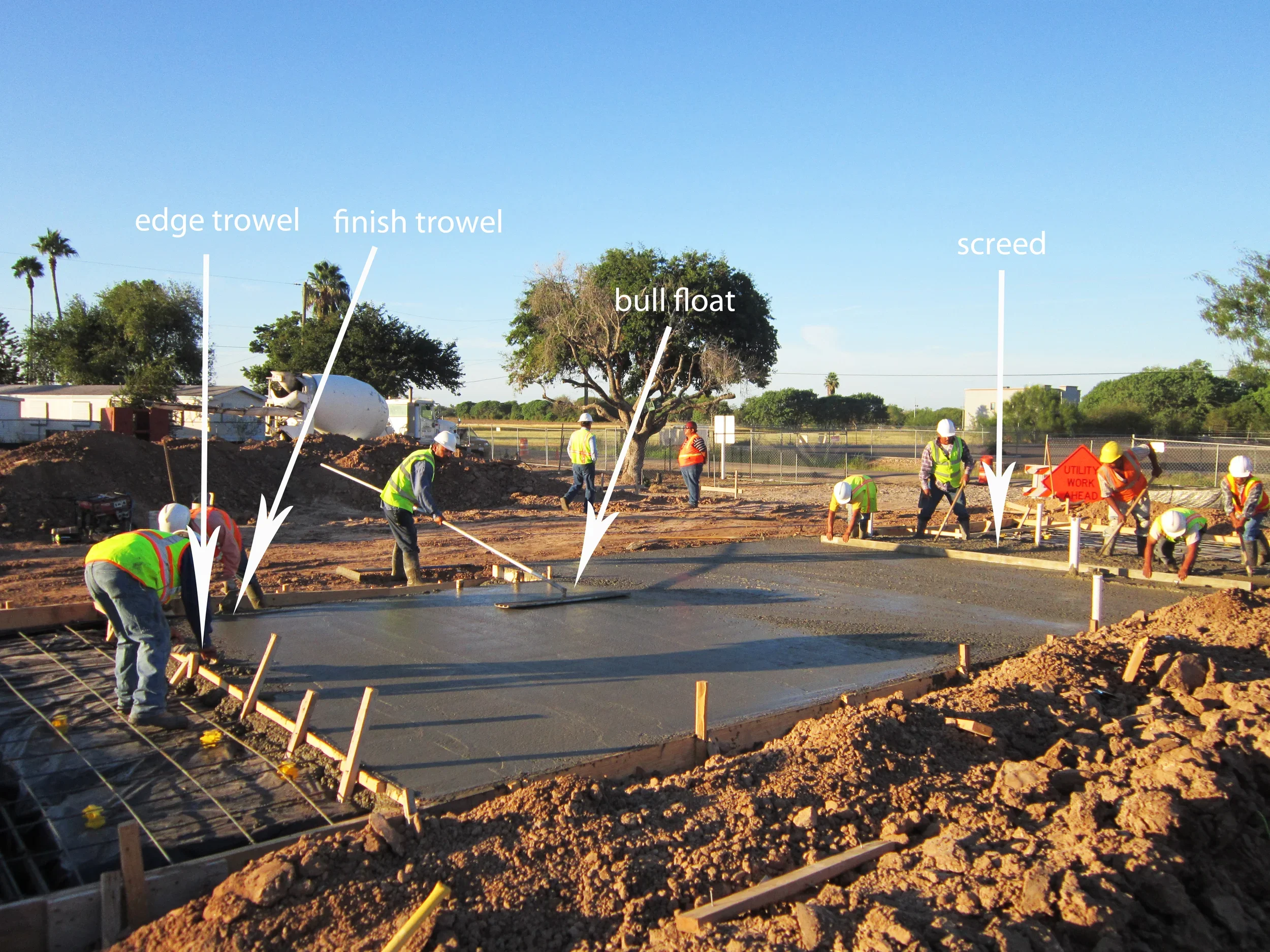
Once the concrete has been distributed evenly, it's roughly smoothed using a screed. As the larger aggregate begins to settle, a bull float is used to smooth the top layer of the finer aggregate. To complete the process, edge and finish trowels are used to refine the concrete surfaces.
As I learned at 5:30am in the morning, pouring concrete is an early event. In order for the concrete to set, the air temperature can't be too hot or too cold. If the temperature is below 50 degrees, the hydration process slows down; if too hot, hydration occurs too fast, causing differential temperatures in the concrete that can lead to cracking, as well as compromising the final strength of the concrete. Due to the Valley's high temperatures, it's important to start as early as possible to beat the heat.
Prior to any foundation pours, a sample is taken from the concrete trucks and tested later to verify the strength and composition of the mixture. According to the tester, the foundations will cure enough in about 3 days to start framing. Fully cured concrete takes about 21 days.
La Hacienda Casitas
October 5, 2012
By Emily Axtman
Founded on the need for safe, clean and affordable housing for families in the Lower Rio Grande Valley, the Community Development Corporation of Brownsville (CDCB) has been working with the residents of Cameron County since 1974. Their mission is to "assist low income families in attaining home ownership" and they've achieved this over the past five decades by providing more than 2,500 built homes. CDCB additionally provides home-buyer education and credit counseling, youth and job training, and colonia redevelopment, among other programs. They are the largest non-profit producer of single family affordable housing for home-ownership in the State of Texas.
bcWORKSHOP's Lower Rio Grande Valley (LRGV) team works alongside CDCB staff in their office in downtown Brownsville at 901 E. Levee Street. Current projects include:
Colonias Planning Project (Sept. 2011-present) - Grassroots efforts to build a planning framework and platform for rural communities to self-organize and address both localized and regional community development issues including insufficient infrastructure, home repairs, safety, and public health concerns.
Belden Trail (July 2012-present) - Community engagement and design for an urban 1-mile hike and bike trail that will run through West Brownsville.
Alegria House (August 2012-present) - Consultation and design of a small home that, in partnership with CDCB, will provide a family of 3 with a much needed fully-accessible house.
Self-Help and Colonia Home Design (July 2012-present) - Design services are now being offered for families that qualify with CDCB for a new home and who wish to participate in the design choices available for their new home.
Better Block Brownsville (May 2012-present) - A monthly Saturday event that demonstrates what a "better block" can be in Brownsville including bike/pedestrian-friendly streets, outdoor cafes and shade, local vendors and music.
La Hacienda Casitas (Feb. 2011-present) - The largest collaboration between CDCB and bcW to design CDCB's first multi-family housing development.
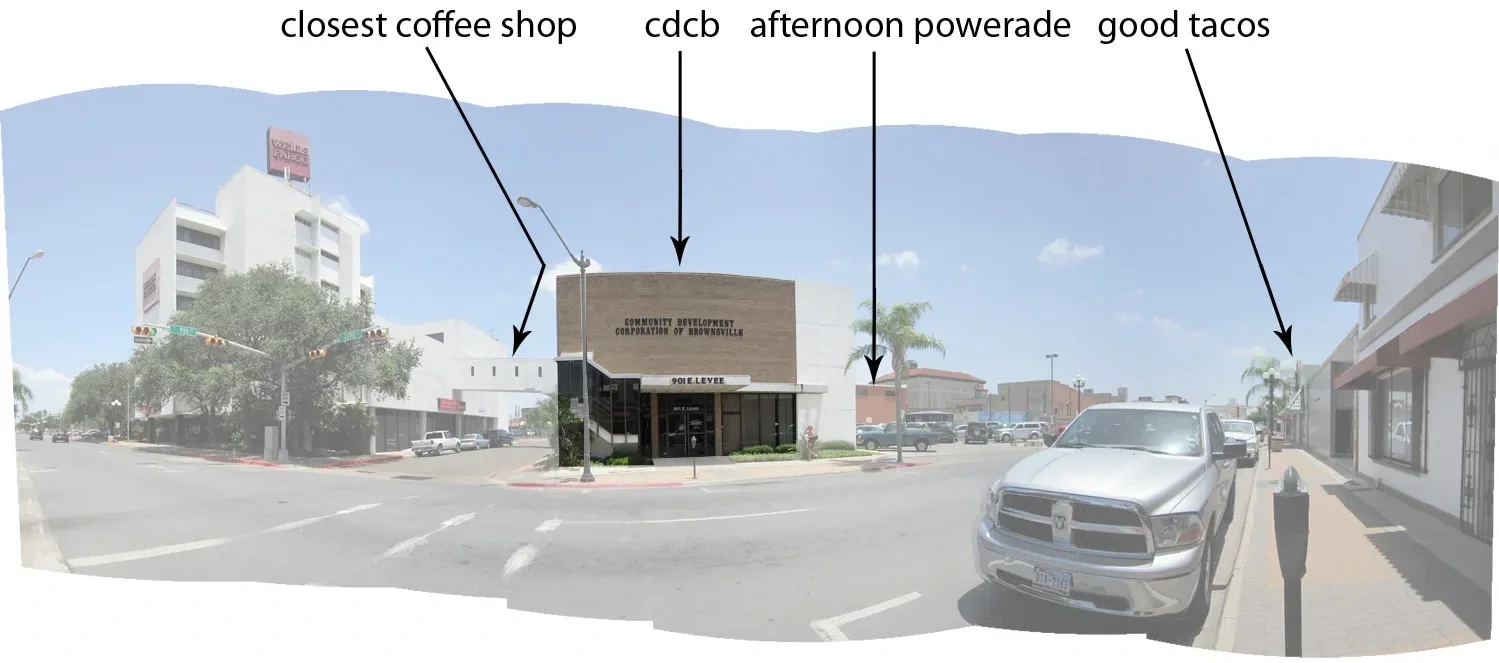
CDCB's office in downtown Brownsville
So how did La Hacienda Casitas get started?
I sat down with Mark Moseley, Manager of Special Programs and Initiatives at CDCB to ask him this question along with a few others. But first, let's get to know Mark!
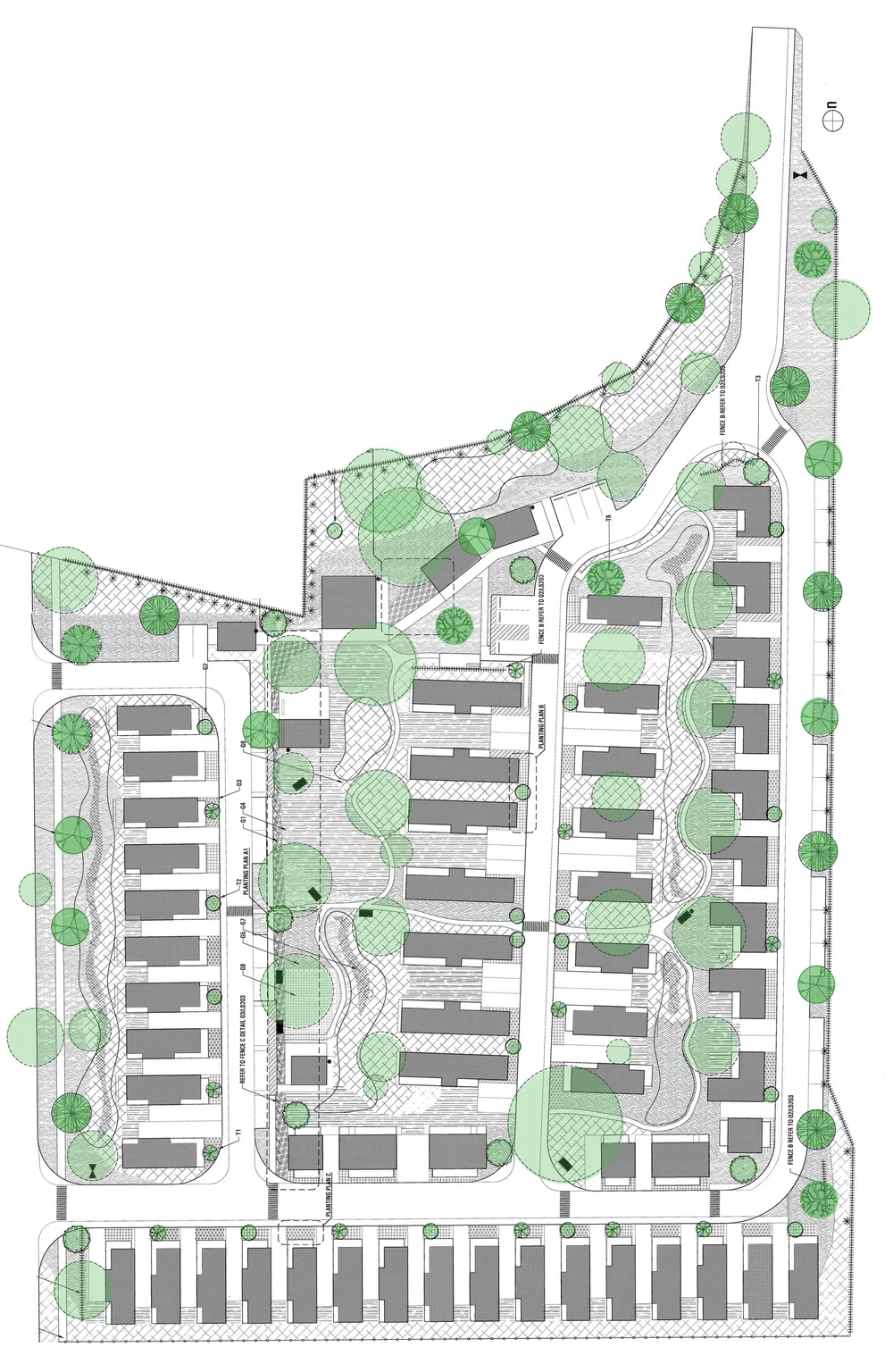
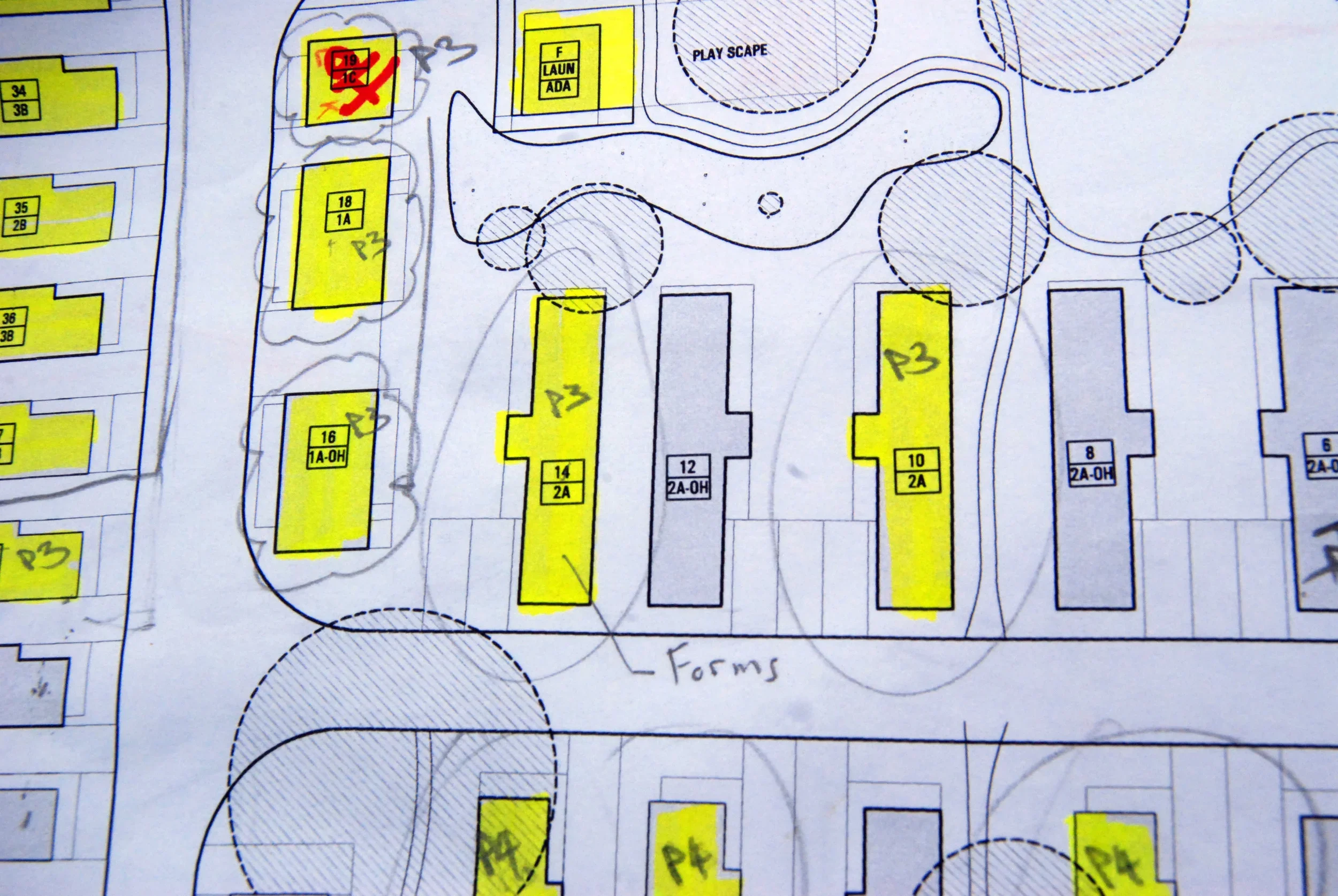
La Hacienda Site Plan - The site design is focused on using a high-density housing model integrated with low-impact design. Covering just under 6 acres, the site design was informed by preserving as many existing trees as possible and centers around a long spine of central green space that provides community amenities including a meeting hall, barbeque pavilion and laundry facility. Through the integration of storm-water management (bio-swales and bio-retentions ponds) with native landscaping (native grasses, wildflowers and site-informed walking paths) a more cohesive and self-sustaining environment will be created for all residents and users.
Mark Moseley, Manager of Multifamily Programs, has over 20 years of experience working in the community development field. Prior to joining CDCB, Mark was the Executive Director of Tri-County HDC in Harrisburg, Pennsylvania. Mark has completed nearly $45 million in multi-family projects utilizing Low Income Housing Tax Credits, USDA 514/516 (farmworker housing), HUD 202/811 (housing for the elderly and people with disabilities), Neighborhood Stabilization Program, CDBG (Community Development Block Grant Program), Housing Trust Fund, and PA Homeownership Choice. Mark has overseen asset management for over $55 million worth of multi-family assets. Mark also served as the Senior Housing Developer for Rural Opportunities (PathStone) in Harrisburg, PA and Housing Director with the Pélathé Indian Center in Lawrence, KS.
Mark currently oversees CDCB’s REO (Real Estate Owned) projects and is leading CDCB’s newest venture into the multi-family rental market.
Emily Axtman: CDCB typically does single-family residences as individual projects. Why did CDCB choose to do their first multi-family housing project now and in Harlingen?
Mark Mosely: With the downfall of the single-family market, a multi-family housing project made sense financially for CDCB and also will provide more families with more housing in less amount of time and space.
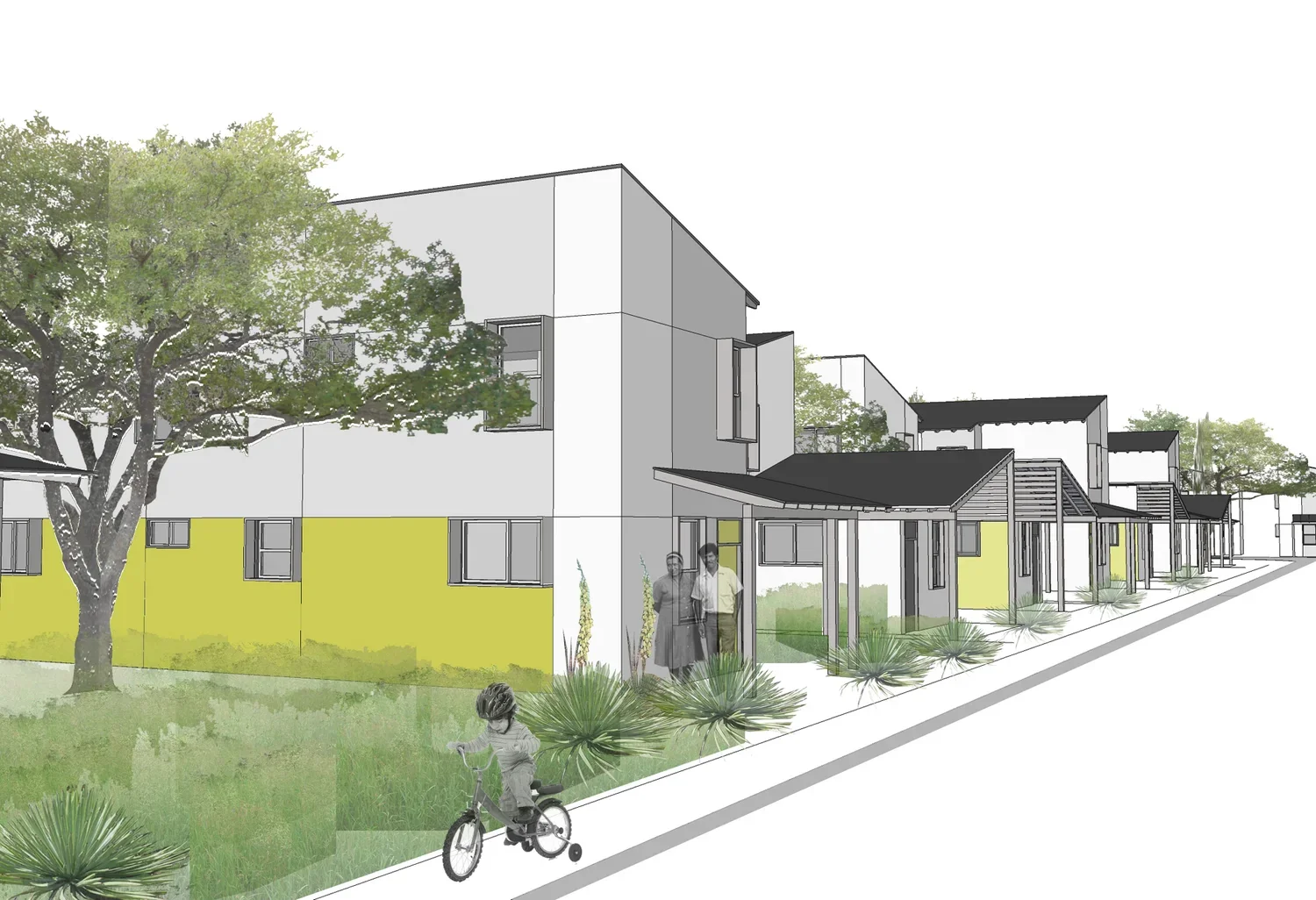
La Hacienda view south down "Center Street". The porches were designed to encourage more interaction among La Hacienda residents and xeroscaping will allow for low site-maintenance and require less water; both contributing to the project's focus on the importance of community and sustainability.
EA: Why did CDCB choose the property in Harlingen over other sites?
MM: The location was originally supposed to be on the outskirts of Cameron Park [one of the Cameron County colonias], however it was known that the site in Harlingen would receive one additional point on the tax credit application, [this was necessary in order to do the project] so CDCB went ahead with the Harlingen site. Securing the site in Harlingen essentially meant a better chance at receiving the tax credit and the project actually going through. CDCB will be leasing the land from the Cameron County Housing Authority for 75 years.
EA: How did bcWORKSHOP become involved and why?
MM: CDCB interviewed several architecture firms to take on CDCB's first multi-family housing project; most were qualified, however bcWORKSHOP stood out in that CDCB felt they shared the same philosophy and over-arching values.
EA: What has been the biggest challenge of the project so far?
[This is where Mark paused. I could tell he had a list...]
MM: Taxing laws, the platting process, it's been very political — the most political project I've worked on actually, working with architects...
And then Mark paused and asked, "Are you going to publish this?" When I told him yes, he stopped his list at that.
Planning for La Hacienda has been a complex process since its inception. Many entities are involved — the CDC, funders, banks, designers, contractors — not to mention this is CDCB's first time taking on a project at this scale. After tying up loose ends over the past 2 months, the project has finally broken ground and is quickly moving along!
The [Short] History
August 16, 2012
By Emily Axtman
This is a post in a series on the La Hacienda Casitas and the Lower Rio Grande Valley.
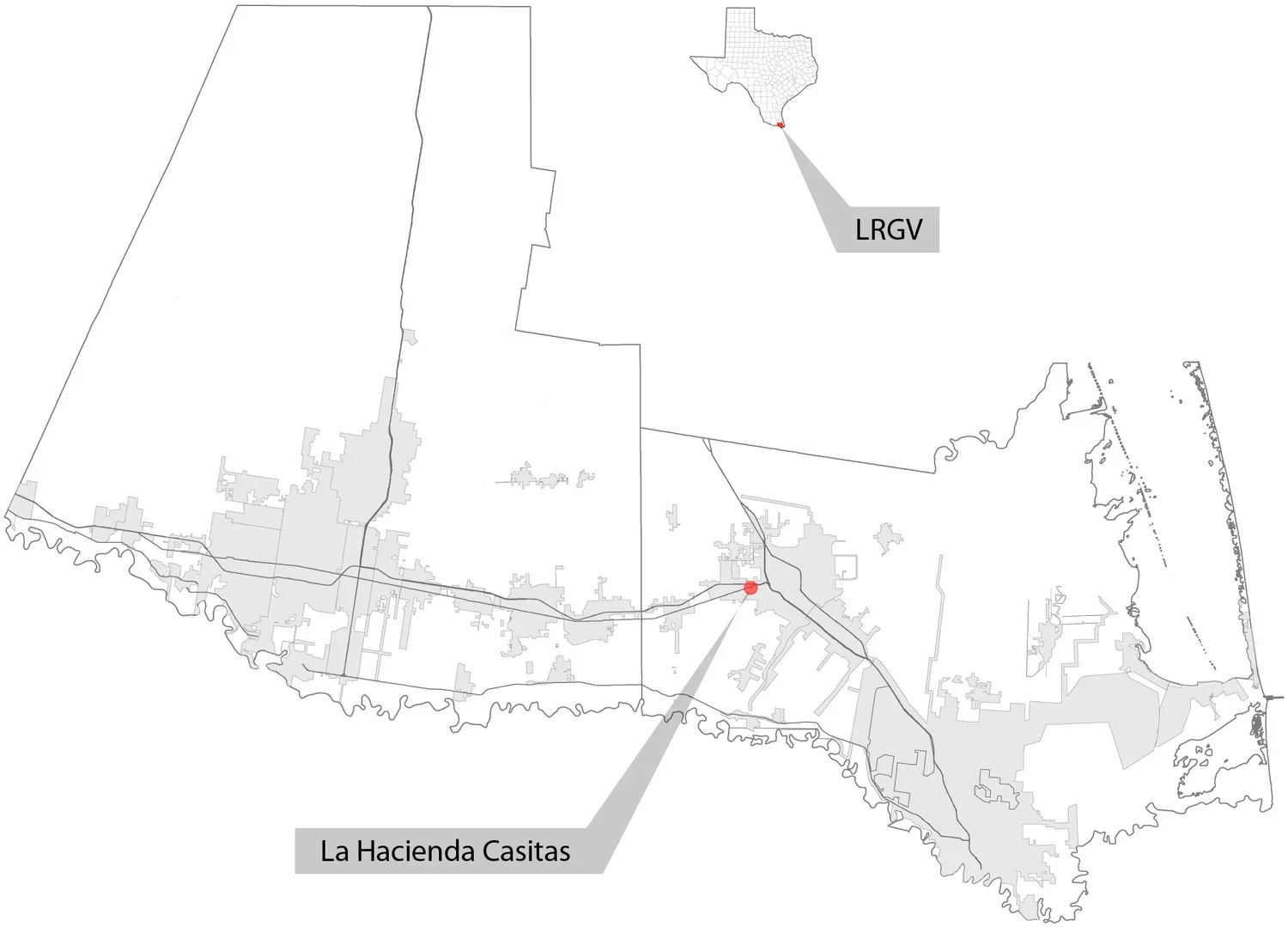
Harlingen, TX is located in the Lower Rio Grande Valley, which is comprised of 4 counties: Starr, Hidalgo, Willacy and Cameron. Both Harlingen and Brownsville are in Cameron County. Harlingen, 30 miles west of the Gulf of Mexico and 15 miles north of the US / Mexico border, enjoys warm (or hot in August) gulf breezes and plenty of tropical vegetation — my favorite being the Sabal palm tree.
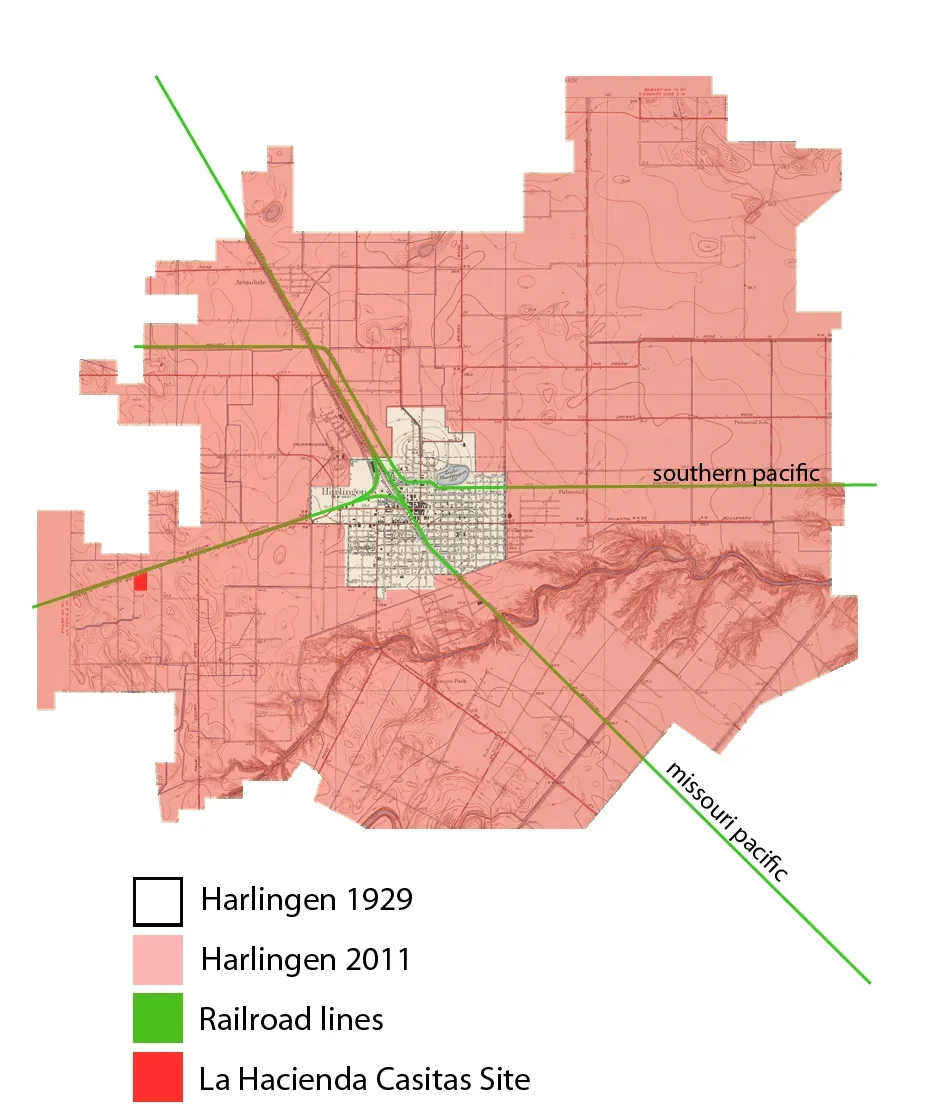
Harlingen's roots go back to the early 1900s when Lon C. Hill, a Valley pioneer and developer, convinced his buddy B.F. Yoakum of the Missouri Pacific Railroad system to build a railroad from Corpus Christi to Brownsville with a stop at a junction just 25 miles north of Brownsville. Hill had built his home here not long before. In the early days this crossroad was known as "Six-Shooter Junction", referencing the Texas Rangers and Border Patrolmen who lived there. The town was later named Harlingen in tribute to Harlingen in the Netherlands, which has a similar canal system.
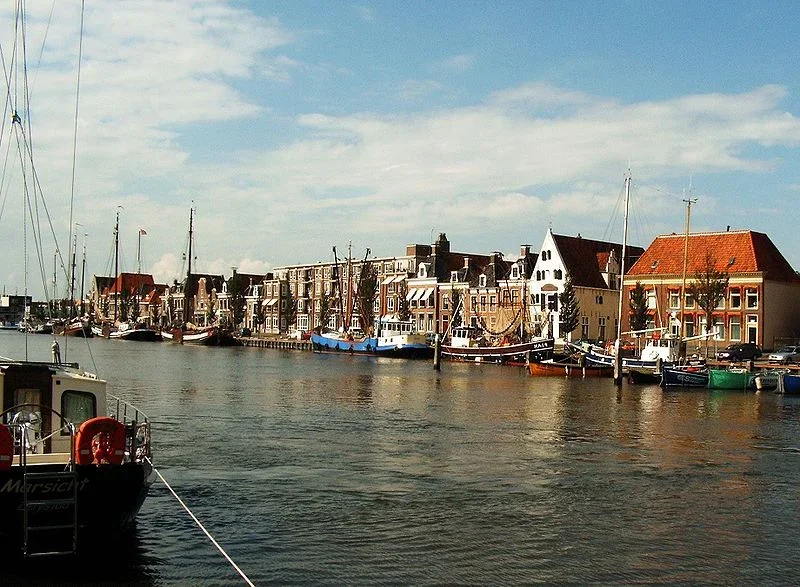
Harlingen, Friesland (a little different than how the canals look in the Valley)
By 1911 the town’s population numbered 1,126 people. Local economy was almost all agriculture, mainly producing cotton and vegetables. In the following decades, Harlingen grew into a distribution, shipping, and industrial center, conducive to its location as a crossroads.
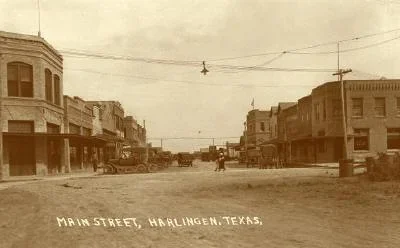
Harlingen in 1918. Photograph: www.texassoldphotos.com
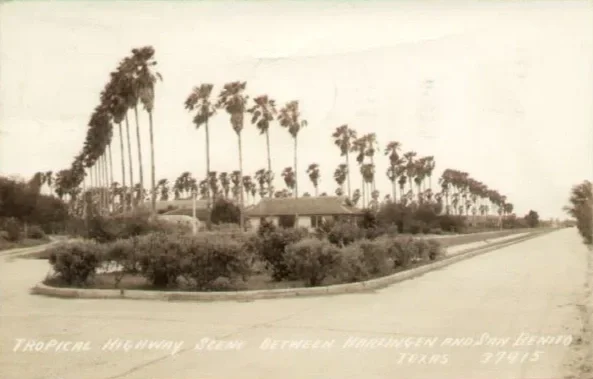
Highway between Harlingen and San Benito in 1940. Photographer: unknown.
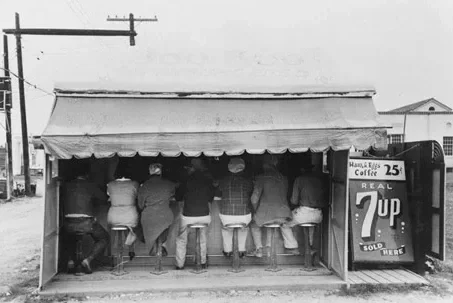
Hamburger stand in 1939. Photograph: Russell Lee.
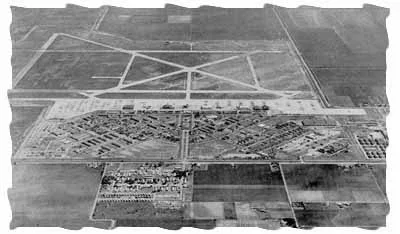
Air Force Base. Date unknown. Photograph: City of Harlingen. The base closed in 1962.
At about the beginning of WWII, Harlingen was chosen by the War Department in Washington, D.C. in 1941 as a new air-base under the U.S. Army Air Corps. It was projected to support 114 Air Corps officers, 37 arms and services officers, 1660 Air Corps enlisted men and 495 arms and services enlisted men, as well as 600 students. With the military presence, Harlingen's population rose to 23,000 by 1950.
By the 1980s Harlingen's main economy was based on citrus fruit production with tourism surprisingly second in line, with grain and cotton following. Economic development now centers around wholesale and retail trade, manufacturing and service industries, as well as large-scale construction. Today Harlingen's population is at about 65,000.
I've driven to Harlingen twice now. It did not look quite like the retro card above. Of course it has undergone four decades of change since this photograph was taken.
If you drive out of downtown, taking HW 83 west (formerly the Missouri Pacific rail line), you'll pass a huge highway interchange. Pass some mobile-home parks on your left and you'll hit Wild Bill's (you can guess what that is. Ladies' Night is Thursdays). Take a left on Paloma Lane, a quiet rural 2-way road, and to the left you'll see the La Hacienda Casitas site.
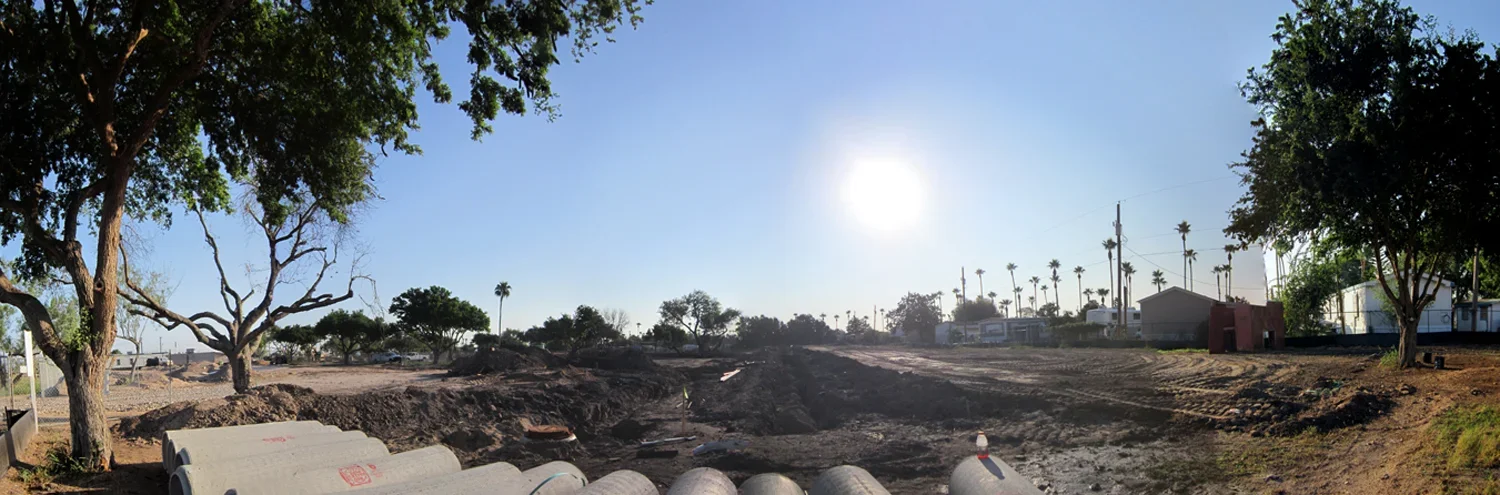
It will appear as though something used to be there, which is true. It is the previous site of 56-unit housing development built in the 1950s that had been converted from a motor court. The houses were in disrepair and removed in preparation for the La Hacienda Casitas. The landscape is now rugged, with wild grass and beautiful trees, which we have worked hard to preserve as many as possible.
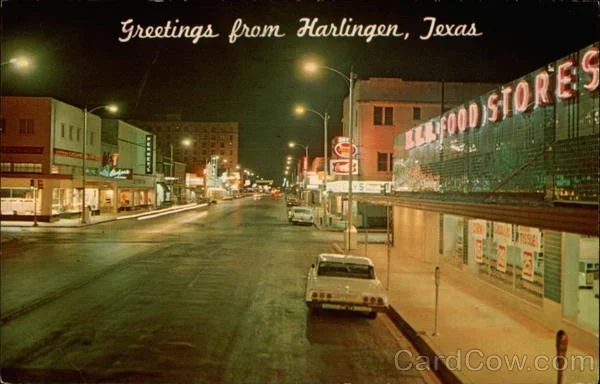
Downtown Harlingen in 1975. Photograph: Frank Whaley Postcards.
Previous site condition.
After visiting the site three times and digging deeper into the history of this project, I have a few questions:
What were the circumstances that led CDCB to this site in Harlingen?
And why did CDCB choose to do their first multi-family housing project now and in Harlingen?
How did bcWORKSHOP become partnered with CDCB?