Toolkit + LabPlanning | Storytelling
DALLAS, TX
2012-2013
The toolkit + labs is a component of the POP Dallas public design effort to strengthen our city's neighborhoods. It is a mechanism that builds collective understanding and awareness of the historical, physical and social complexities of a place and empowers people to advocate for their own cultural sustainability.When complete, the Samano Building will include a small grocery store and coffee shop on the ground floor (filling the gap in nutritious grocery access left when HEB moved from its downtown location), coworking/office spaces on the middle floor, and 34 units of affordable housing on the top floors with set-asides for citizens in transition.
Check out other projects that fall within our POP [People Organizing Place] Initiative here.
[bc] Contributors:
Diana Kichler
Adam Kerechanin
Thomas Simpson
Emily Schmidt
Matthew Weiss
Andrew Tran
Katherine Dike
Lauren Powers
Elizabeth Jones
Roger Mainor
Craig Weflen
Maria Bergh
Evan Todtz
Leslie Nepveaux
Mark Lea
Jennifer Mayfield
The toolkit is an evolving strategy for how people can become engaged with the places they live. It can be about discovering our family history, sharing stories or making a garden. The toolkit is as much a recognition of human nature as it is a strategy for building and empowering individuals. It is a recognition of the many ways we give meaning to the things around us and of the ways we strive to position ourselves in the environment.
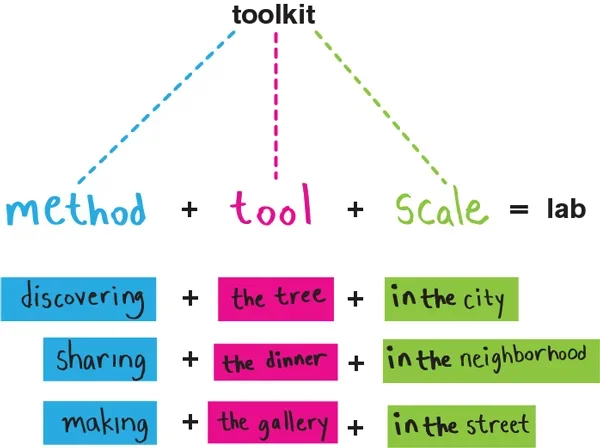
Through acts of discovering, sharing and making, the toolkit promotes engagement at the scale of the house, the street, the neighborhood and the city. Together the components build a laboratory — a living workshop — where people can begin to more clearly reveal the places they live.
UPDATES
SMU deploys POP Toolkit
June 10, 2013
In February 2013, Southern Methodist University’s Innovation Gymnasium and bcWORKSHOP began talks about a partnership to bring engineering students into neighborhoods to develop socially engaged technology solutions. The Innovation Gymnasium regularly runs Immersion Design Experiences (IDEs), intensive ten-day interdisciplinary engineering design projects for real clients that allow students to build skills with client relations, research, prototyping, finance, and marketing. During the last week of May 2013, the IDE began work within Dolphin Heights. Seven engineering students were presented with an unwieldy problem: how can you measure healthy living environment, connectivity, and cohesion, three of the Measures contained in the POP Toolkit? They brainstormed a number of possible solutions including: a wireless sensor network that could detect noise, light, weather, and air quality and relay the information to a website to host and display collected data; an interactive Neighborhood Board to display sensor-gathered data and also collect qualitative data; and a Wi-Fi bench to serve as a gathering place for the community while providing Wi-Fi to the neighborhood. Due to the budget and time constraints, the students decided to focus on producing the wireless sensor network and the website to display the collected data.
By tracking levels of sound intensity at sensors scattered throughout the neighborhood, students hypothesized that they could map movement and pinpoint circulation patterns (connectivity), gathering places (cohesion), as well as ambient noise (healthy living environment). Tracking light with photosensors at night and during the day would identify light pollution and available shade, two more components of a healthy living environment. An additional single sensor recording weather and air quality would help understand pollution (healthy living environment).
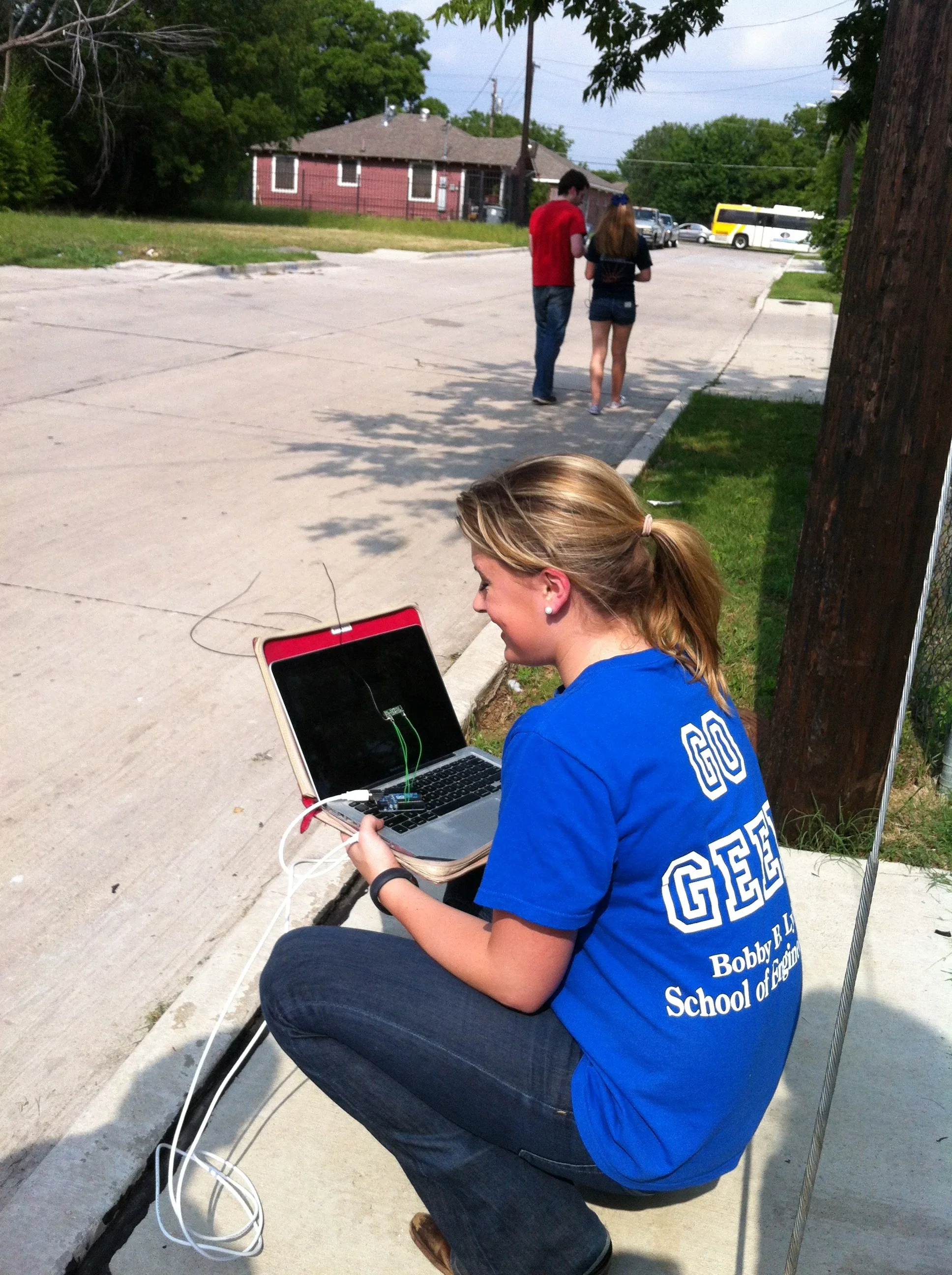
Testing sensors
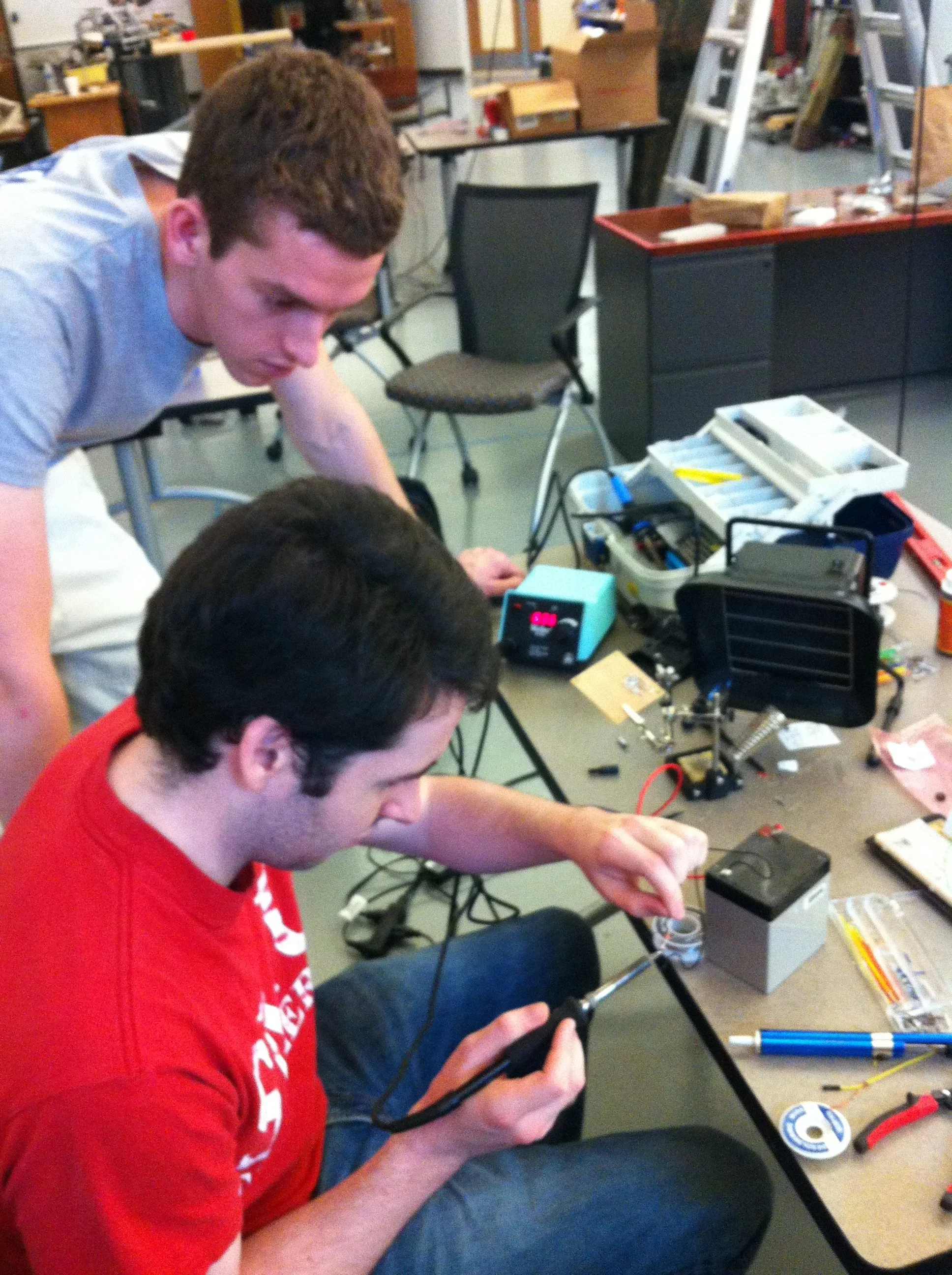
Creating power source for sensor node
In February 2013, Southern Methodist University’s Innovation Gymnasium and bcWORKSHOP began talks about a partnership to bring engineering students into neighborhoods to develop socially engaged technology solutions. The Innovation Gymnasium regularly runs Immersion Design Experiences (IDEs), intensive ten-day interdisciplinary engineering design projects for real clients that allow students to build skills with client relations, research, prototyping, finance, and marketing. During the last week of May 2013, the IDE began work within Dolphin Heights. Seven engineering students were presented with an unwieldy problem: how can you measure healthy living environment, connectivity, and cohesion, three of the Measures contained in the POP Toolkit? They brainstormed a number of possible solutions including: a wireless sensor network that could detect noise, light, weather, and air quality and relay the information to a website to host and display collected data; an interactive Neighborhood Board to display sensor-gathered data and also collect qualitative data; and a Wi-Fi bench to serve as a gathering place for the community while providing Wi-Fi to the neighborhood. Due to the budget and time constraints, the students decided to focus on producing the wireless sensor network and the website to display the collected data.
By tracking levels of sound intensity at sensors scattered throughout the neighborhood, students hypothesized that they could map movement and pinpoint circulation patterns (connectivity), gathering places (cohesion), as well as ambient noise (healthy living environment). Tracking light with photosensors at night and during the day would identify light pollution and available shade, two more components of a healthy living environment. An additional single sensor recording weather and air quality would help understand pollution (healthy living environment).
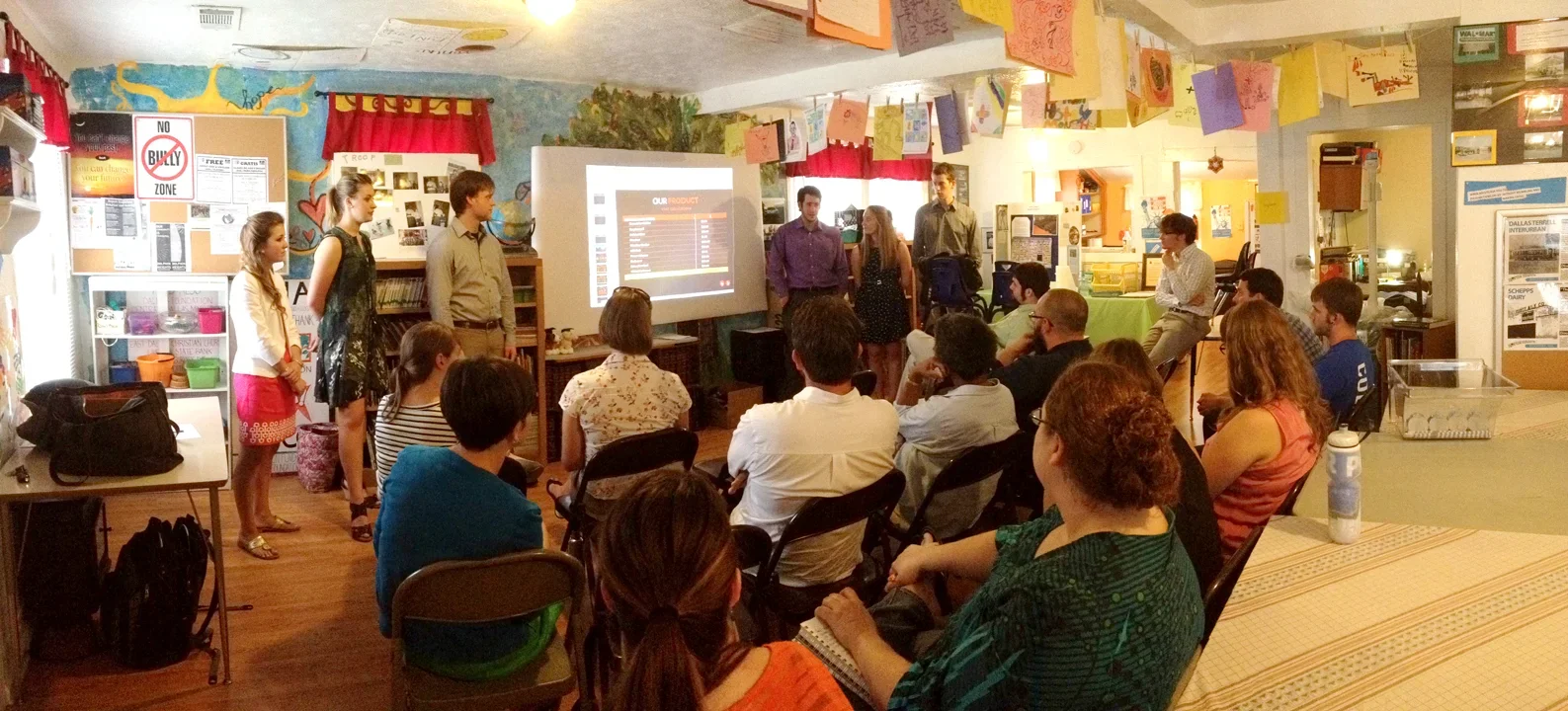
Creating power source for sensor node
In February 2013, Southern Methodist University’s Innovation Gymnasium and bcWORKSHOP began talks about a partnership to bring engineering students into neighborhoods to develop socially engaged technology solutions. The Innovation Gymnasium regularly runs Immersion Design Experiences (IDEs), intensive ten-day interdisciplinary engineering design projects for real clients that allow students to build skills with client relations, research, prototyping, finance, and marketing. During the last week of May 2013, the IDE began work within Dolphin Heights. Seven engineering students were presented with an unwieldy problem: how can you measure healthy living environment, connectivity, and cohesion, three of the Measures contained in the POP Toolkit? They brainstormed a number of possible solutions including: a wireless sensor network that could detect noise, light, weather, and air quality and relay the information to a website to host and display collected data; an interactive Neighborhood Board to display sensor-gathered data and also collect qualitative data; and a Wi-Fi bench to serve as a gathering place for the community while providing Wi-Fi to the neighborhood. Due to the budget and time constraints, the students decided to focus on producing the wireless sensor network and the website to display the collected data.
By tracking levels of sound intensity at sensors scattered throughout the neighborhood, students hypothesized that they could map movement and pinpoint circulation patterns (connectivity), gathering places (cohesion), as well as ambient noise (healthy living environment). Tracking light with photosensors at night and during the day would identify light pollution and available shade, two more components of a healthy living environment. An additional single sensor recording weather and air quality would help understand pollution (healthy living environment).
POP Measures & Tools
June 6, 2013
The last POP Toolkit post, in March, mentioned we were looking for a neighborhood to partner with us to Pilot the Toolkit. We found that partner in the Mill City neighborhood, but what has happened in the meantime? Making that announcement revealed to us how much more work still needed to be done -- refining our product and engagement, yes, but also our project definitions.
We had figured out what the Toolkit was and how it worked, but not how to explain it. Our (self-described) “fun and engaging process” was clumsy and awkward to explain or facilitate. We had to go back to the drawing board, where we had long ago stated that the POP Toolkit would structure, visualize, and organize grassroots planning. These principles neatly organize the pieces and parts that make up the Toolkit Process.
The Toolkit structures change by challenging stakeholders to declare a scale of intervention, whether it be the house, the street, the neighborhood or the city. This identifies expectations, a potential audience, and stakeholders.
Livability Measures and Engagement Tools
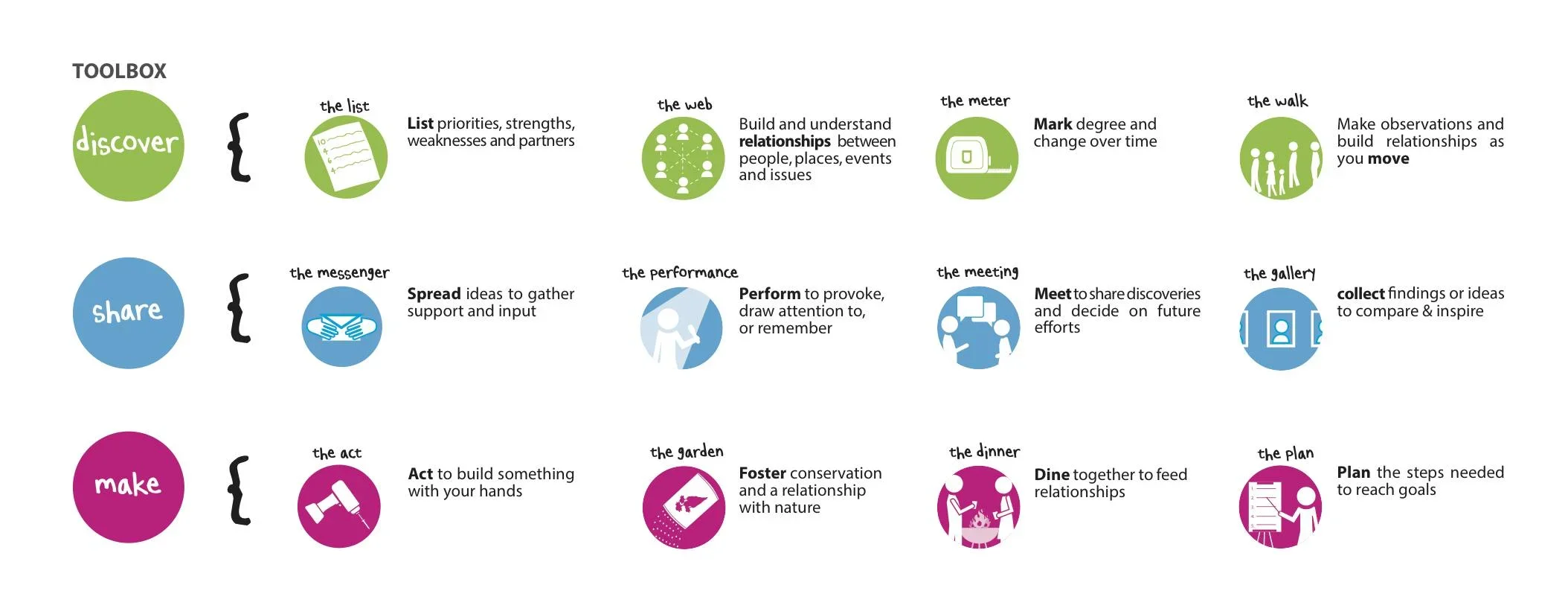
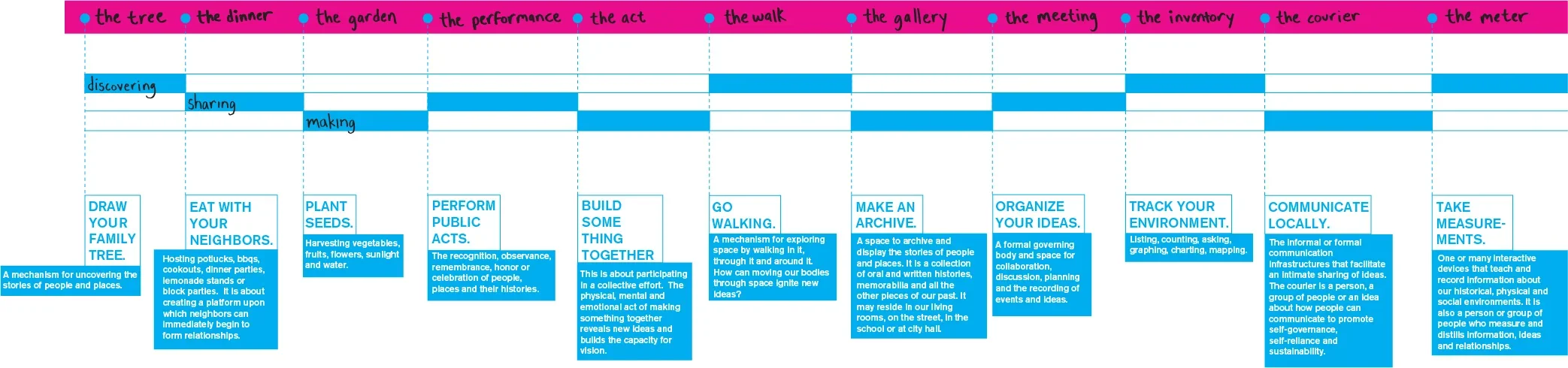
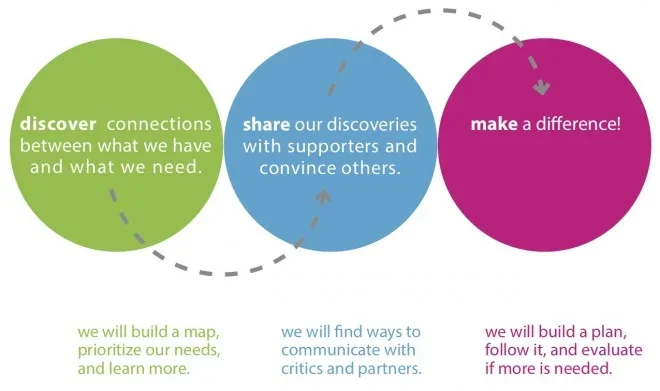
Finally, the Toolkit organizes change through twelve Engagement Tools: strategies to convert everyday activities into activism. These are split into three Methods which provide a flexible guide to planning Workshops. The Walk, Meter, List or Web lend themselves to discovering Connections. The Messenger, Gallery, Performance or Meeting are good strategies to share those discoveries. The Act, Garden, Dinner and Plan make a difference. All of the Tools should be used with reflection to deepen the impact and understanding of each step.
The POP Toolkit is, at it's simplest, a way to deploy design thinking as a community organizing Tool. It reflects the process we at bcWORKSHOP use in all our design and making, and puts those skills in neighbor's hands to expand the impact we can make together.
The Toolkit visualizes change by establishing baseline conditions, contributing factors, and possible solutions to neighborhood concerns. These neighborhood concerns helped us filter global livability research into eight Measures of Livability. The Measures are Density, Form, Use vs. Entitlement, Ownership, Healthy Living Environment, Connectivity, Safety and Cohesion.
Activity Book Launch
March 28, 2013
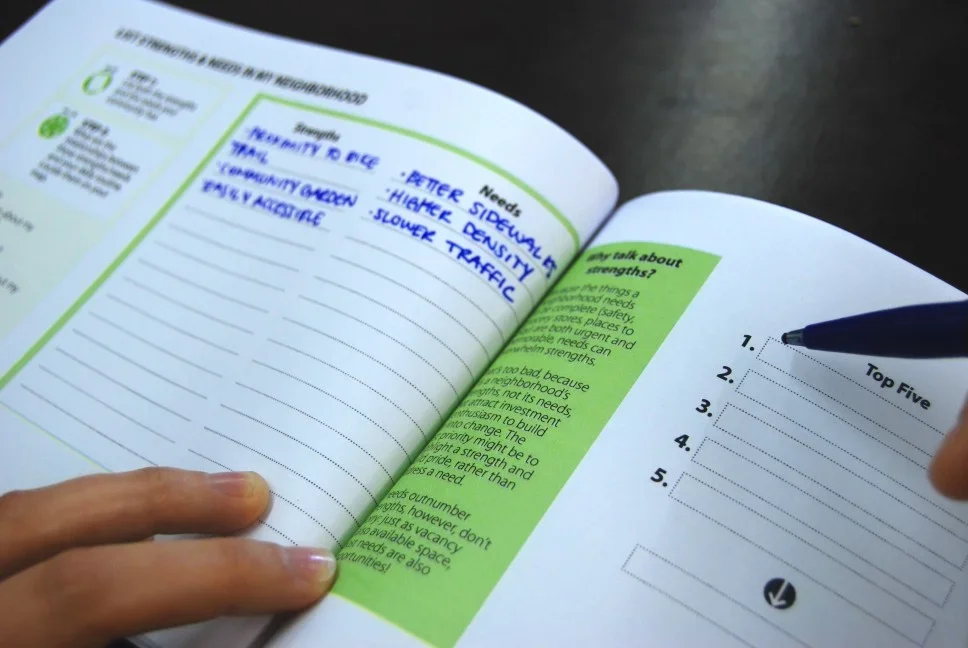
The POP [People Organizing Place] Dallas Toolkit is an ongoing initiative that provides citizens with a common language and set of tools to gather neighborhoods around creating a vision & organizing community change. bcWORKSHOP is excited to announce the POP Toolkit Activity Book coming soon to a neighborhood near you! To participate in the pilot, you will need to gather an inclusive group of neighborhood stakeholders that will commit to seeking positive change guided by four meetings with bcWORKSHOP.
During the first meeting, bcWORKSHOP will help you collectively map and prioritize the issues and assets that sustain your neighborhood. This is used in the second meeting to generate a prioritized list of goals, which you will discover more about by building a Workshop around a Tool. The third meeting with bcWORKSHOP moves from reflection on discoveries to identifying partners and an audience to help reach your goal. You will build a second workshop around another Tool to share your goal with this audience. The last meeting with bcWORKSHOP helps identify and plan how a change will be made once the issue is understood and partners are gathered.
The Toolkit is a resource for neighborhoods in Dallas (and potentially beyond)! It teaches design thinking in the form of Tools that engage creative problem solving and Metrics that identify and compare outcomes. If your neighborhood is interested in exploring your assets and issues through the Toolkit, please be in touch!
TEDx SMU + TEDx Kids
December 4, 2012
On November 30 and December 1, 2012, bcWORKSHOP was invited to participate in the TEDxKids @ SMU (a special TED event for local middle school students) and TEDxSMU conferences to showcase our POP [People Organizing Place] Dallas initiative. Now in its fourth year, TEDxSMU brought a multitude of creative thinkers to the City Performance Hall in the Arts District to share and discover innovative ideas in technology, entertainment and design.
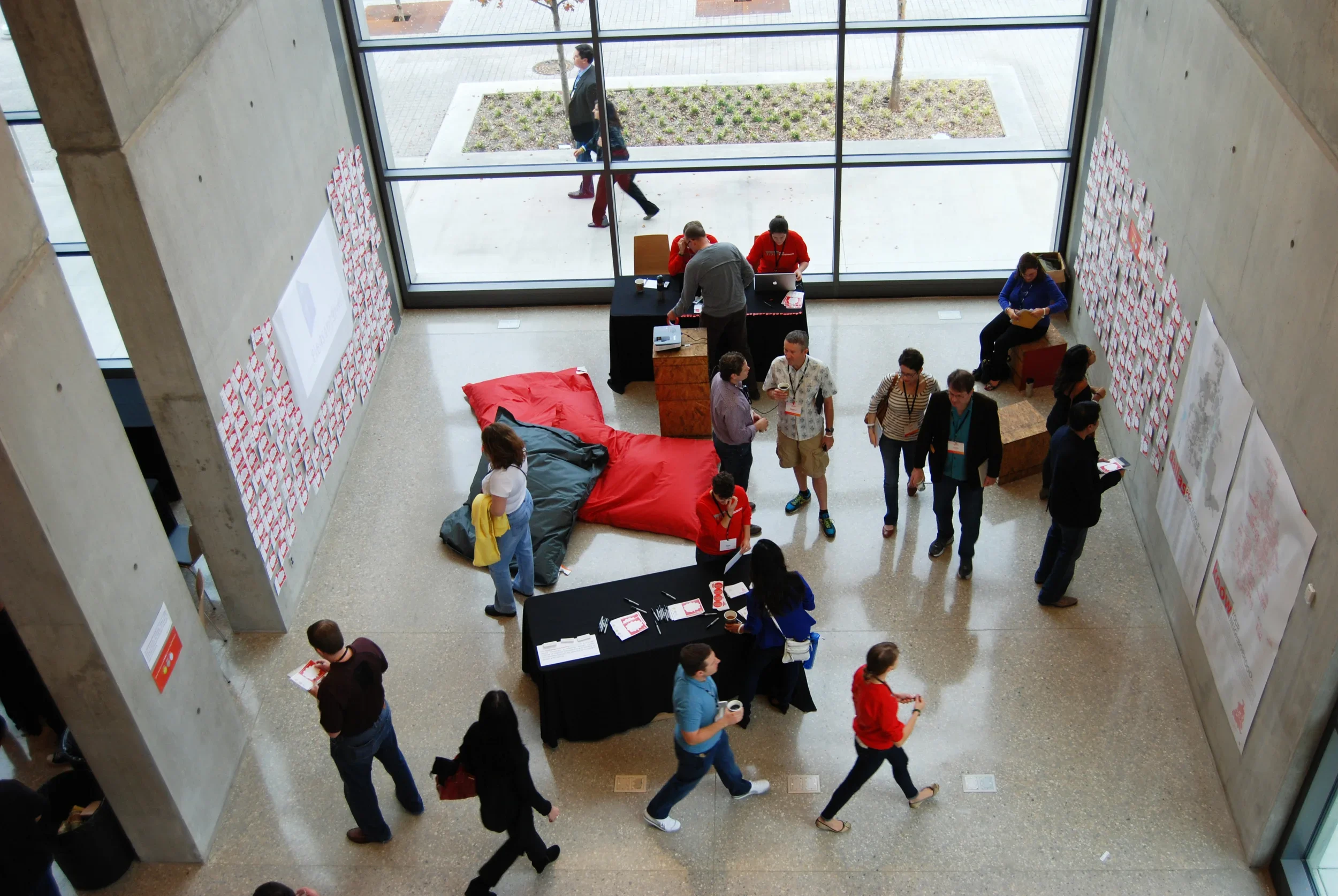
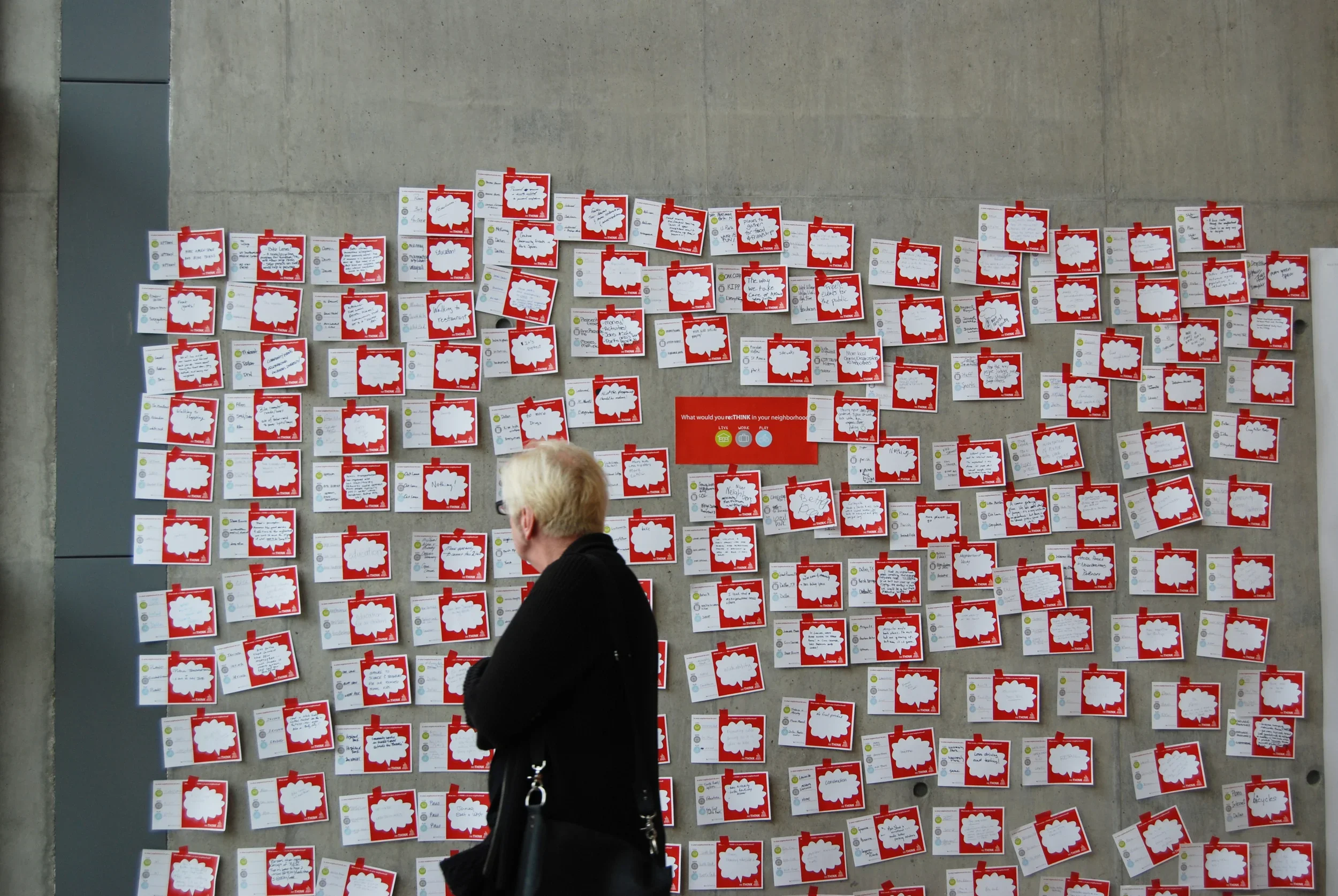
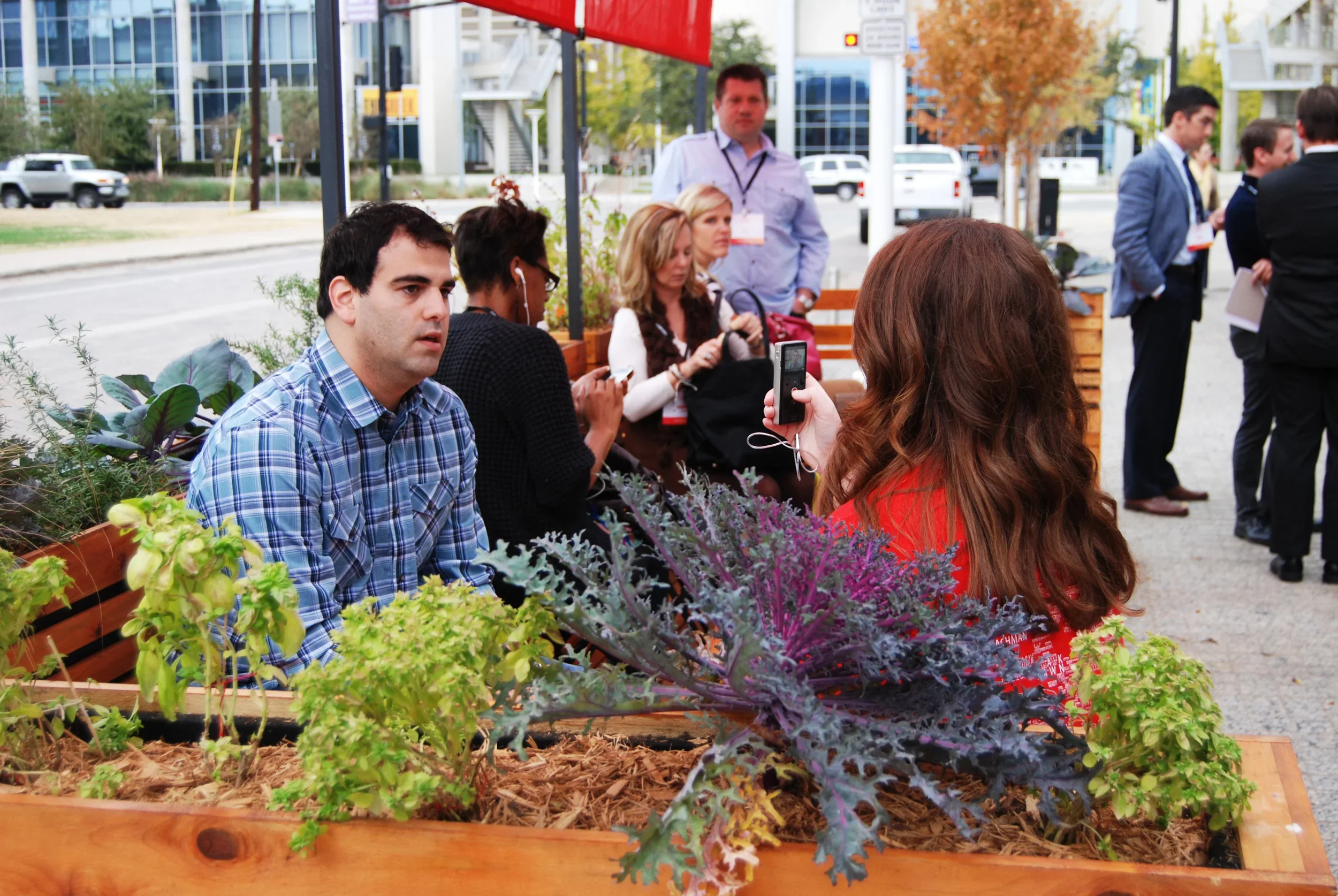
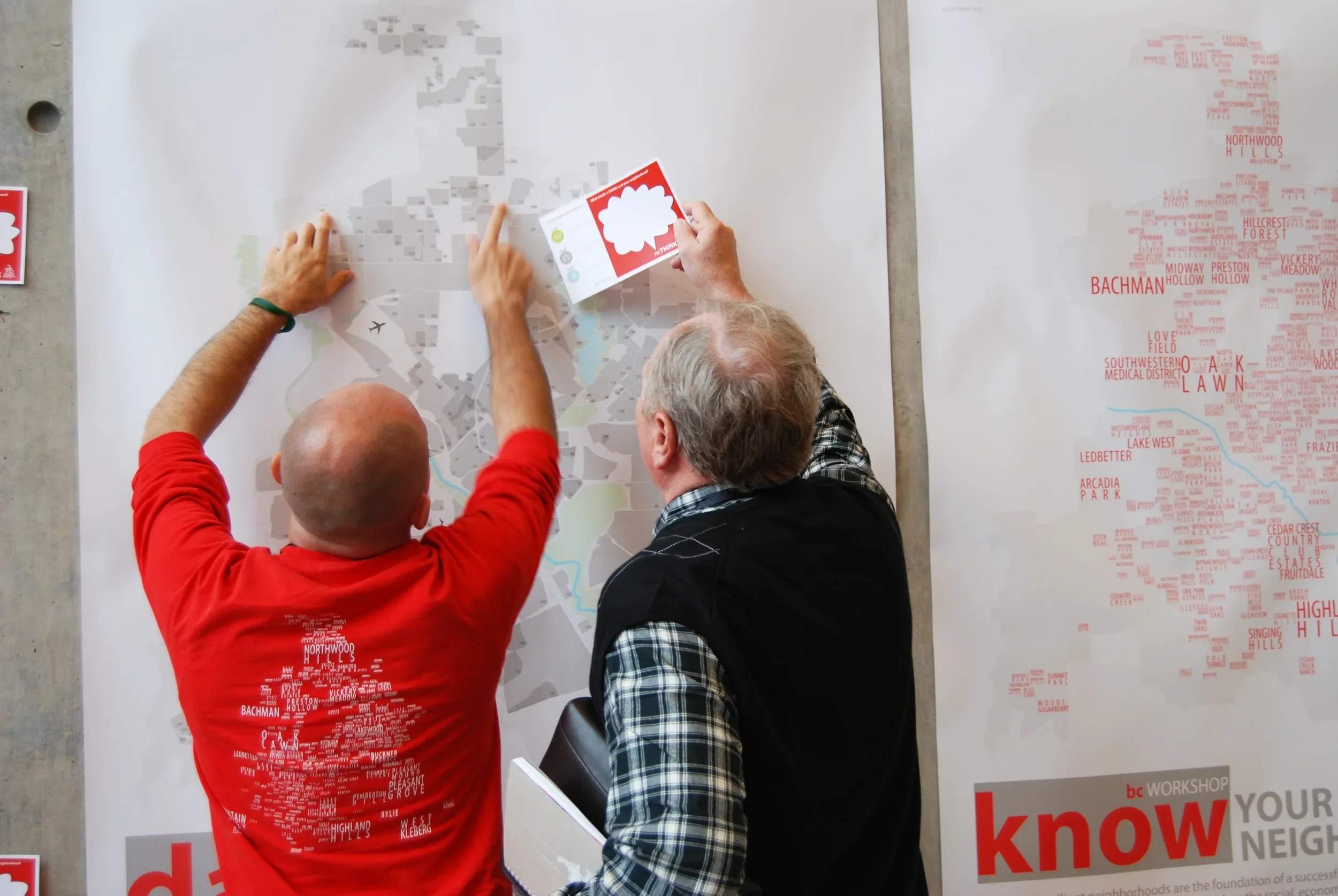
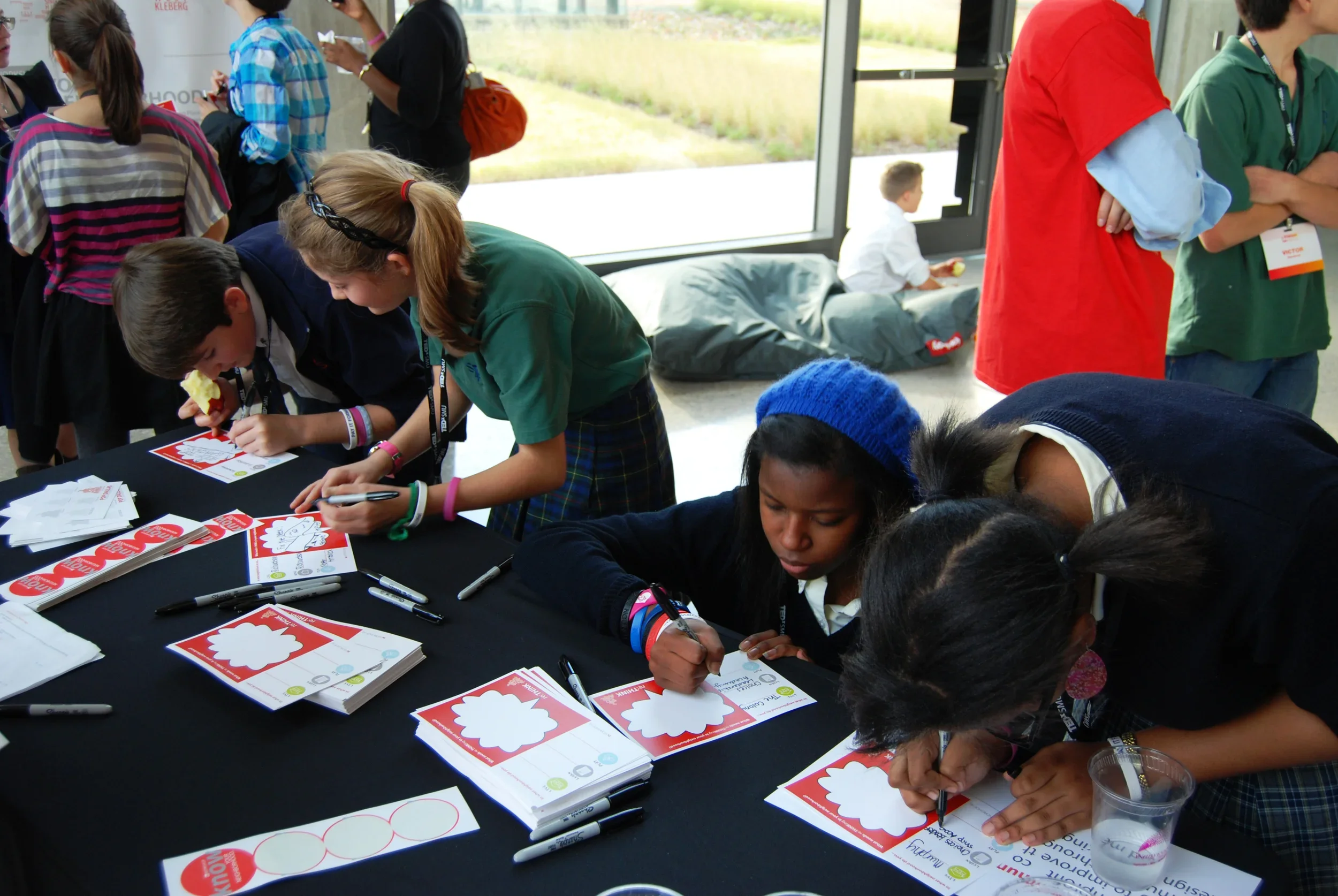
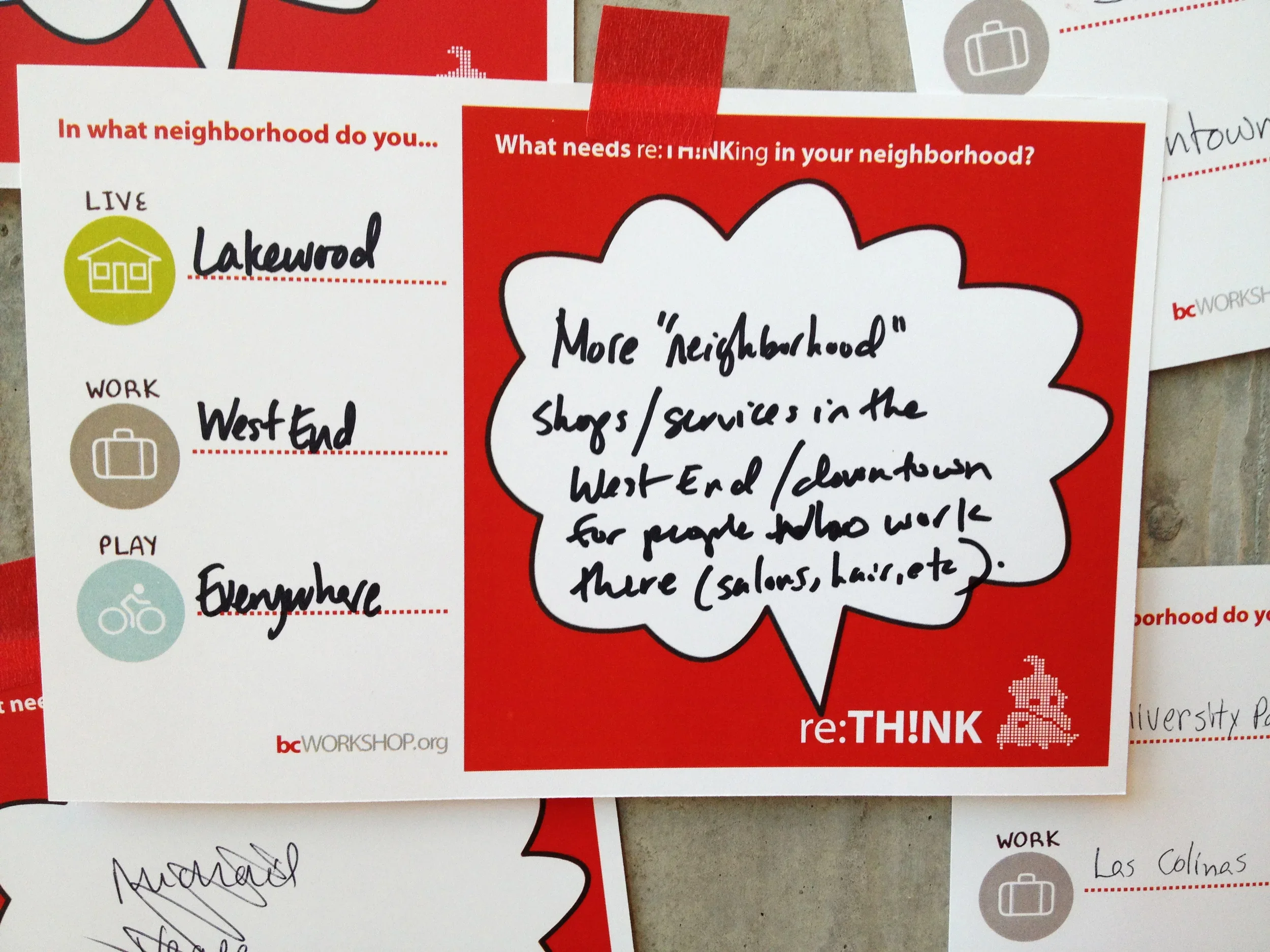
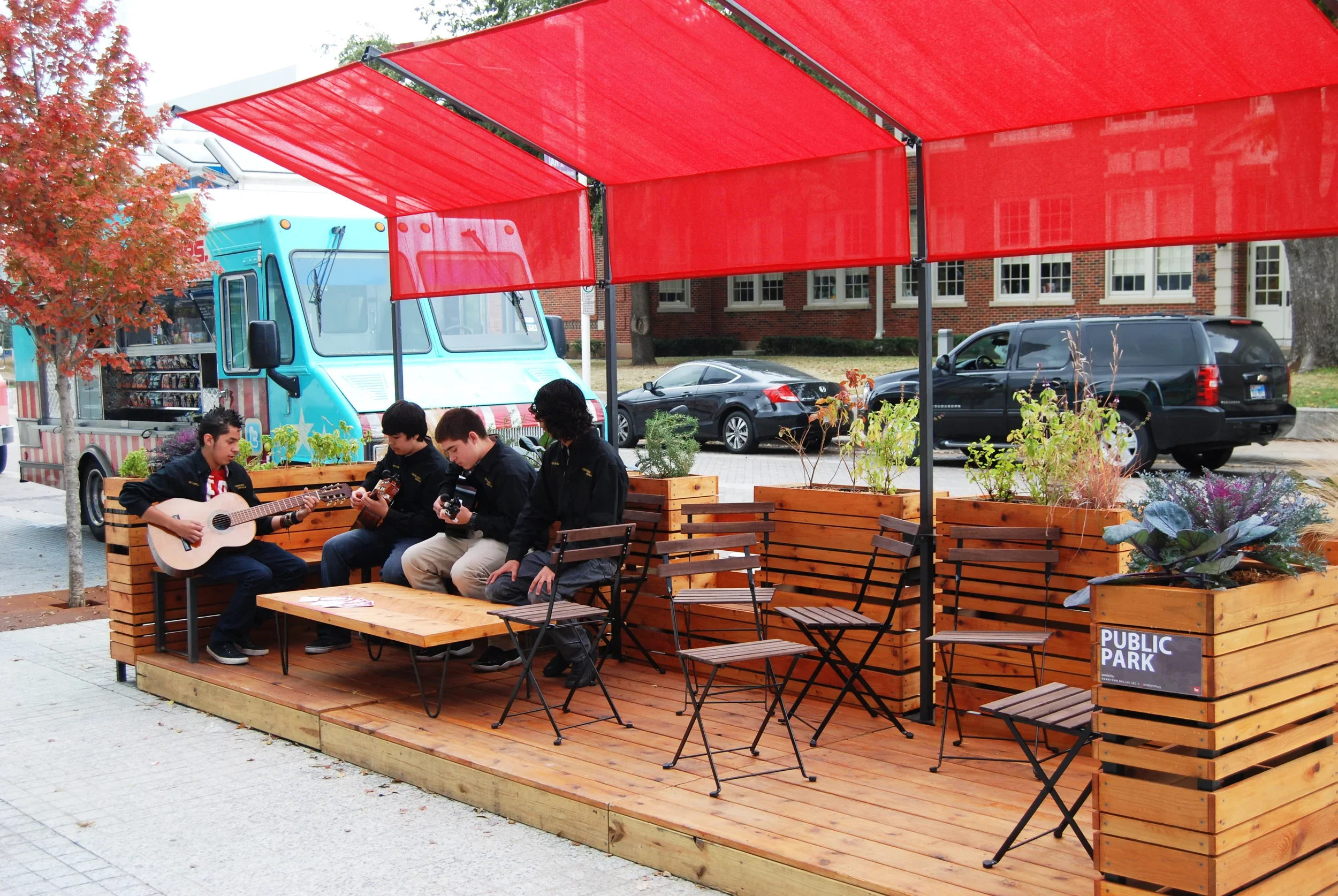
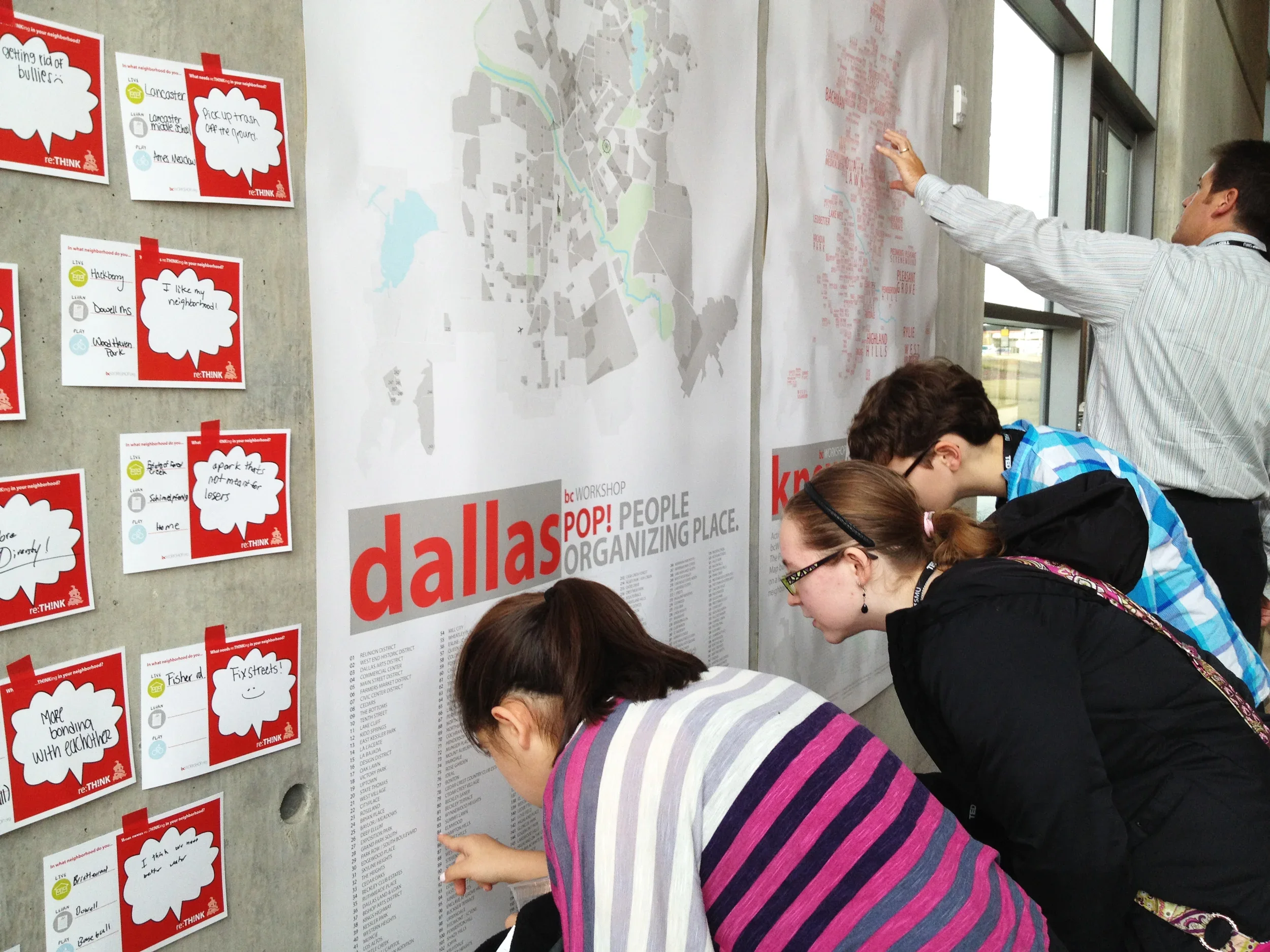
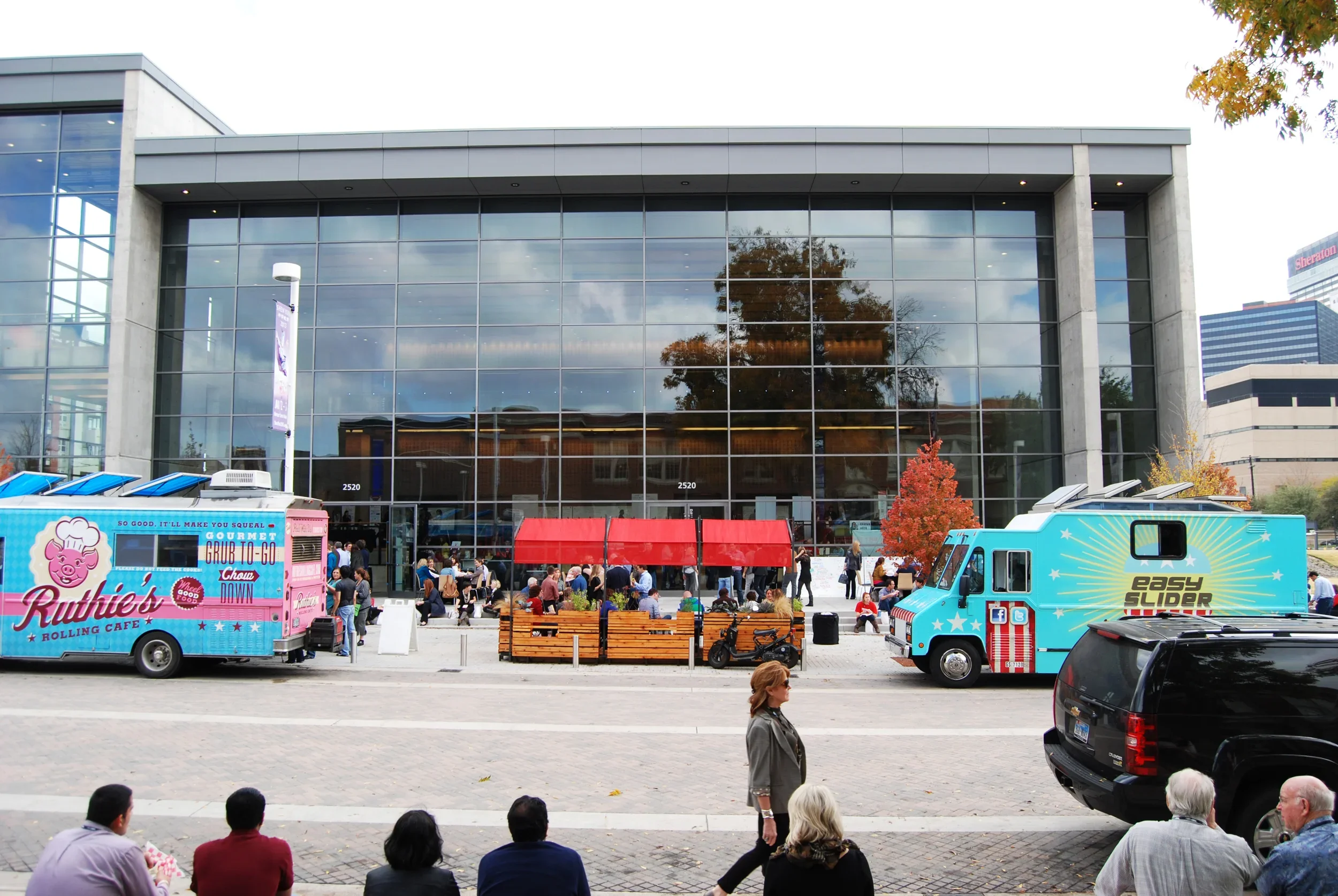
Following the conference's theme of re:TH!NK, over 400 attendees on both days shared their ideas for re-thinking the neighborhoods where they live, learn, work and play through activity cards, video interviews and good old-fashioned conversation. During the day, bcWORKSHOP created a compilation of Neighborhood Stories collected throughout the conference as well as a map of representing attendees' neighborhoods, which was screened at the end of the conference.
Conference participants were eager to share ideas for their own neighborhoods and absorb the ideas shared by others from around the city. With the POP City Map as a guide, attendees left armed with a strengthened understanding and commitment to place-making in Dallas.
Denton Neighborhood Empowerment Summit
November 9, 2012
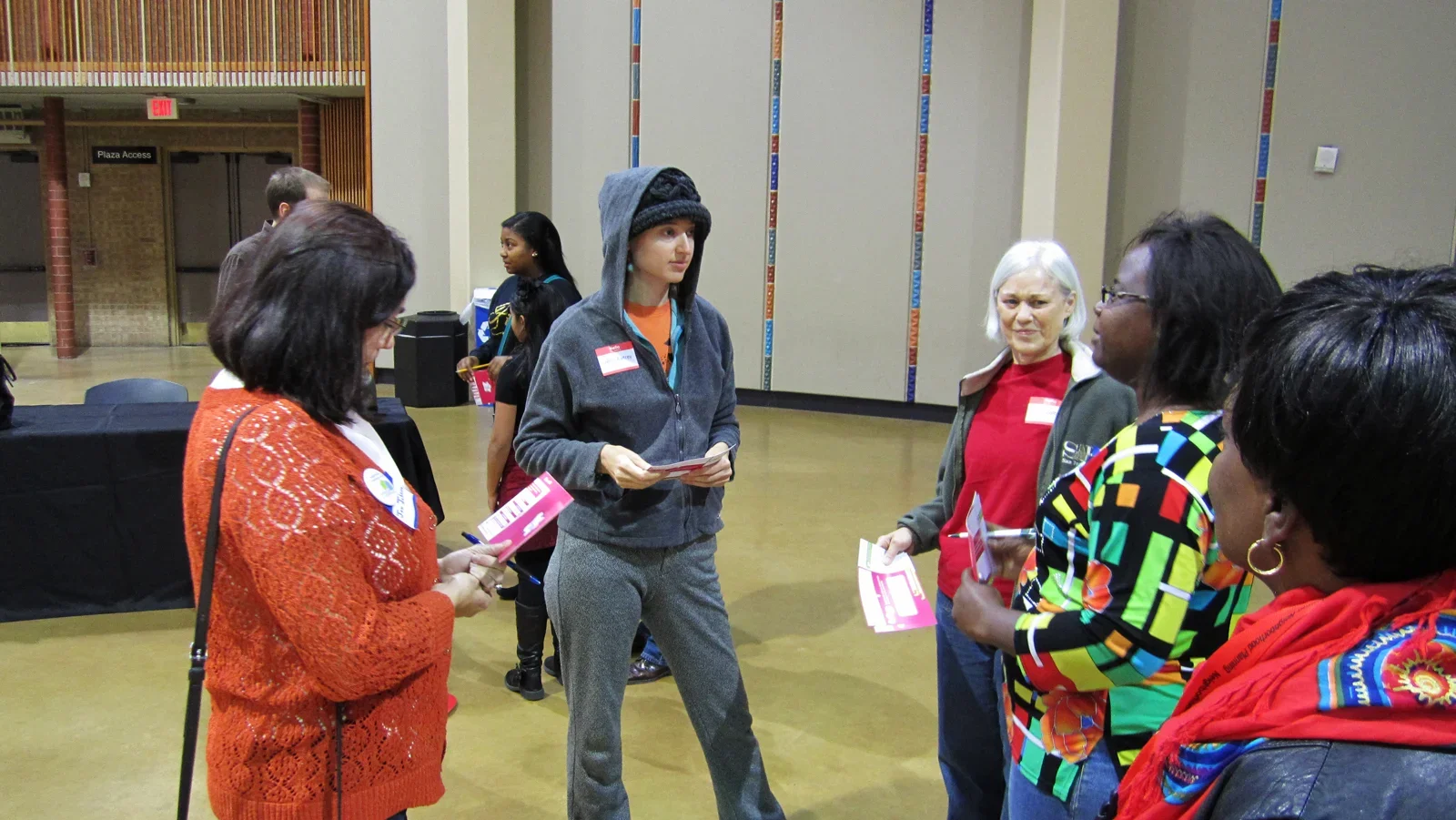
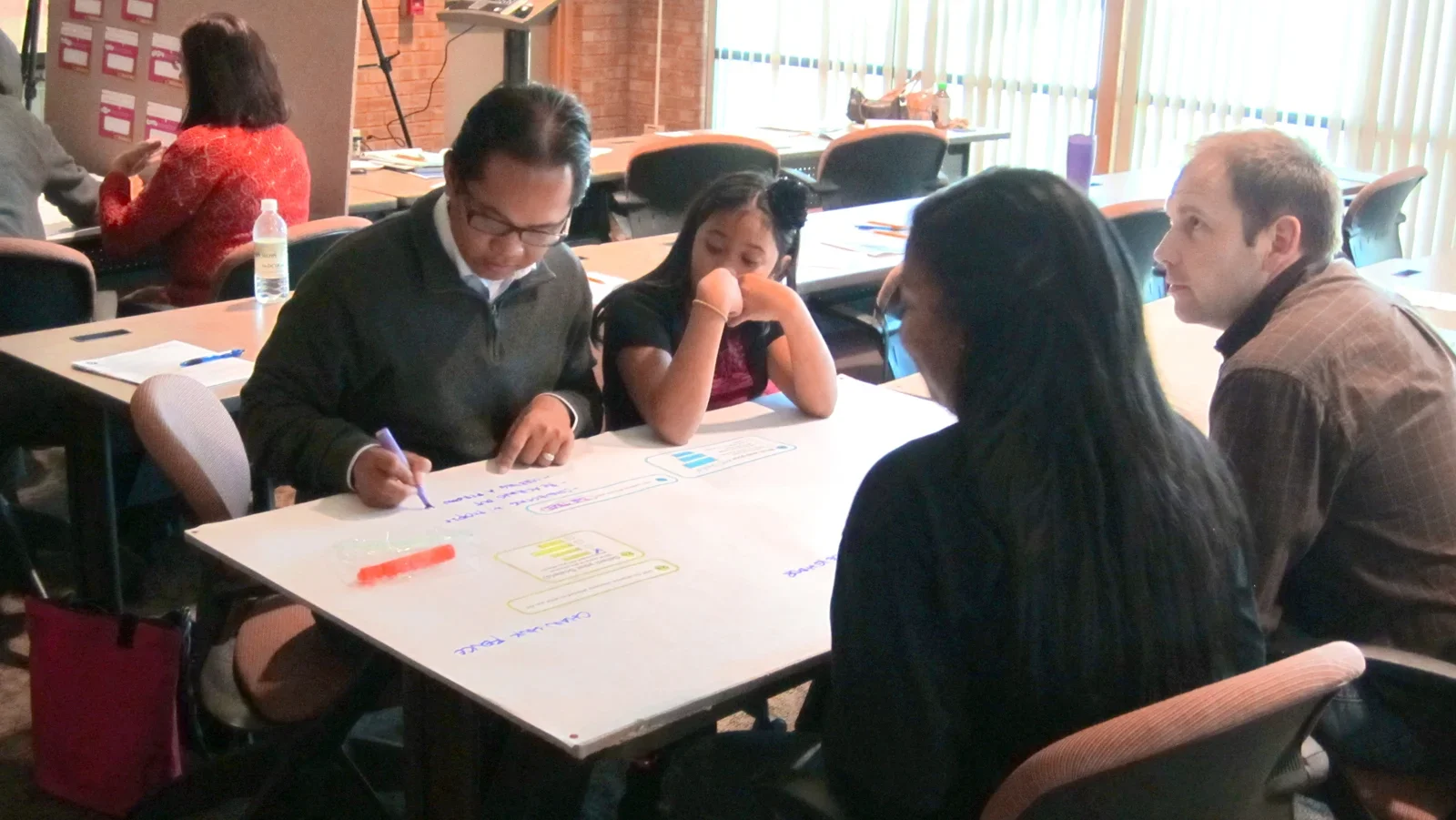
On October 27, 2012, bcWORKSHOP supported the City of Denton Neighborhood Planning Program's efforts to provide residents with tools to affect positive change in their neighborhoods by engaging them with the POP [People Organizing Place] Dallas Toolkit at the fourth annual Neighborhood Empowerment Summit.
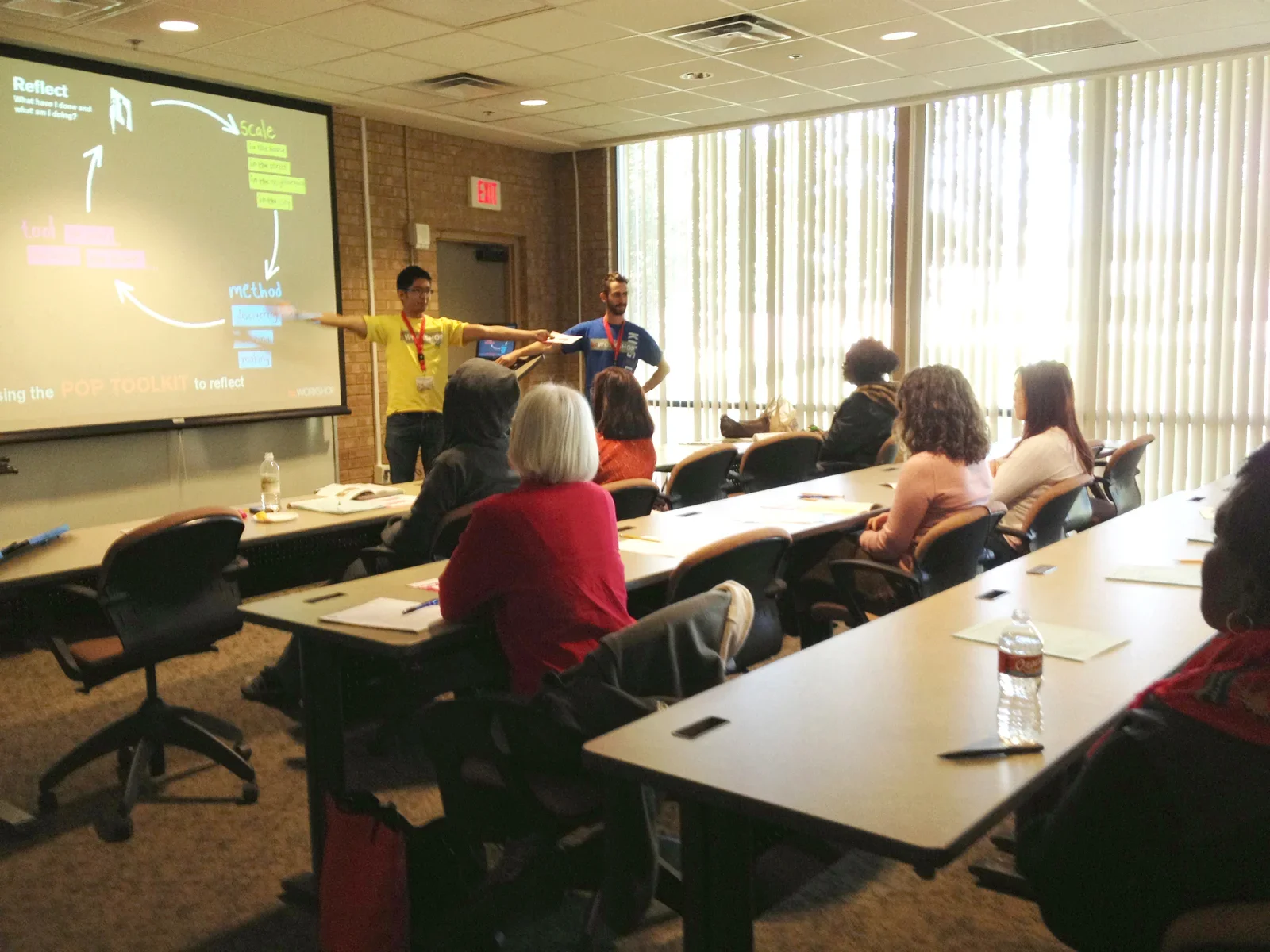
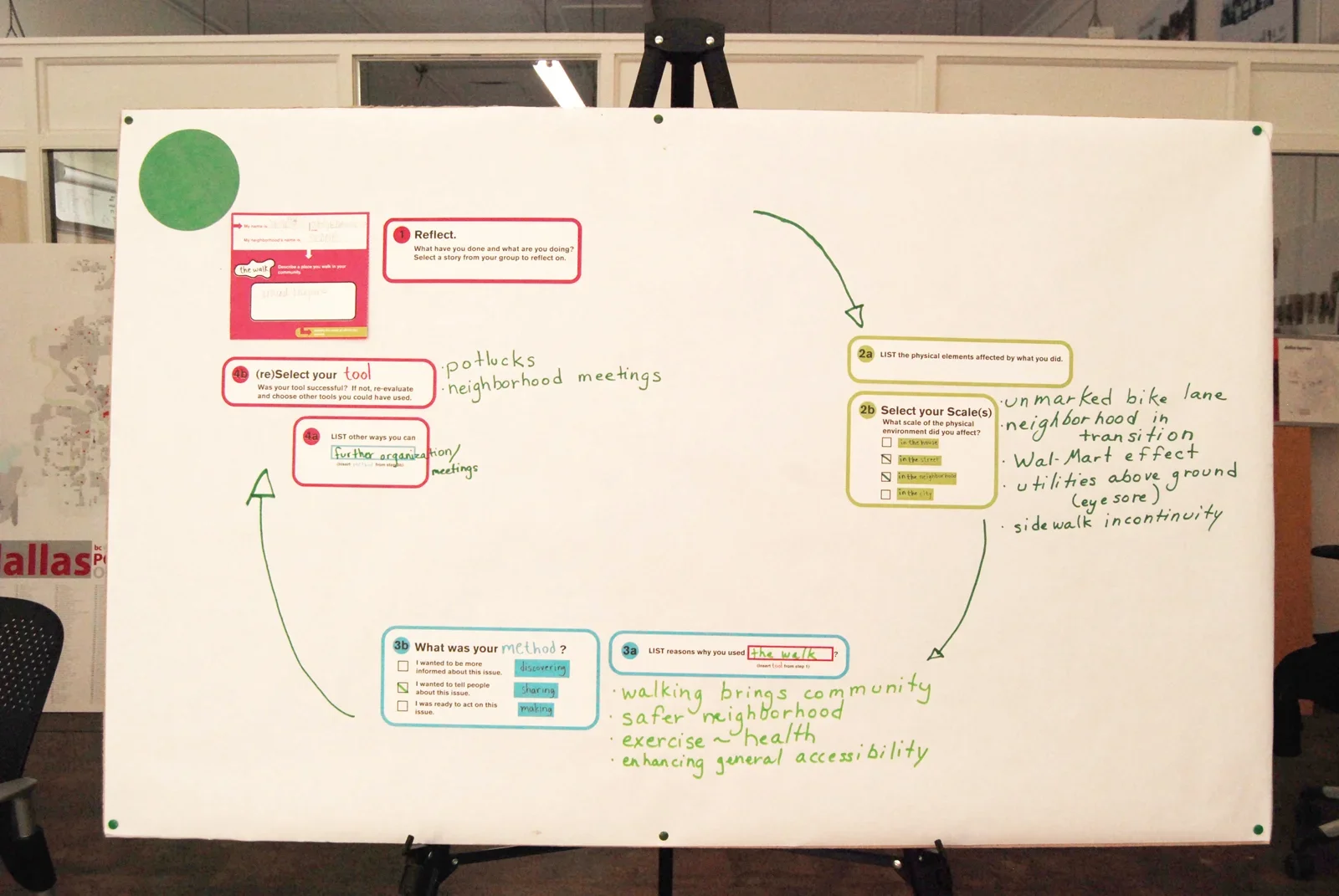
Local advocates first learned about the Toolkit as a common language that guides people in understanding their physical and social environments, as well as provides them with tools to position themselves as effective advocates for change. Next, the participants had to critically reflect on what they had done and were already doing in their neighborhood, allowing them to develop an informed strategy for advancing their interests.
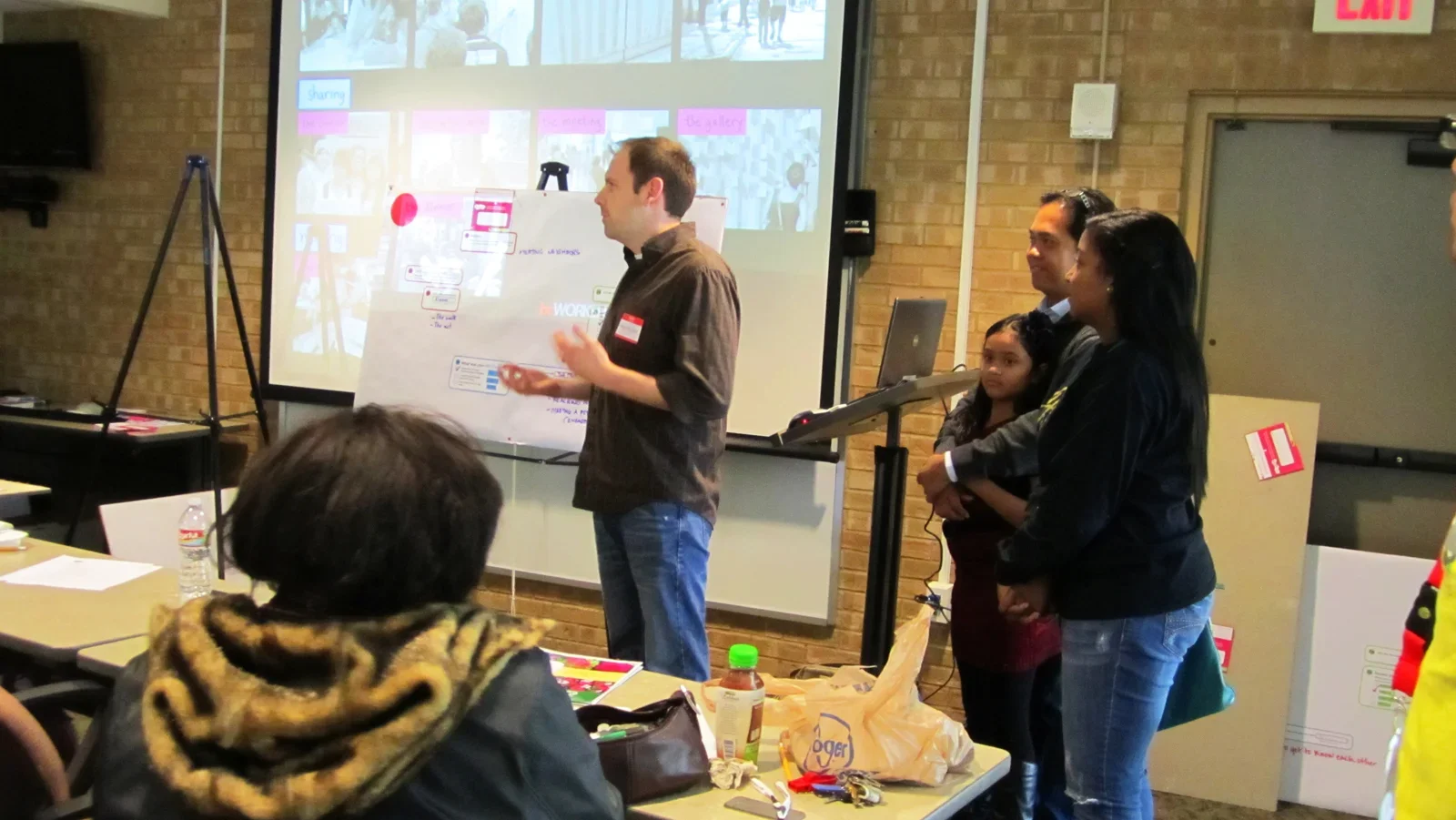
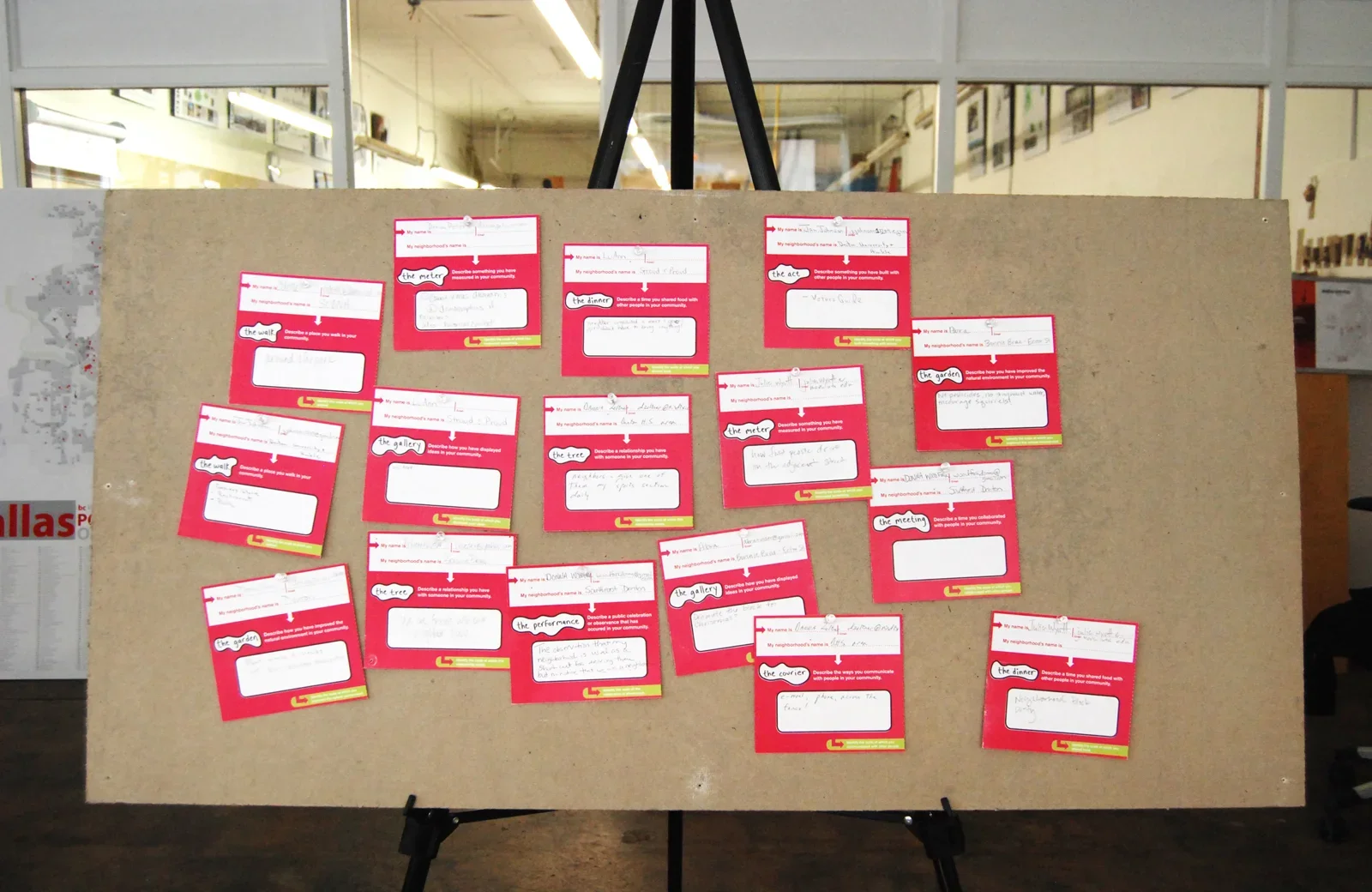
The Toolkit requires active engagement, so bcWORKSHOP challenged participants to critically reflect on their daily behavior through several high-energy activities. They were first given cards on which they wrote stories of what they have done in their communities related to a specific tool, and shared these stories in small groups. In the same groups, they collectively chose one tool for a reflection exercise. Group members were responsible for dissecting the story using the Toolkit’s four-step process by identifying the scale, naming the method used, and evaluating the tool's success. The exercise generated productive dialogue, as groups discussed other tools that could be more effective and how their relationship with the physical environment influenced their actions.
To emphasize that sharing ideas and stories is an integral part of the Toolkit, bcW concluded the session by having each group not only present their discussion, but also defend the reasons their tool was appropriate for discovering, sharing, or making.
Homeowners Bootcamp
September 7, 2012
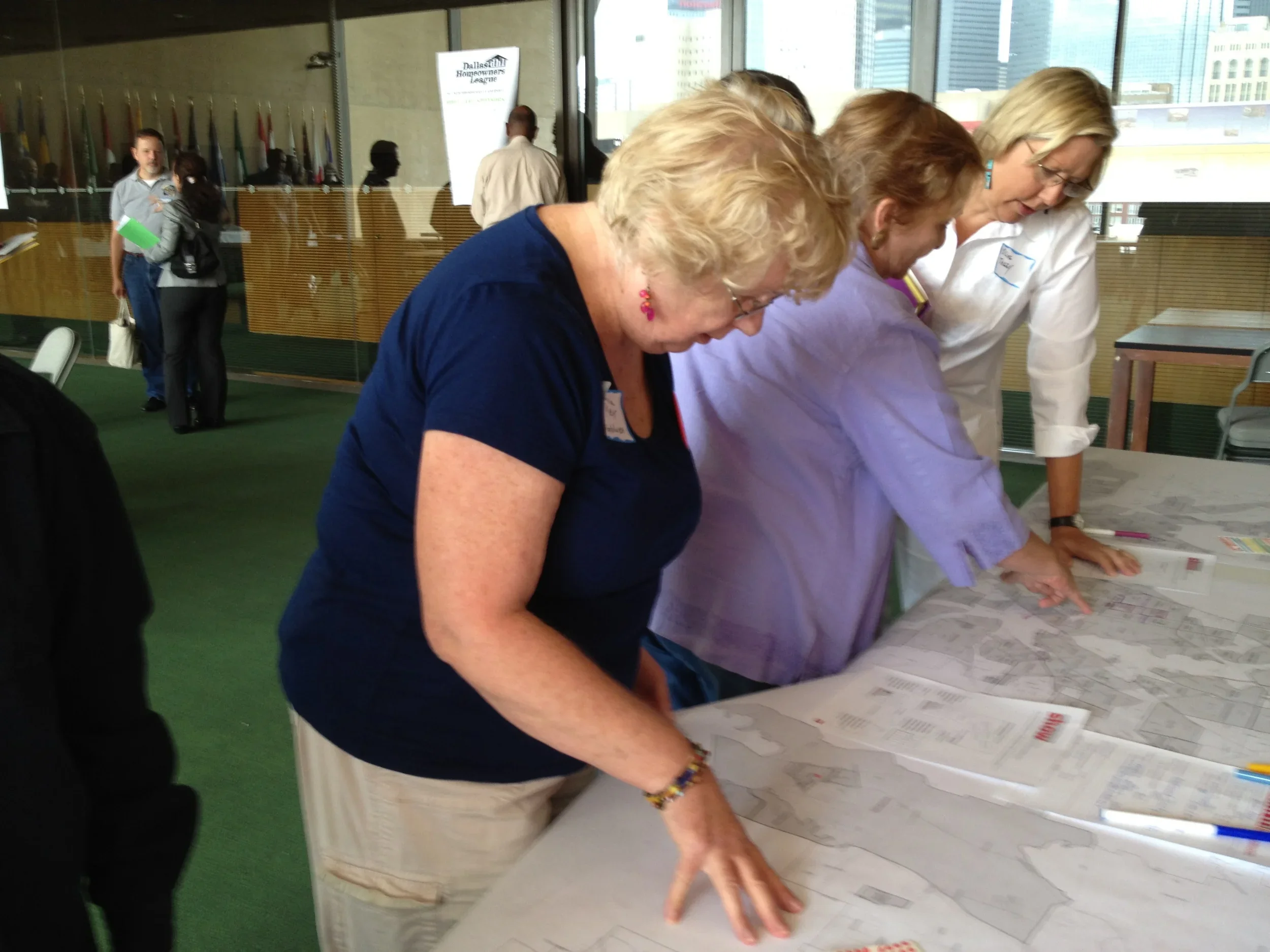
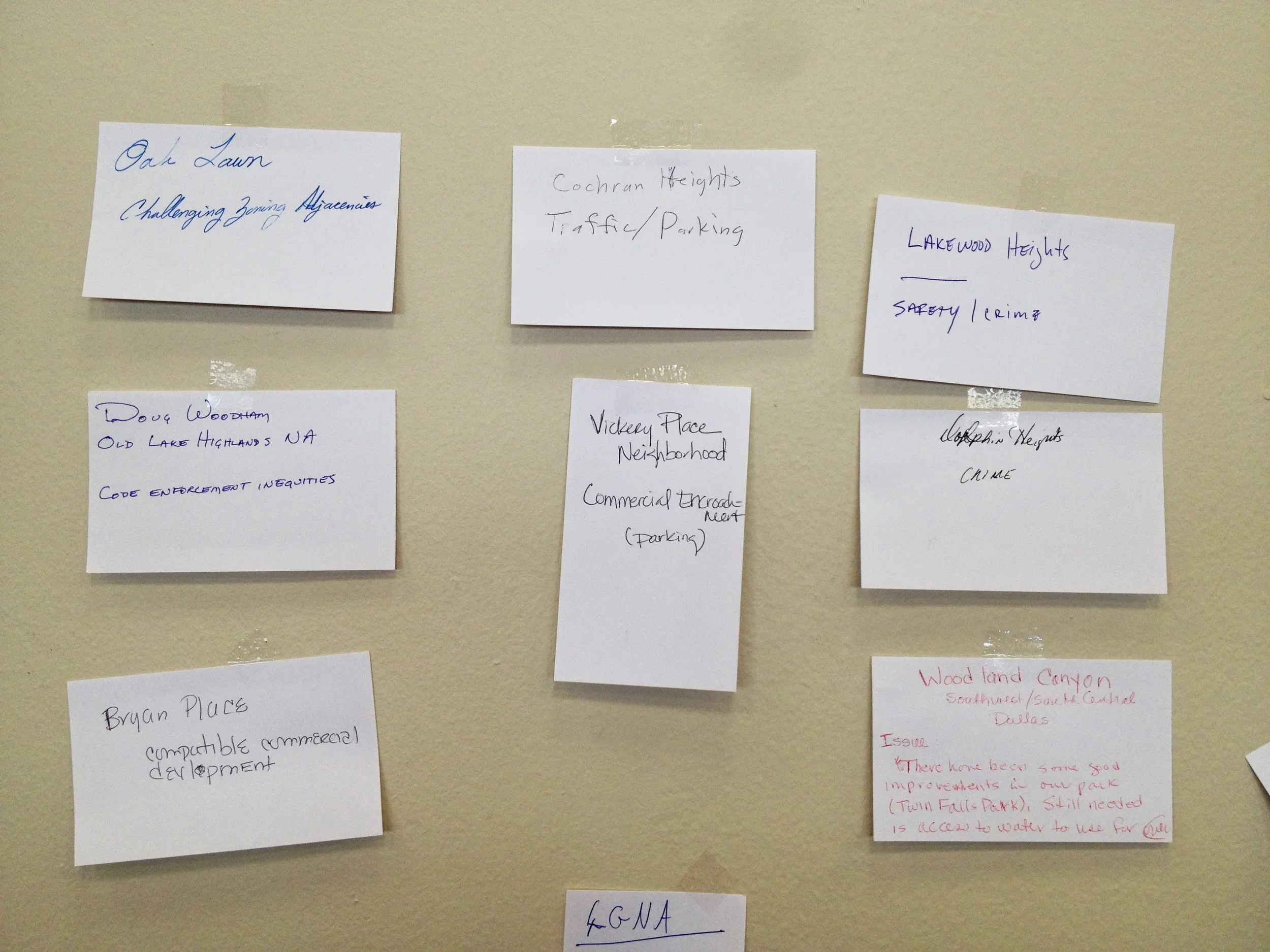
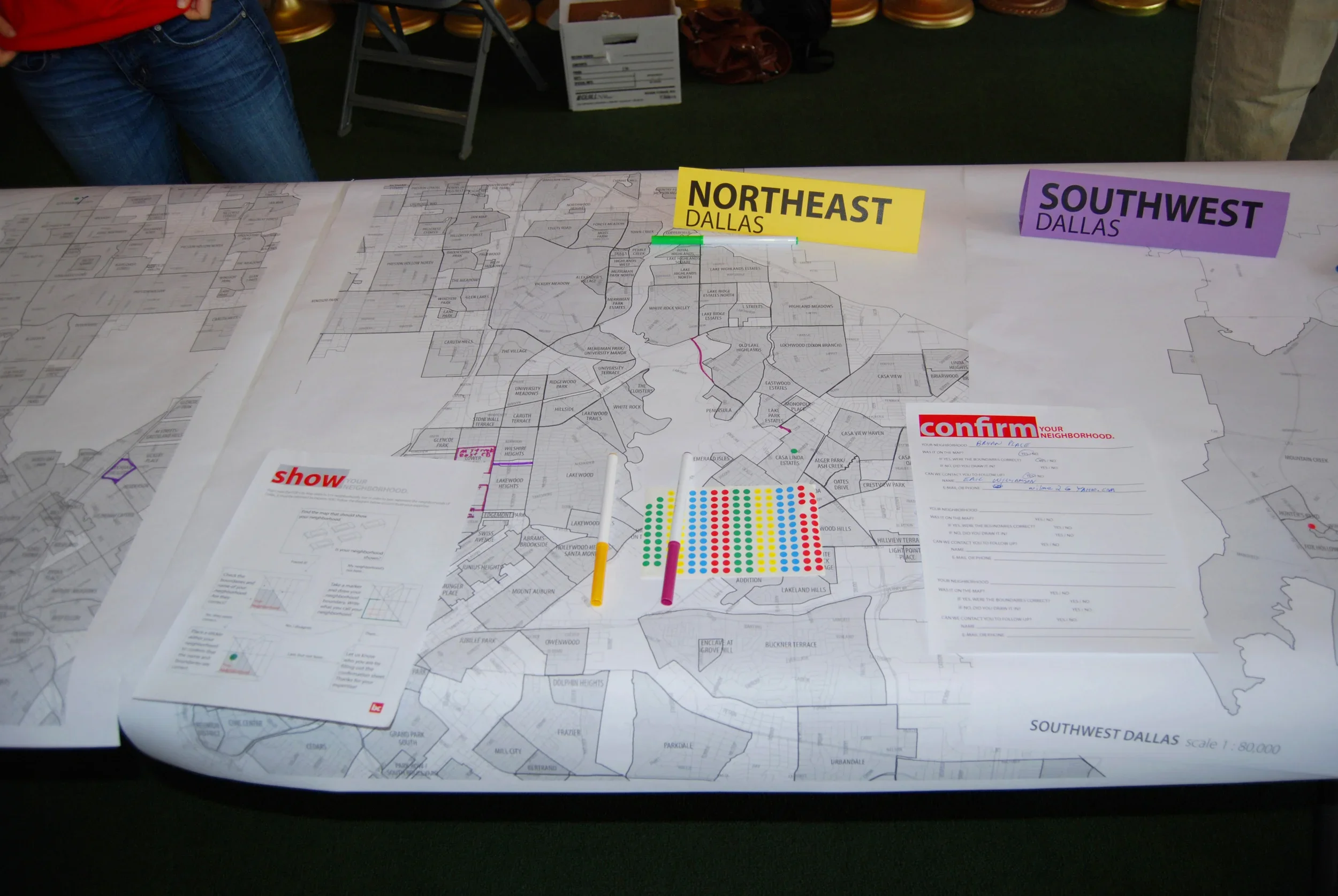
As a continued effort to strengthen the social, economic, and physical health of Dallas’s neighborhoods, bcWORKSHOP brought the POP [People Organizing Place] Dallas initiative to the 14th annual Dallas Homeowners' League (DHL) Neighborhood Bootcamp at City Hall on Saturday, August 25. Bringing together community leaders in an exchange of ideas for the betterment of Dallas's neighborhoods, DHL invited bcW to share three elements of POP: a workshop that introduced and applied the POP Toolkit; the confirmation, adjustment and addition of neighborhood names and boundaries to the POP City Map; and the collection of Neighborhood Stories.
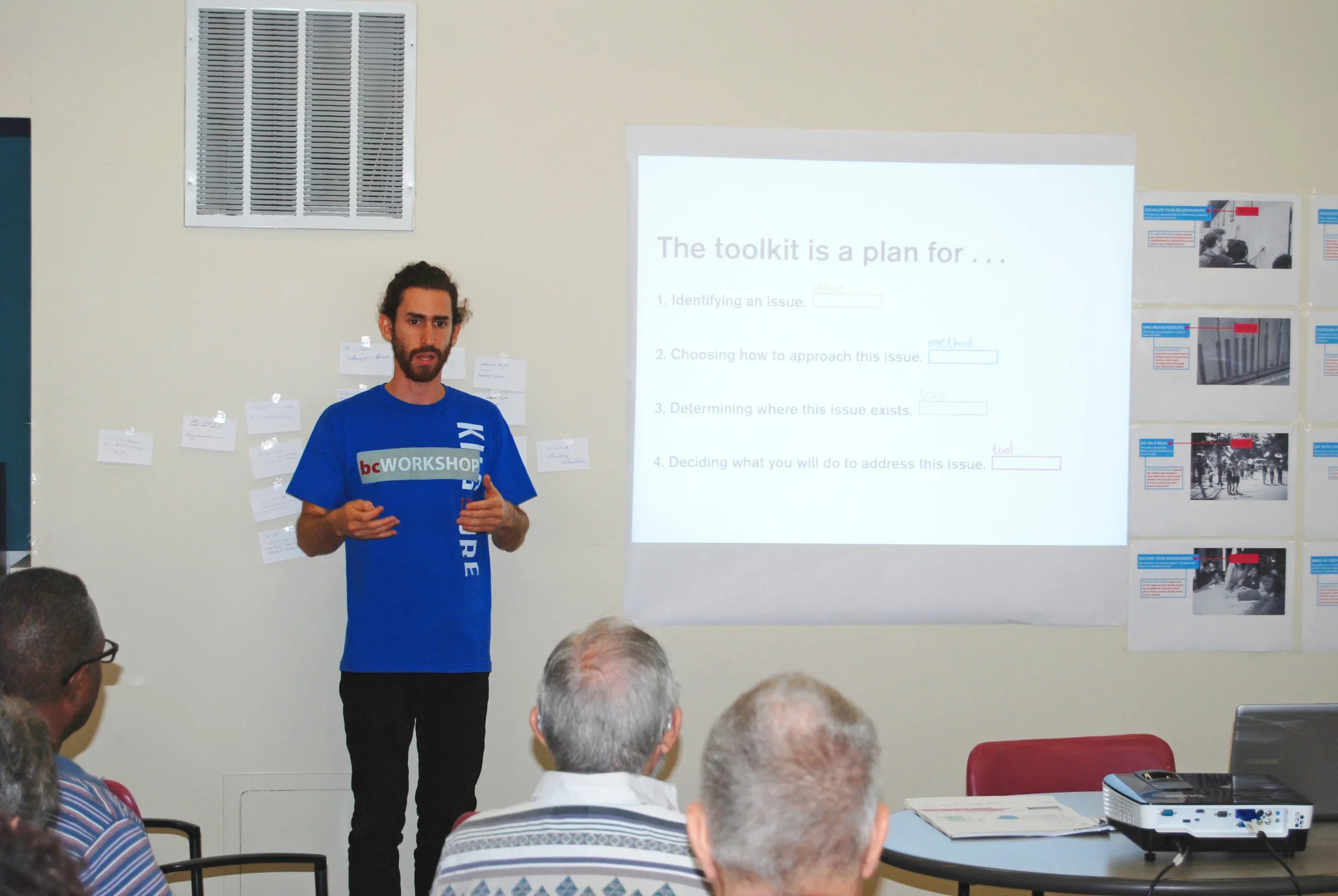
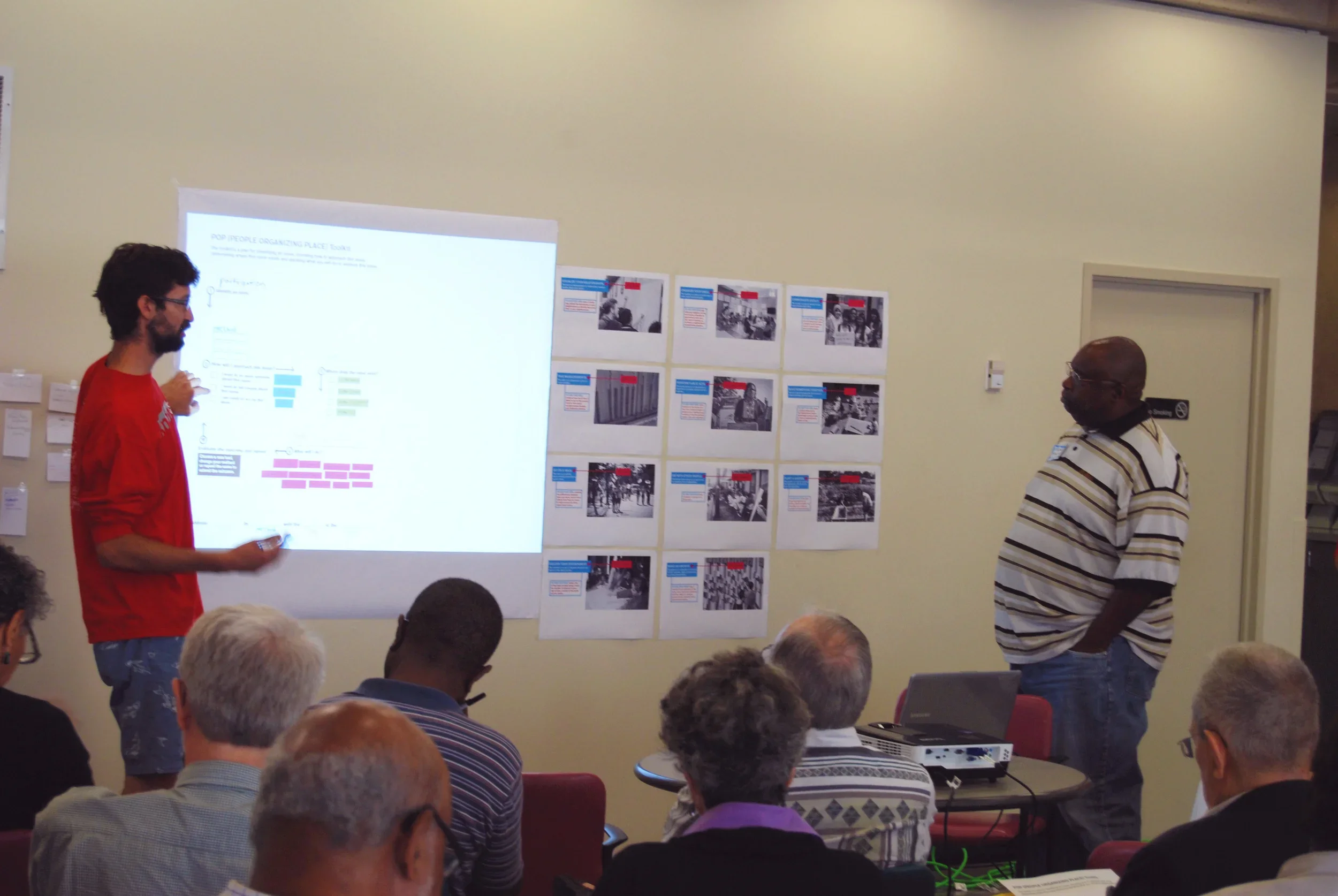
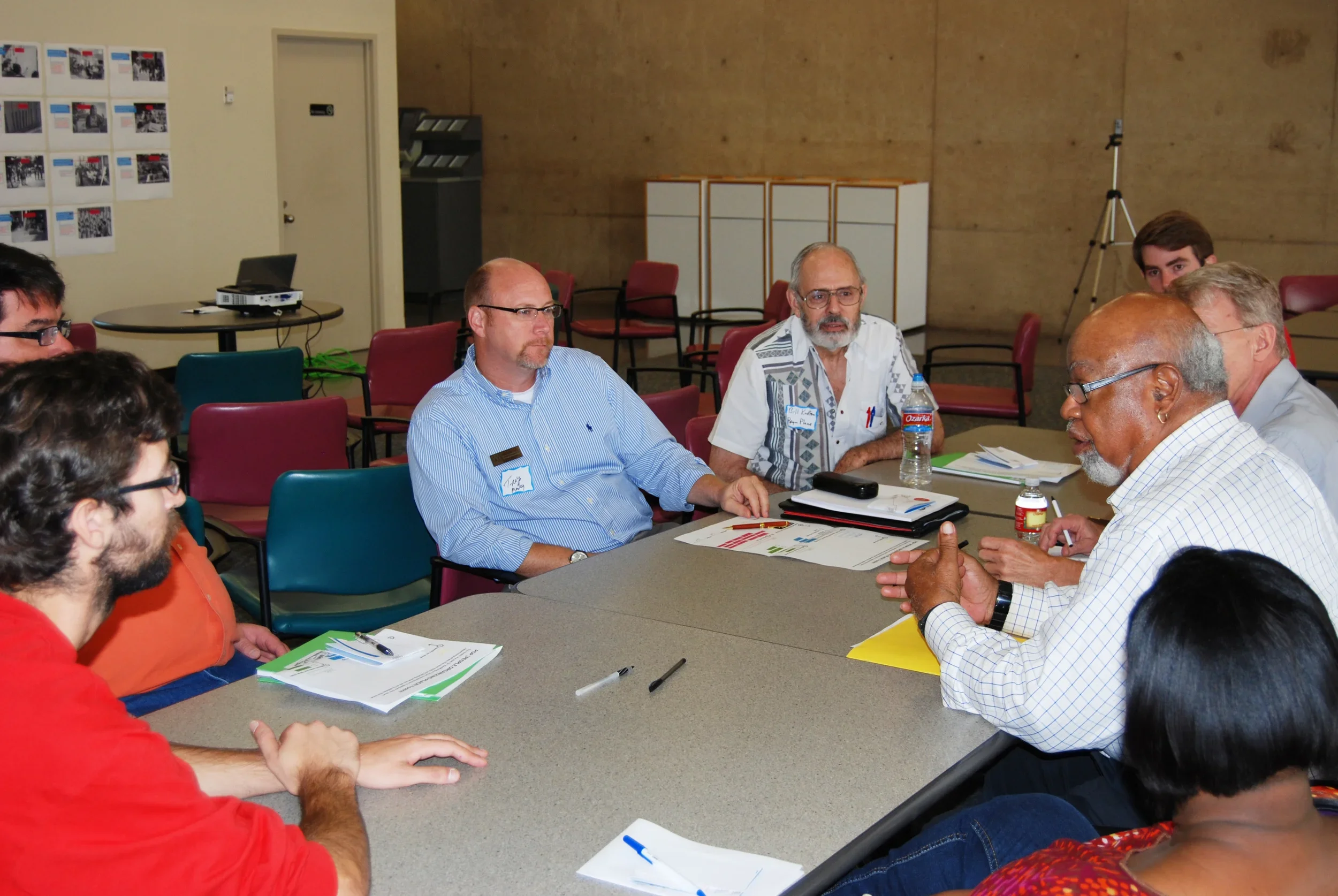
During the interactive work session, 21 neighborhood leaders learned about the Toolkit as a grassroots approach to addressing neighborhood issues through a four-step process. Following an introductory presentation, budding and battle-tested activists alike used the Toolkit to identify an issue, choose a scale, determine a method, and select tools to address an example concern from a volunteer. The session ended with robust discussion in breakout groups in which participants discussed local issues, swapped success stories, and shared strategies for unifying and activating their neighborhoods.
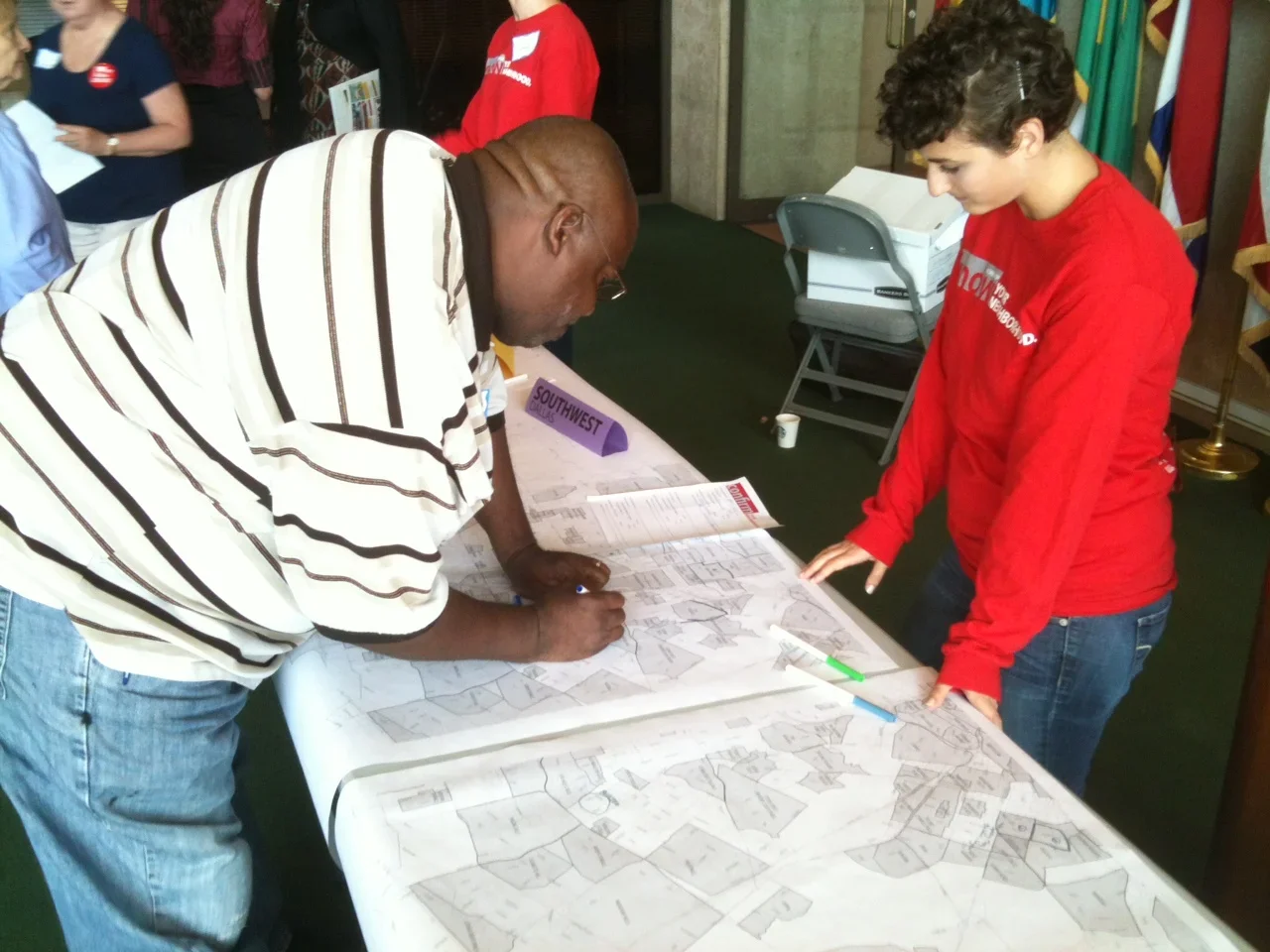
While the Toolkit presented strategies for how neighborhood leaders could direct their energy and efforts, bcWORKSHOP asked that they share their expertise in other ways. Throughout the event, residents of 27 different neighborhoods from across the city confirmed, adjusted, or added their neighborhood names and boundaries by drawing on enlarged sections of the City Map. Amidst the day’s activities, 7 new contributors to Neighborhood Stories took the time to share what they love about where they live and challenges they had overcome through collective action.
City Builder Lab
August 23, 2012
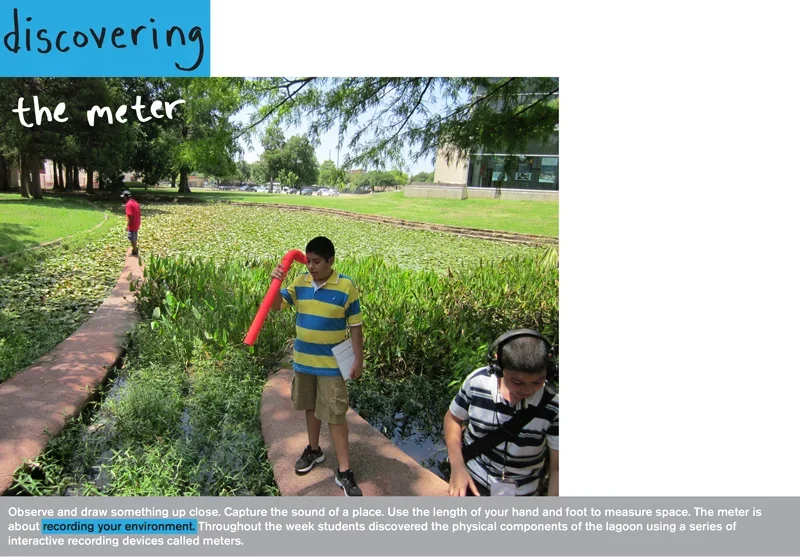
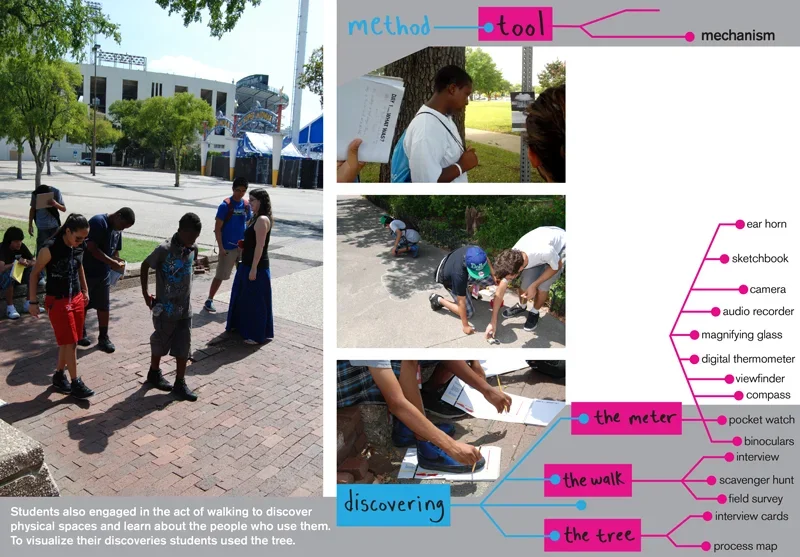
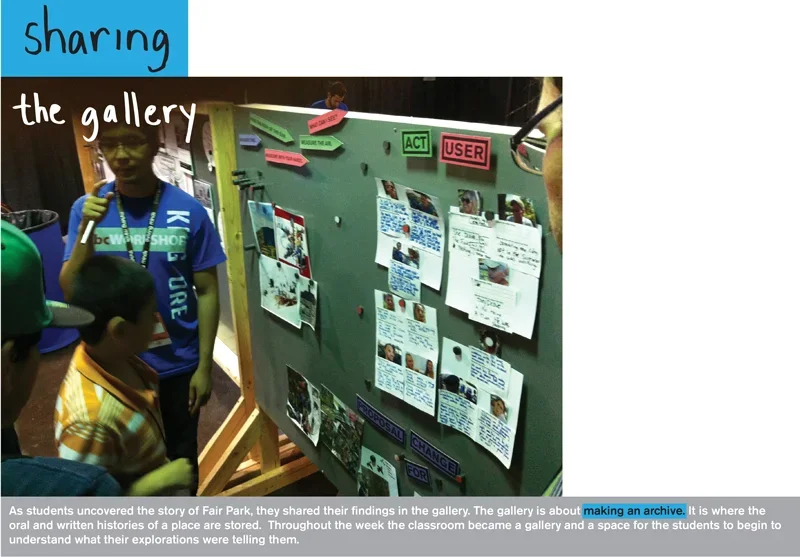
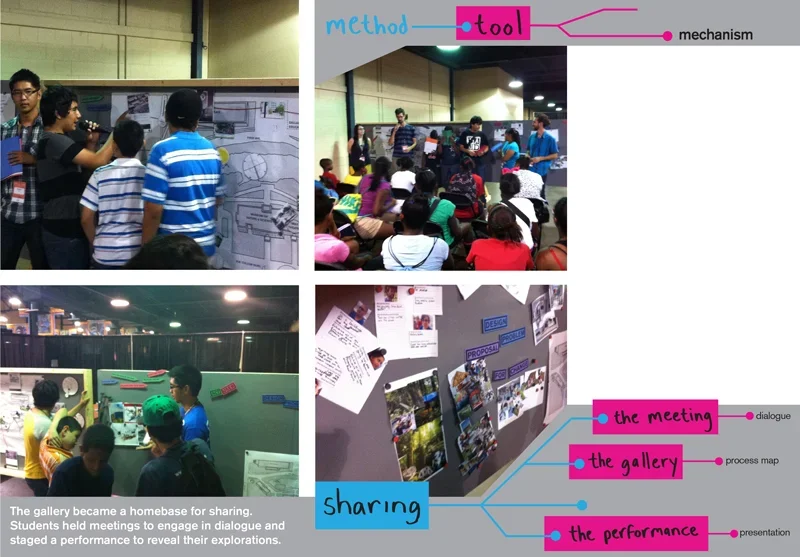
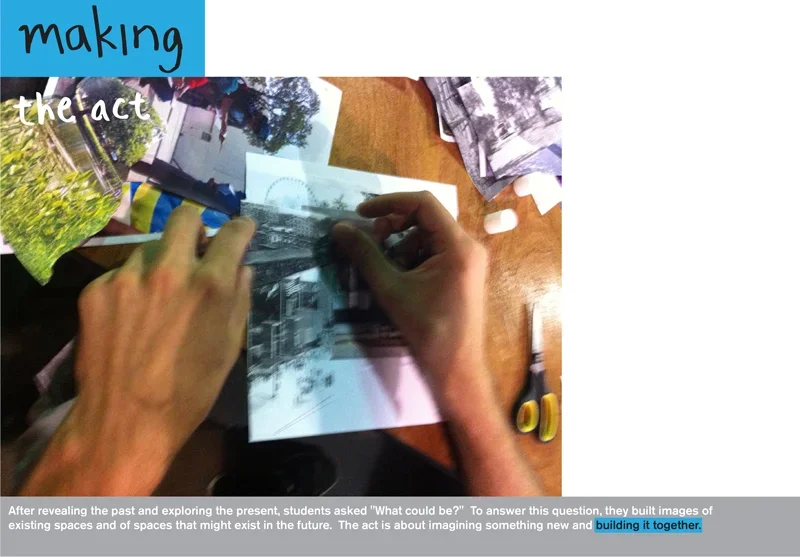
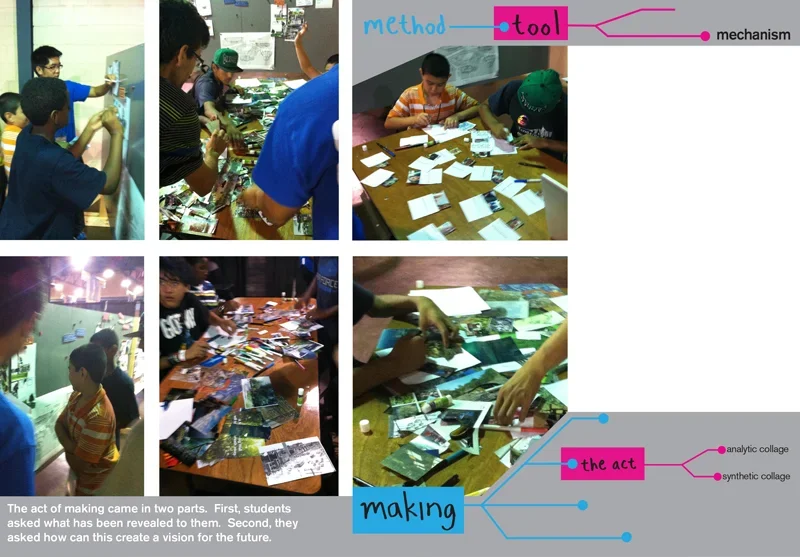
In the summer of 2012 bcWORKSHOP partnered with Big Thought's Thriving Minds camp to launch the pilot toolkit + labs initiative. Using Dallas' historic Fair Park as a testing ground, middle school students engaged in a series of discovery, making and sharing-based learning exercises. Through these sessions, dubbed the City Builder Lab, students engaged with the historical, physical and social components of Fair Park. They examined the local environments within the park through the lense of a city builder, identifying problems and offering solutions as informed advocates of the park.