RAPIDOArchitecture | Policy
DALLAS, BROWNSVILLE , HOUSTON, TX
2012 - 2019
RAPIDO is a new holistic approach to speeding up the process for returning residents to their homes after federally declared natural disasters. Several key systems are integrated, including community outreach, case management, housing design & construction, labor recruitment, and resource deployment. The objective is to have residents returned to their home within 12 to 20 weeks of a disaster.
Through understanding and redesigning the entire U.S. disaster recovery housing process with the people that are impacted the most, RAPIDO fosters resilience within texas communities and abates the social and economic impacts of disaster.
Partners:
A Resource In Serving Equality
Hazard Reduction & Recovery Center, Texas A&M University
Texas Low Income Housing Information Service
[bc] Contributors:
Elaine Morales
Omar Hakeem
Benje Feehan
Donald Hickman
Alison Katz
Gerardo Gutierrez
Luis Murillo
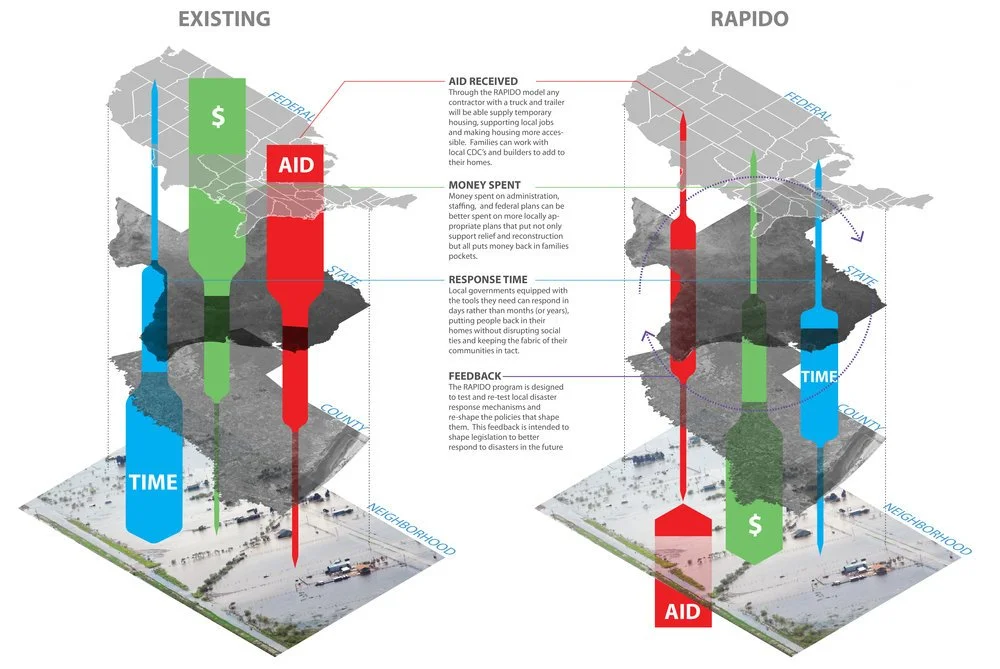
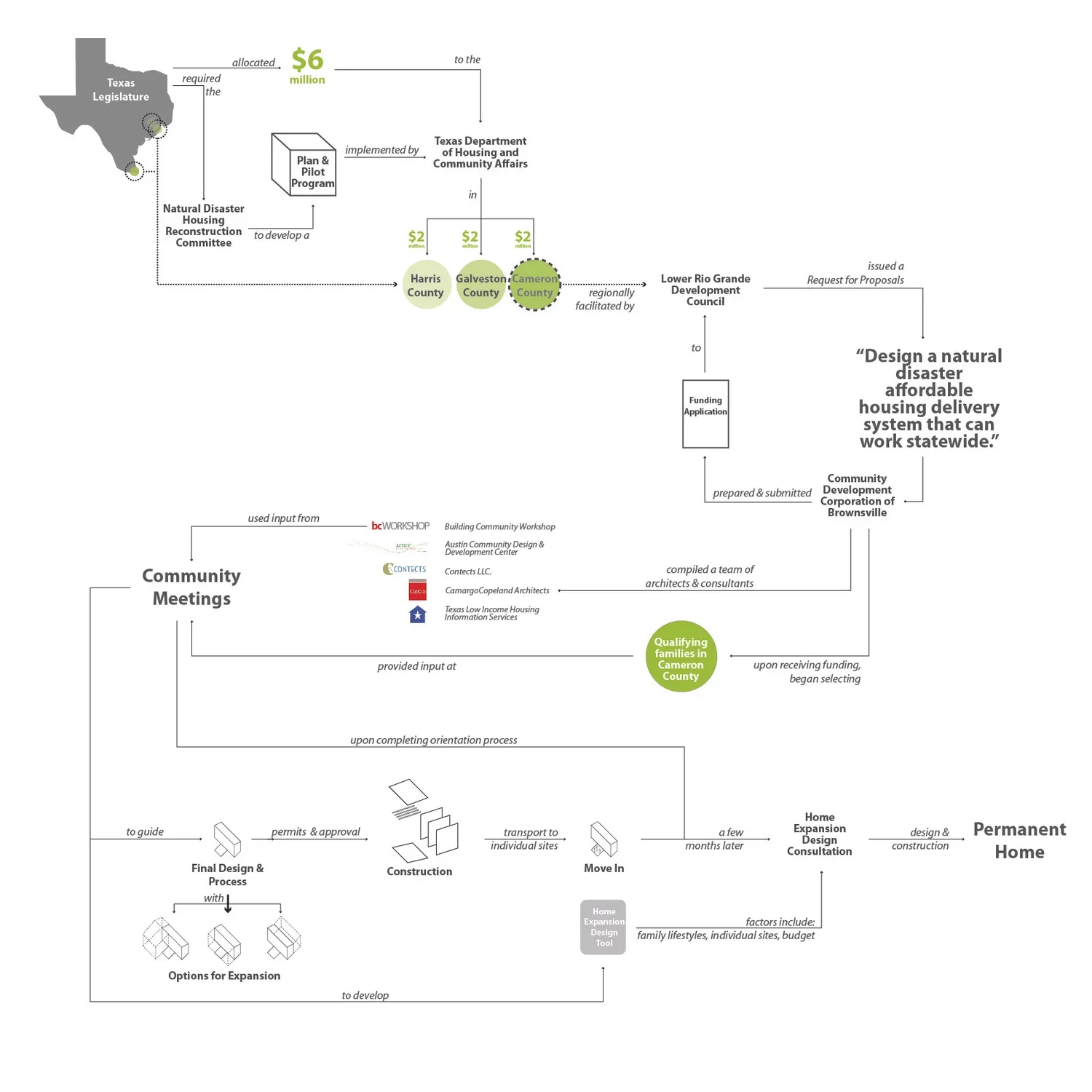
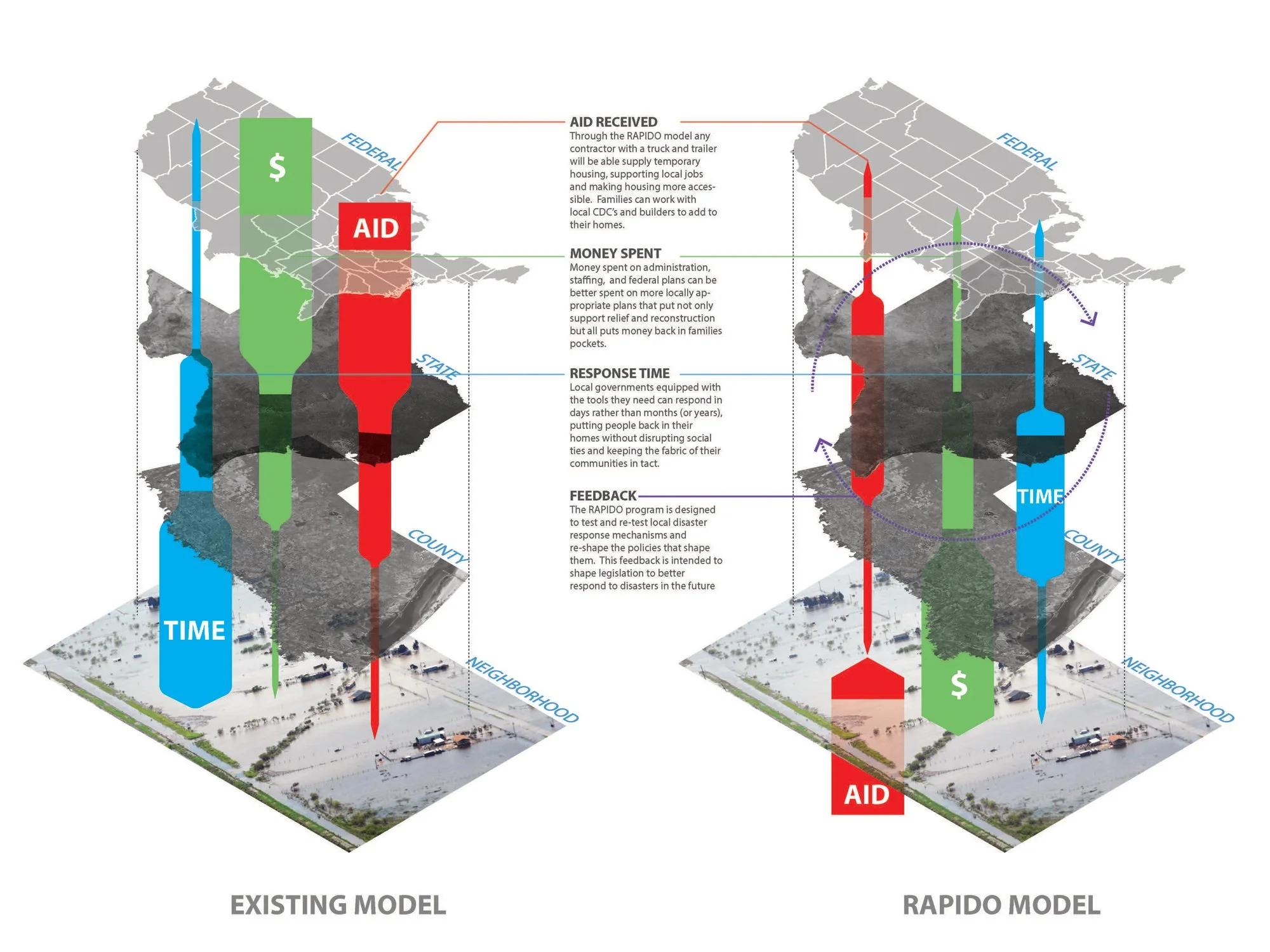
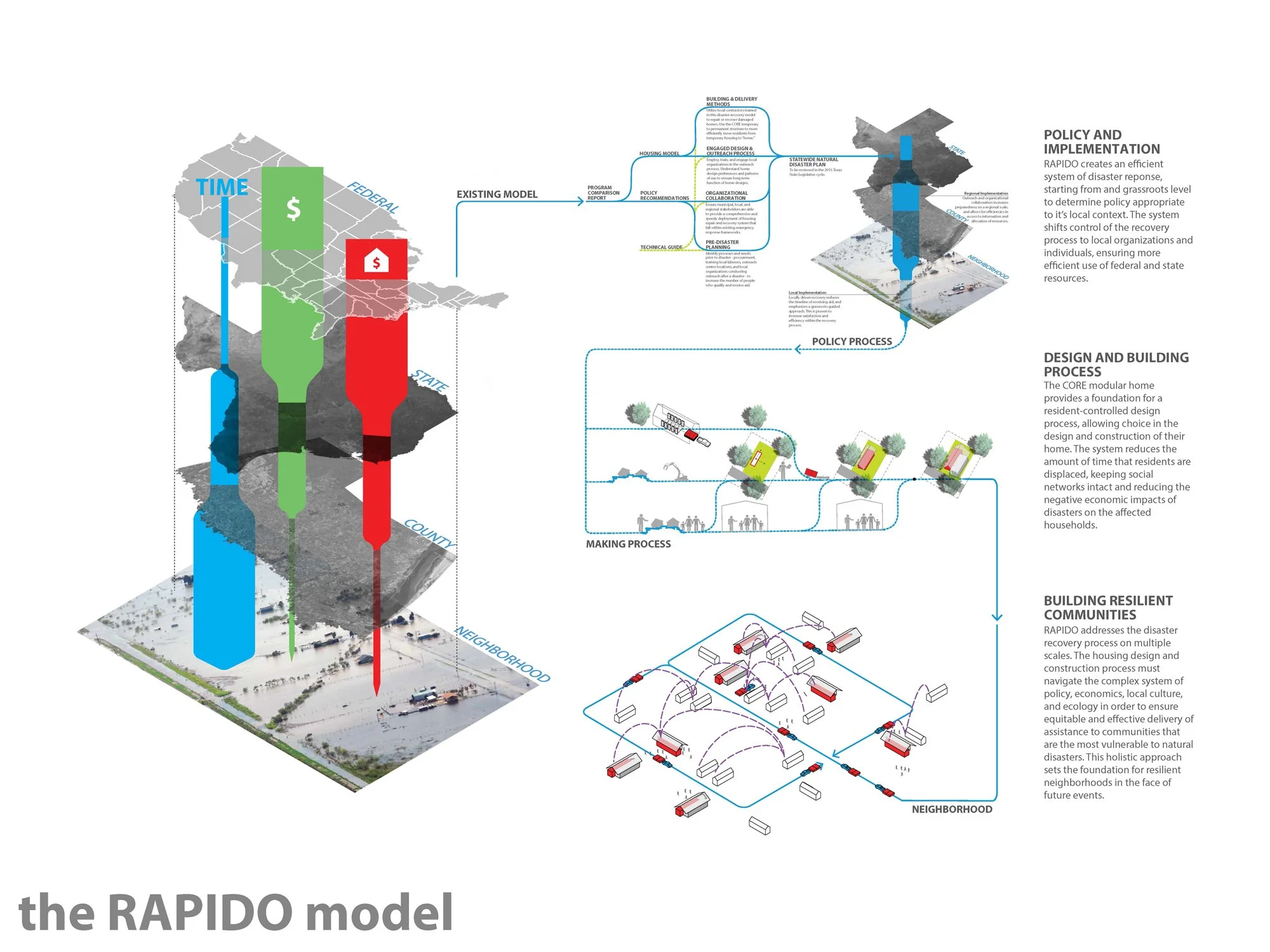
Disaster recovery - Existing Model vs. the RAPIDO Model.
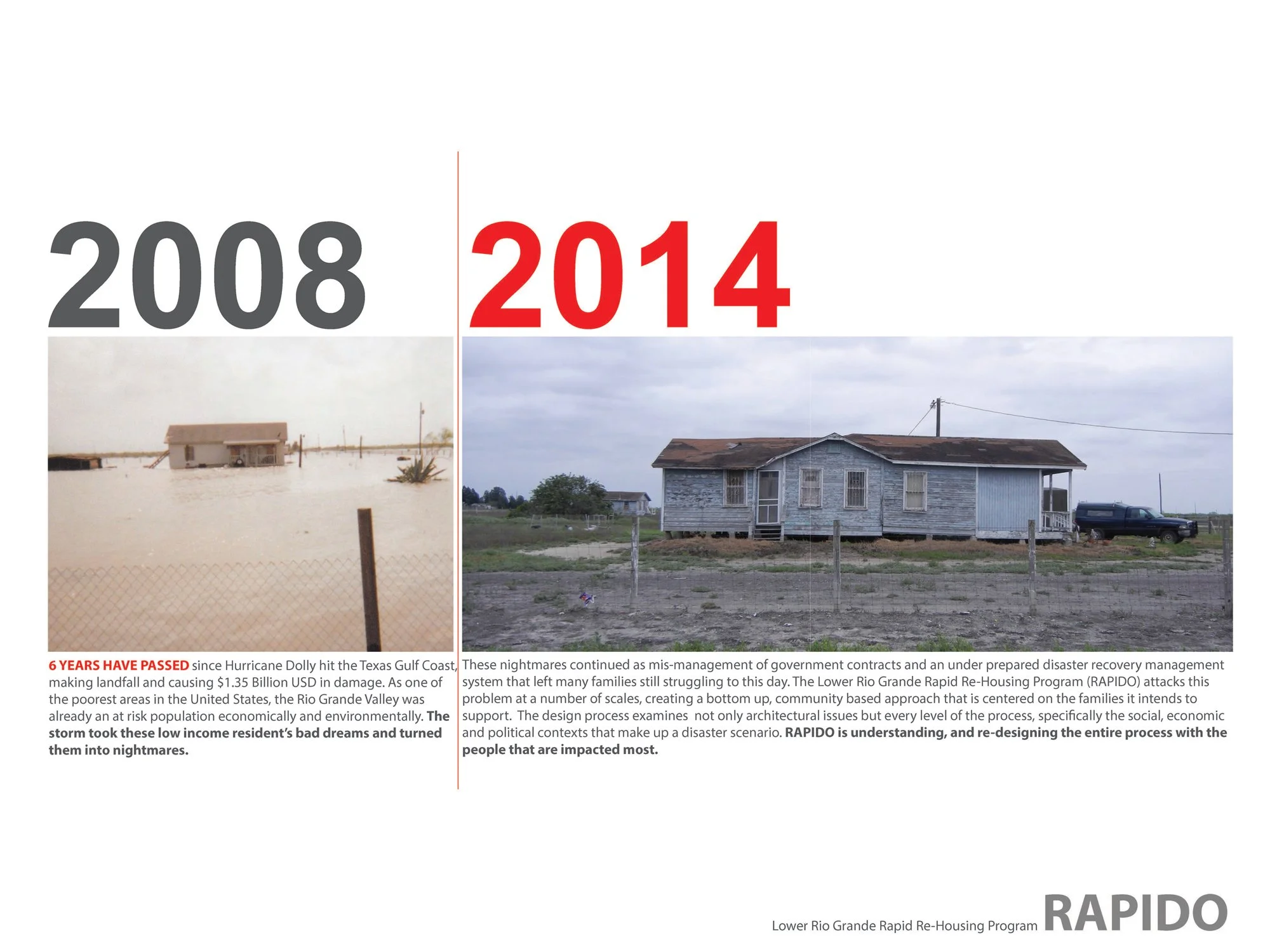
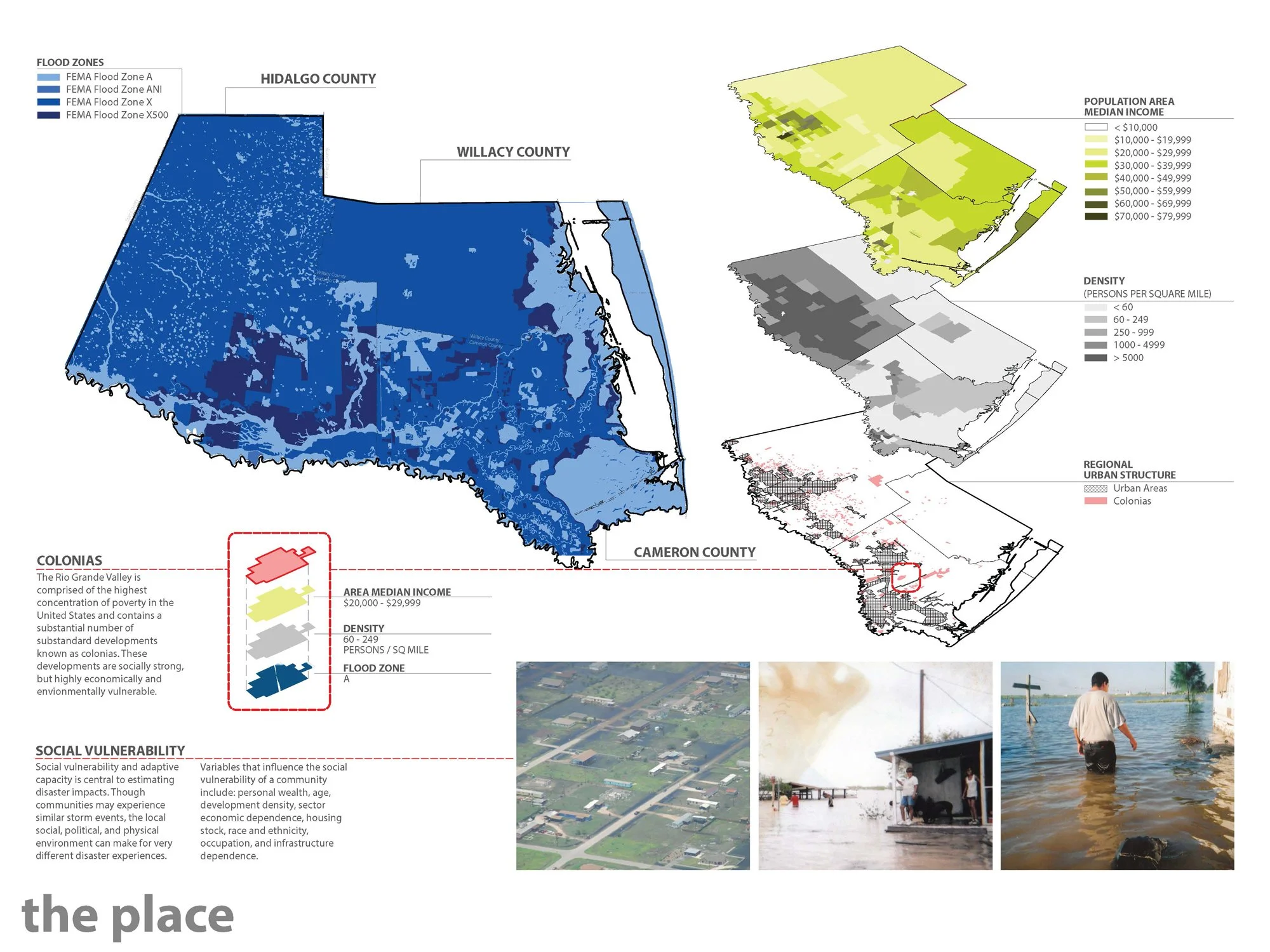
In 2008, Hurricane Dolly hit the Texas Gulf Coast causing $1.35 billion in damages. As one of the poorest areas in the United States, the Rio Grande Valley was already an "at risk" population economically and environmentally. Response to this storm, mismanagement of government contracts, and underprepared disaster recovery management systems left many families in the Valley struggling to this day.
The Lower Rio Grande Rapid Recovery Re-Housing Program (RAPIDO) offers solutions to disaster recovery on a number of scales, creating a bottom-up community based approach that is centered on the families it intends to support. The design process examines not only architectural issues, but every level of process, specifically the social, economic, and political contexts that make up a disaster scenario. RAPIDO is evaluating and redesigning the entire process with the people that are impacted most.
INTRODUCTION
In 2008, the Lower Rio Grande Valley experienced major devastation at the hand of hurricanes Dolly and Ike. Wind and flood damage in the four county area topped 1 billion dollars; however, in 2013 hundreds of families were still living in homes with flood and wind damage, ultimately triggering a second round of disaster recovery. The purpose of the DRH program is to develop a system that would be able to respond to housing recovery faster, cheaper, and with greater choice. The program utilized the innovative temporary-to-permanent design tested in the RAPIDO pilot to rehouse families affected by a disaster within 120 days of disaster response.
POLICY RECOMMENDATIONS
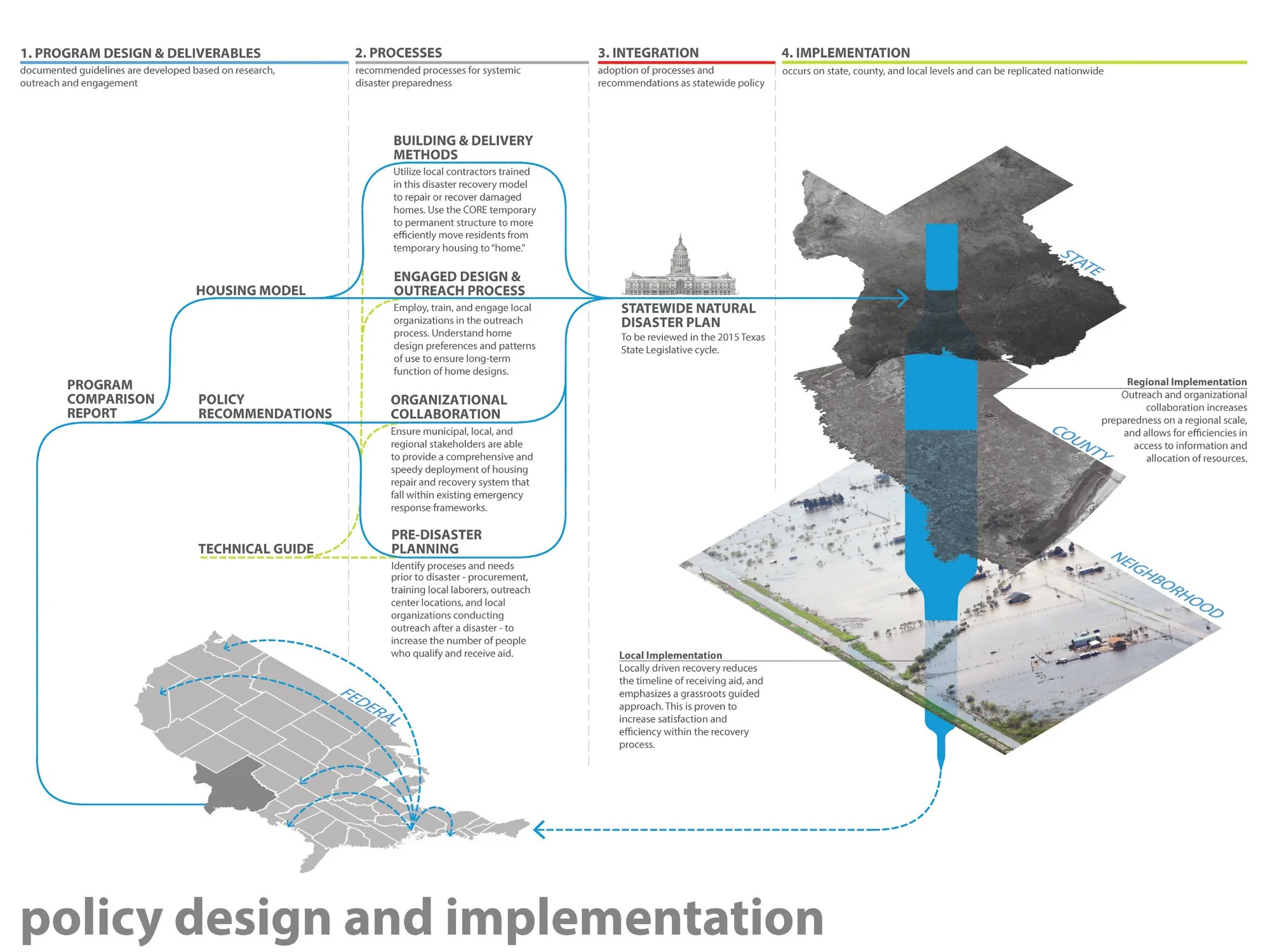
The Policy Recommendations give an overarching view of the lessons learned from both the RAPIDO Demonstration Project as well as our findings from a comparison of other reports completed after similar disasters across the Gulf and Atlantic Coasts. It includes general recommendations for improving disaster housing recovery processes for home owners, primarily at the state and local level, as well as more specific recommendations in each of the major areas of work (education, navigation, and design and construction). The intended audience is federal, state, and local policy makers.
TECHNICAL GUIDE
The Technical Guide supports the Policy Recommendations, offering greater detail on a proposed administrative structure, but more importantly, the Technical Guide serves as a step-by-step guide to adopting and administering the Disaster Recovery Housing program. The intent of the Technical Guide is to allow other users to replicate the program. It is structured so that professionals involved in the execution of such a program can both discover the steps they need to take, but also understand how their parts fit into the whole of the program.
PROGRAM COMPARISON REPORT
The Program Comparison Report serves as an appendix of sorts and includes materials that underlie the actions recommended in the Policy Recommendations and undertaken in the Technical Guide. The Program Comparison Report was generated by identifying post-disaster reports for every hurricane that has struck the Gulf and Atlantic Coasts since 2005 (including Katrina and Rita). This yielded forty (40) reports and articles, most of which covered only pieces of the recovery effort (case management, design, construction, etc.) These documents were systematically compared to one another to develop an understanding of issues and obstacles that have arisen repeatedly across comparable disasters as well as issues that may be more context-dependent.
DISASTER RECOVERY GUIDES
As we mark the two year anniversary of Hurricane Harvey, families are continuing to struggle to recover and rebuild their lives from the devastation this storm wreaked. For many, the challenge is made more difficult due to a lack of accurate information available in the language they understand best. By partnering with the Red Cross, we have developed the following Disaster Recovery Guides to help get information into the hands of those who need it most. Topics include Renter’s Rights, Contractor Fraud, Flood Insurance, and Clearing Title.
Click the link below to download the guides in English, Spanish, Arabic, Chinese, and Vietnamese.
ENGLISH
ESPAÑOL
باللغة العربية
中文
Trong tiếng việt
This Hurricane Harvey recovery project was made possible in part by a grant from the American Red Cross.
Este proyecto de recuperación del huracán Harvey fue posible en parte gracias a una subvención de la Cruz Roja Americana.
أصبح هذا المشروع لاستعادة الإعصار هارفي ممكنا جزئيا بمنحة من الصليب الأحمر الأمريكي
美国红十字会的拨款使该飓风哈维恢复项目成为可能
Dự án phục hồi cơn bão Harvey này đã được thực hiện một phần nhờ một khoản trợ cấp từ Hội Chữ thập đỏ Hoa Kỳ.
UPDATES
Expanding RAPIDO for Gulf Coast Recovery
October 31st, 2018
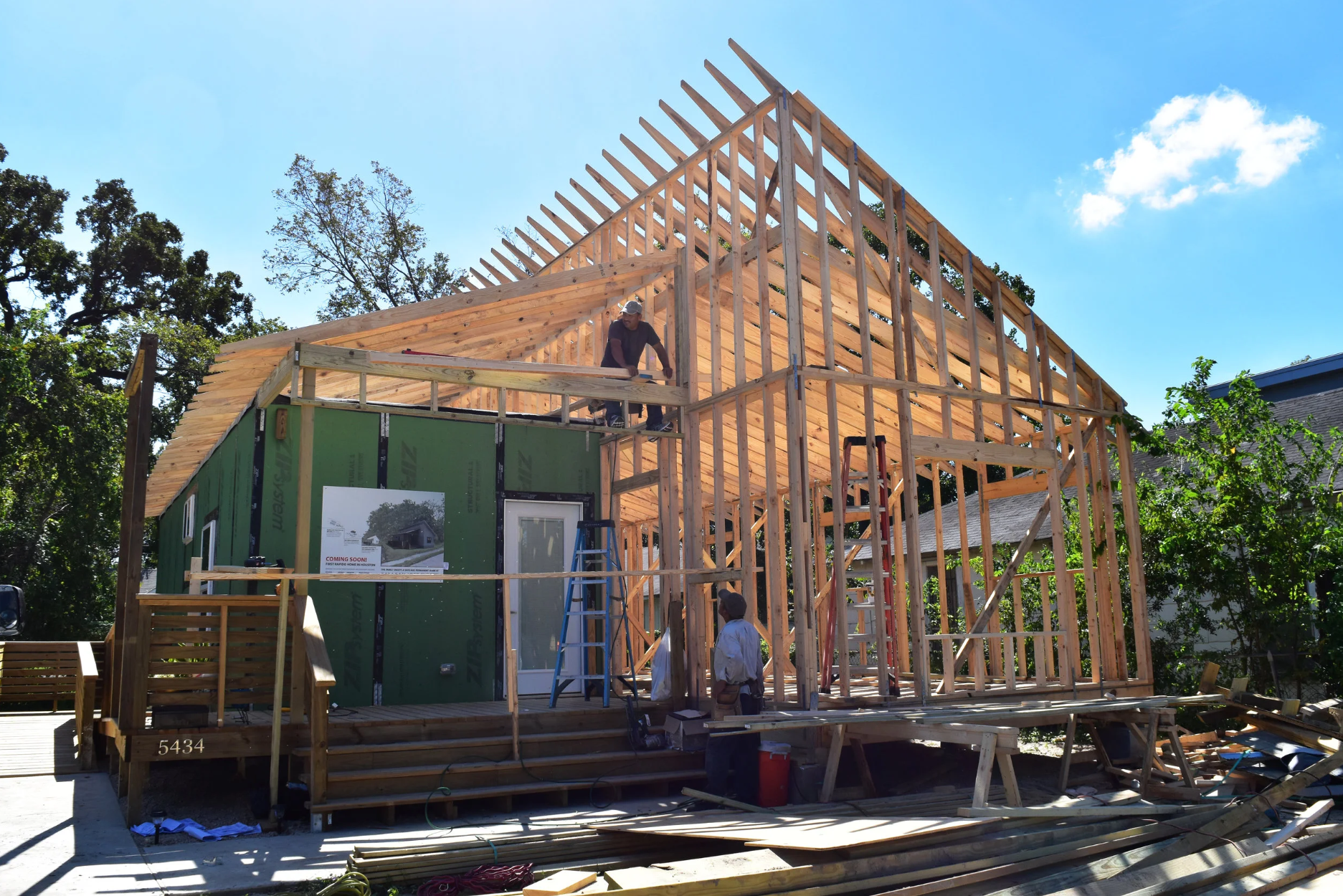
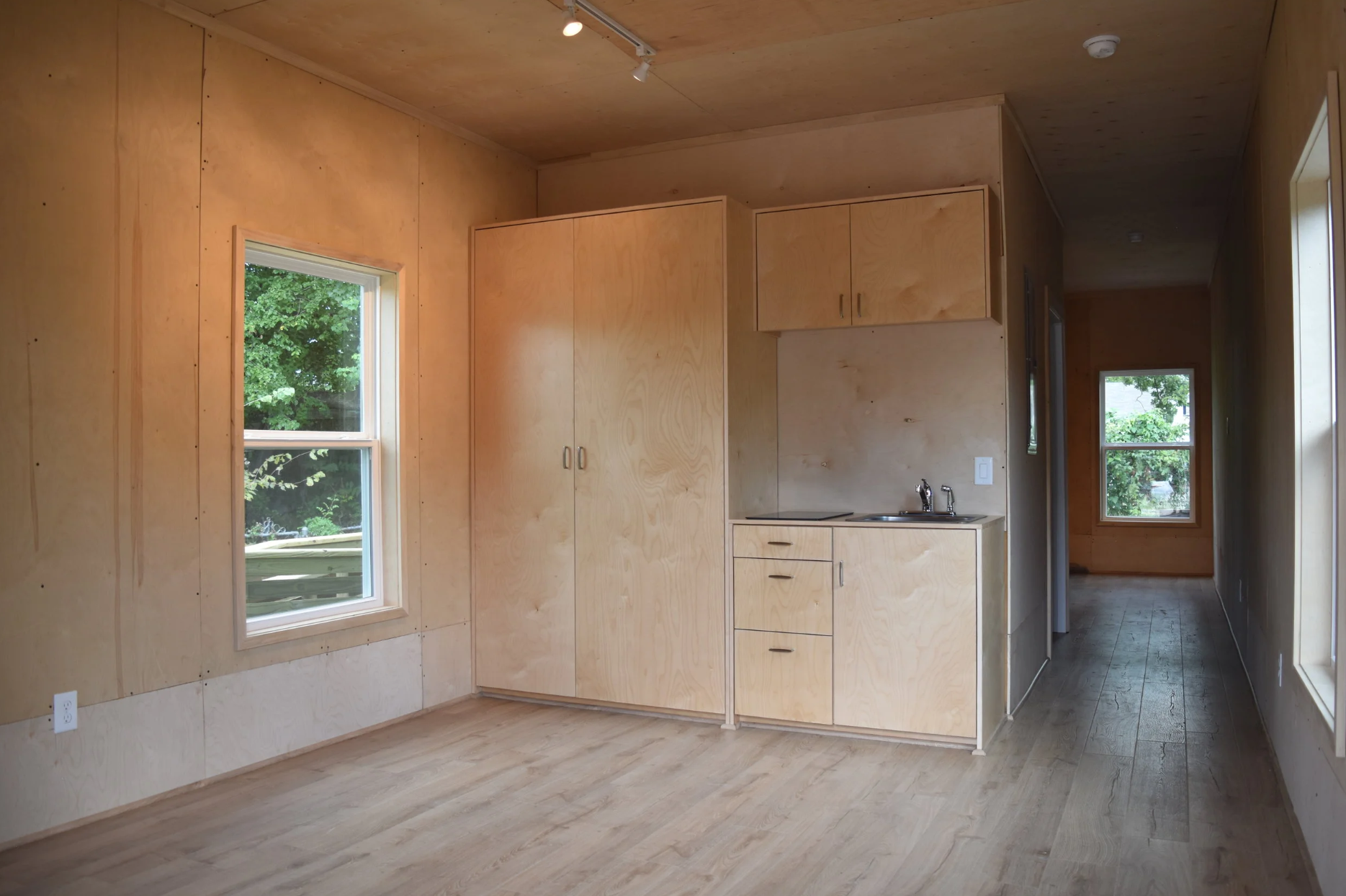
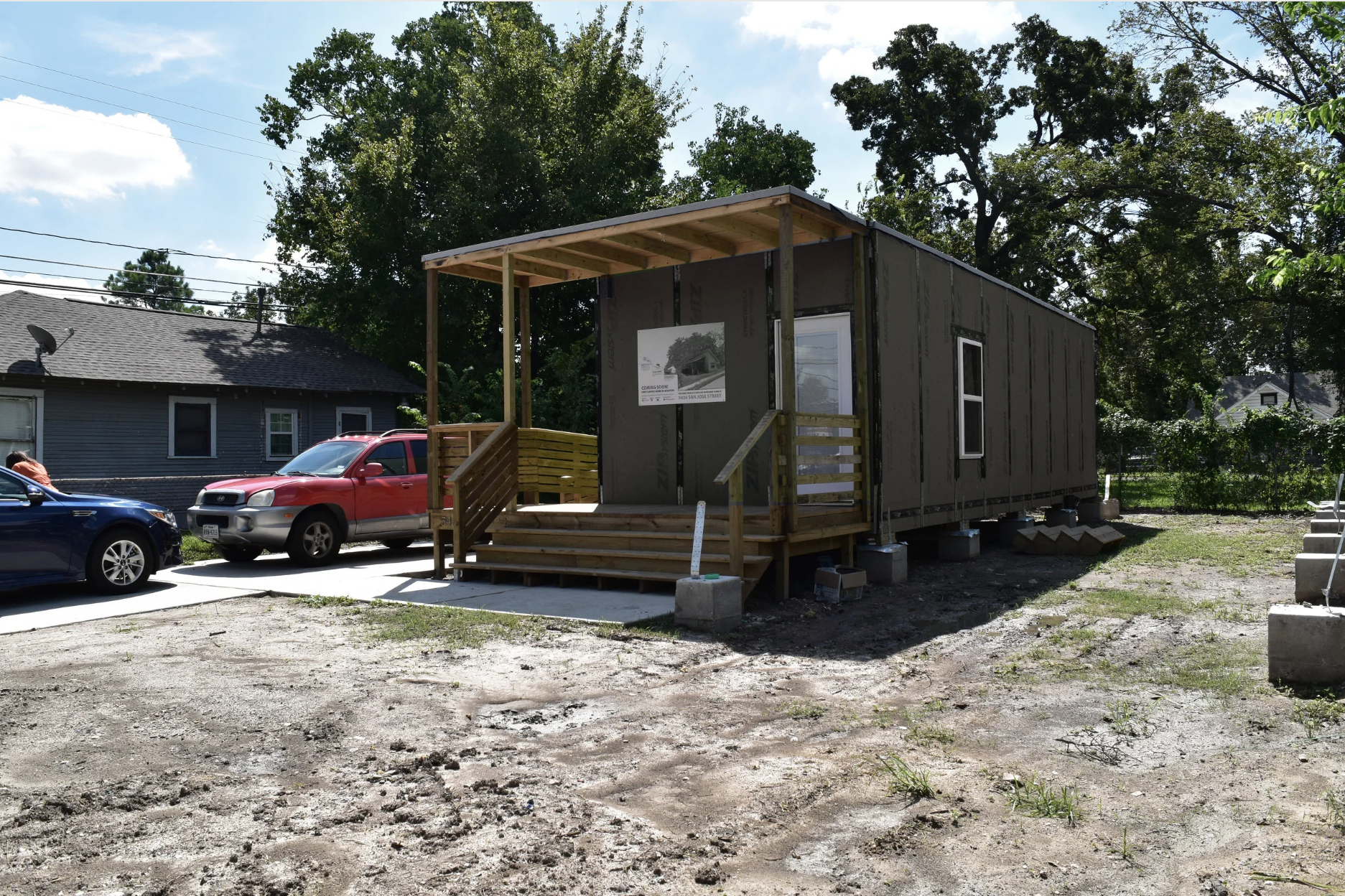
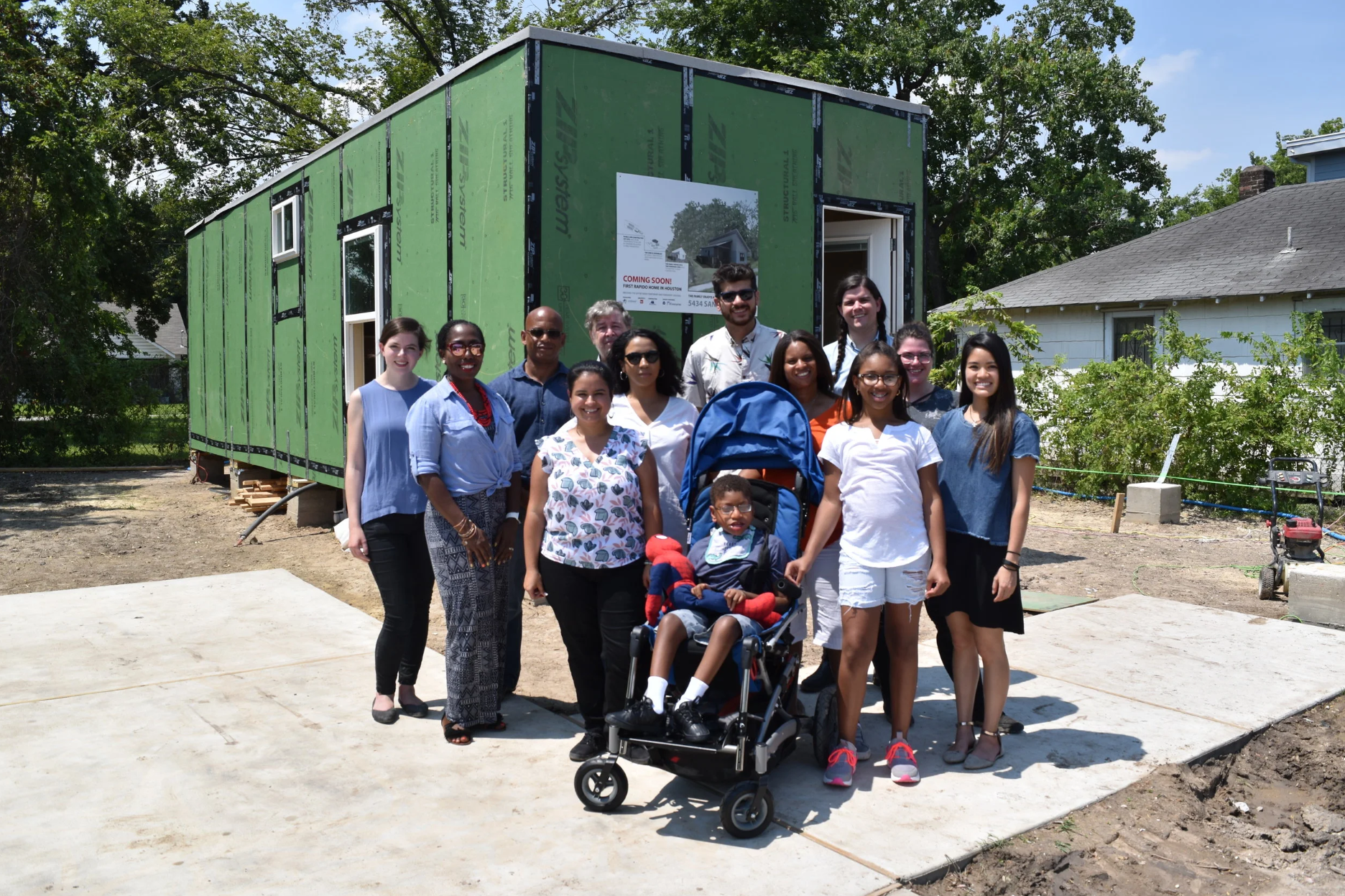
On July 26, the first RAPIDO Core unit in Houston opened its doors to visitors and stakeholders. Also in attendance was the family who will call the Core home. On September 20, the family moved into the first RAPIDO Core in the city of Houston, TX. The family will remain there throughout construction of the Expansion, transforming the temporary Core unit into a permanent three-bedroom home. Construction on the expansion began in October.
Our efforts have also included design for RAPIDO Accessory Dwelling Units (ADUs), which can act as temporary housing during the home repair process, and then provide a source of extra income as a rental unit after reconstruction.
The design and partnership work with Covenant Community Capital and Texas Housers to realize RAPIDO units in Houston was supported by funding partnership with Enterprise Community Partners.
We are excited to announce that we are working to design and build 15 RAPIDO Core Units in Gulf Coast communities through a new grant from the Rebuild Texas Fund. Through this grant, we are also conducting research and development for mass production of RAPIDO Cores. This will serve 15 additional families affected by the storm, while also advancing progress toward the mass production of RAPIDO Cores.
Rapido CORE Accessory Dwelling Unit
August 9th, 2018
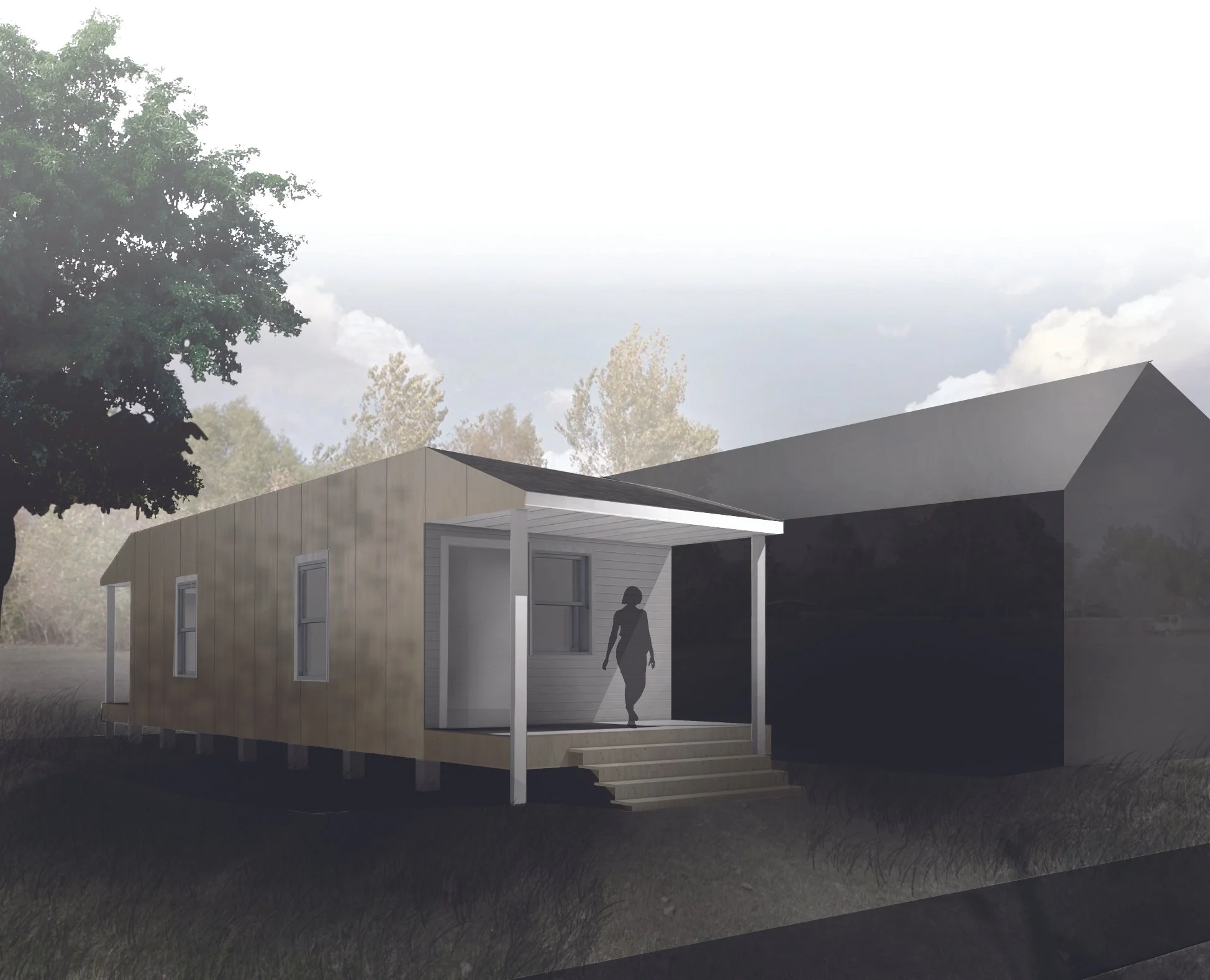
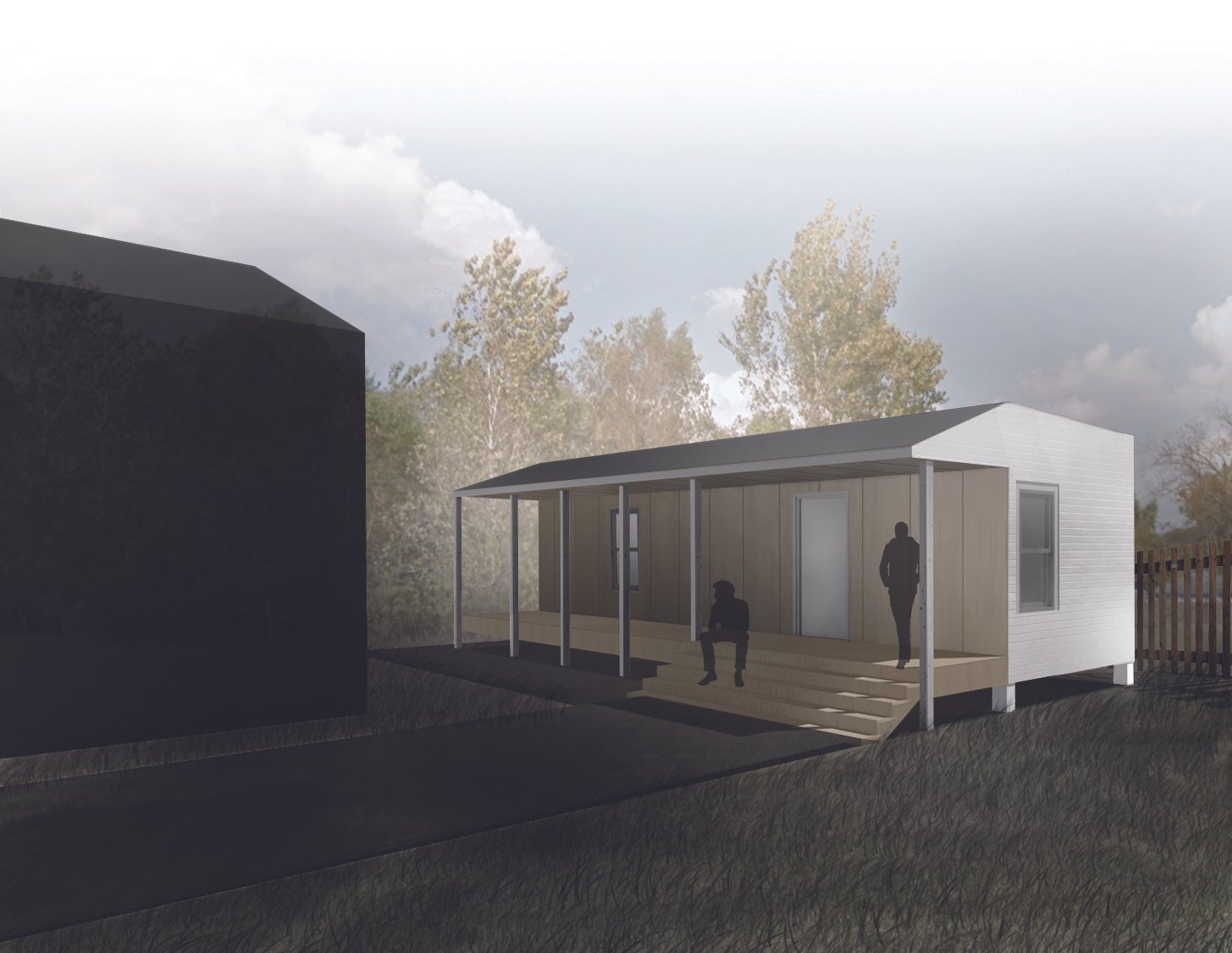
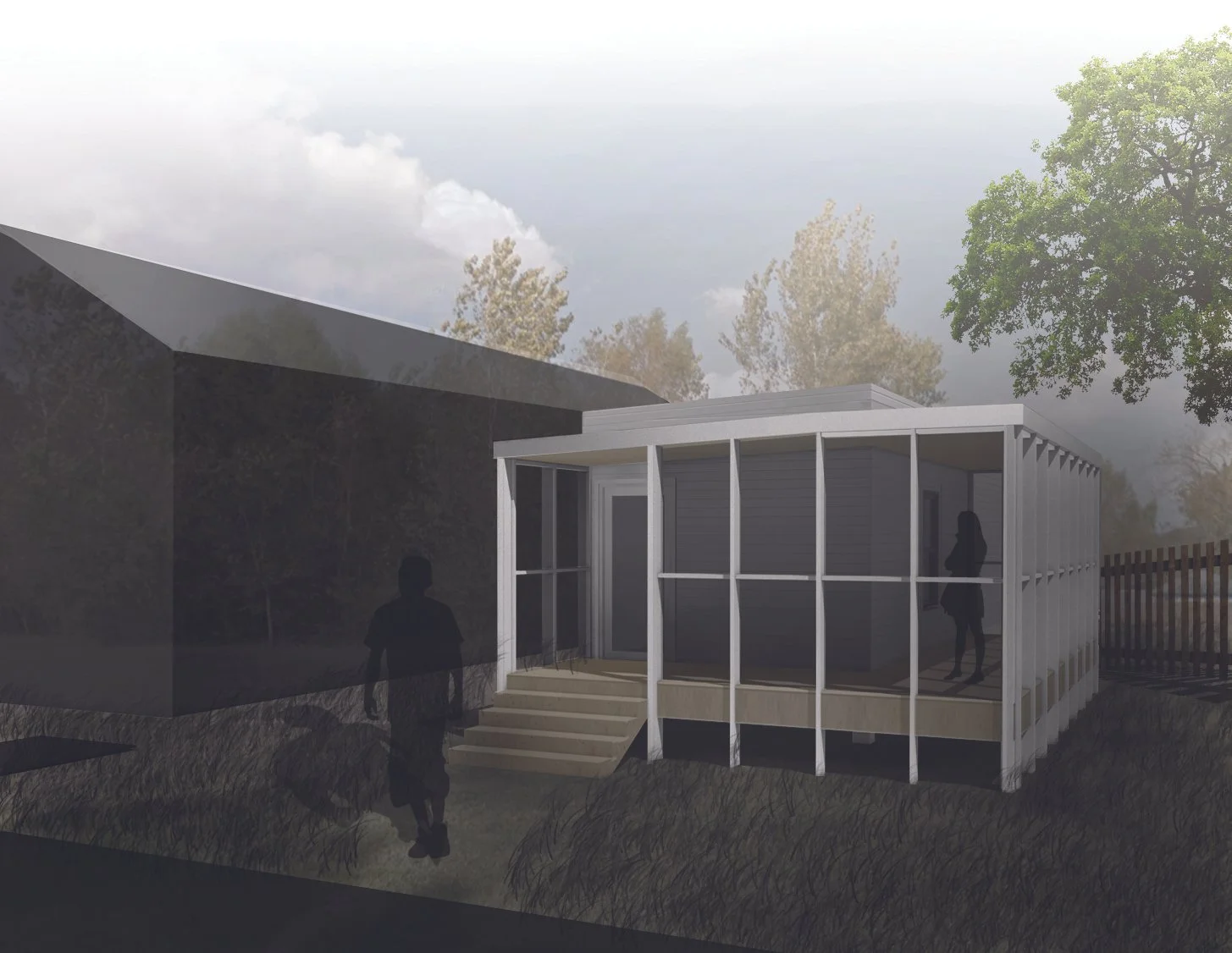
We have developed a series of accessory dwelling units (ADUs), exploring different outdoor design layouts that allow for adaptation and flexibility of placement in multiple lot configurations. All of our ADU designs utilize [bc]'s RAPIDO CORE, a disaster recovery housing modular unit, designed for durable and fast rehousing post disaster. Check out more information about this initiative and the details for each ADU design option at [bc]'s People's Design Library.
There are many reasons a property owner would want to invest in a RAPIDO ADU: disaster preparedness, temporary housing during repairs or reconstruction, increase affordable units in the city and provide extra income to homeowners.
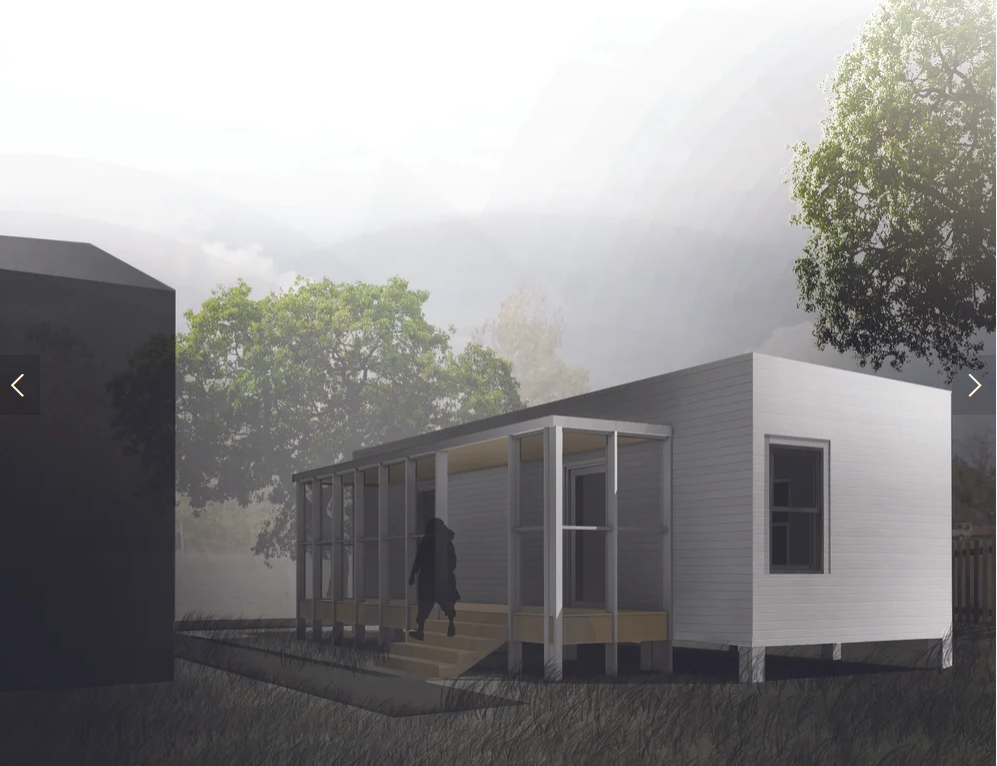
These structures can be built quickly using standard materials and construction methods and are designed on raised platforms in order to avoid damage from flooding. A RAPIDO ADU can also be used as a safe house during a storm, especially if your home sustains serious damage. Because RAPIDO COREs can be built quickly, the ADU can act as temporary housing and allow homeowners whose houses are in need of repairs to remain on their property while their home is repaired or rebuilt. ADUs are also often rented out to individuals, and this extra structure can give the homeowner an extra source of income once they have returned to their repaired home.
RAPIDO in Houston
March 29th, 2018
With the support of a funding partnership with Enterprise Community Partners, Inc., [bc] is working to bring the RAPIDO model to Houston, working with families affected by Hurricane Harvey in collaboration with Texas Low Income Housing Information Service and Covenant Community Capital.
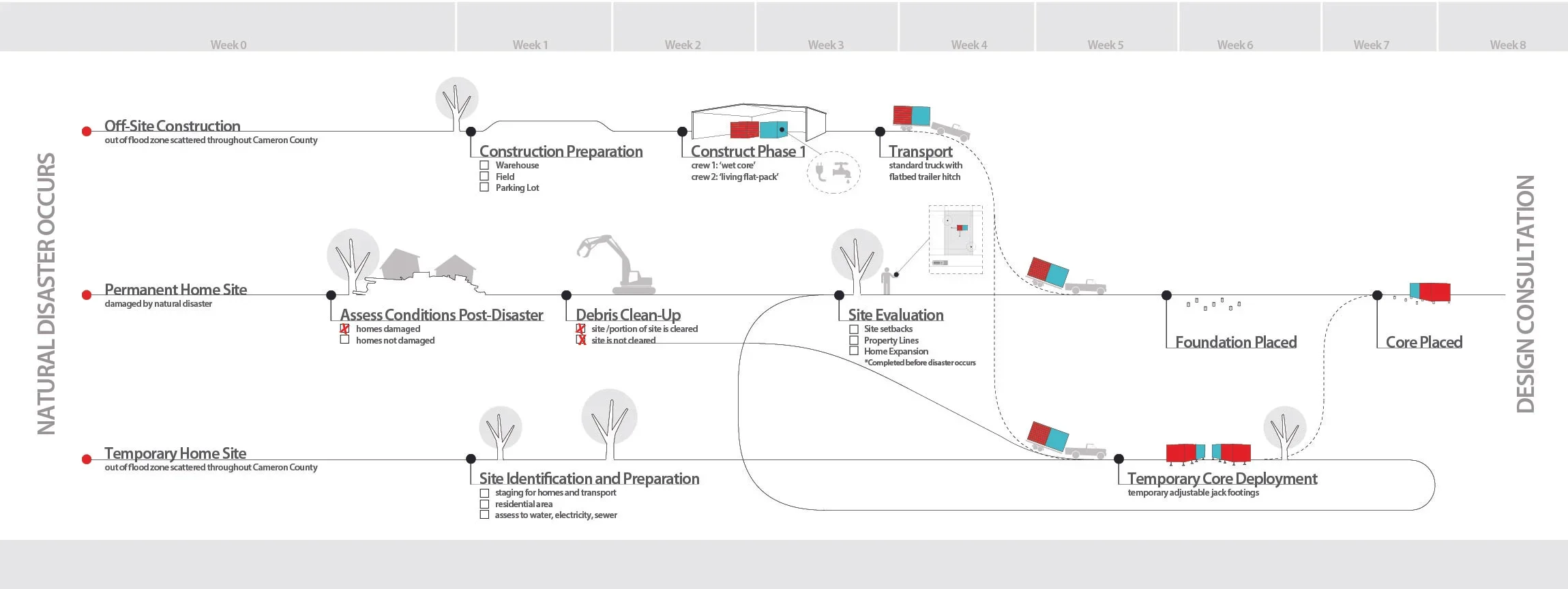
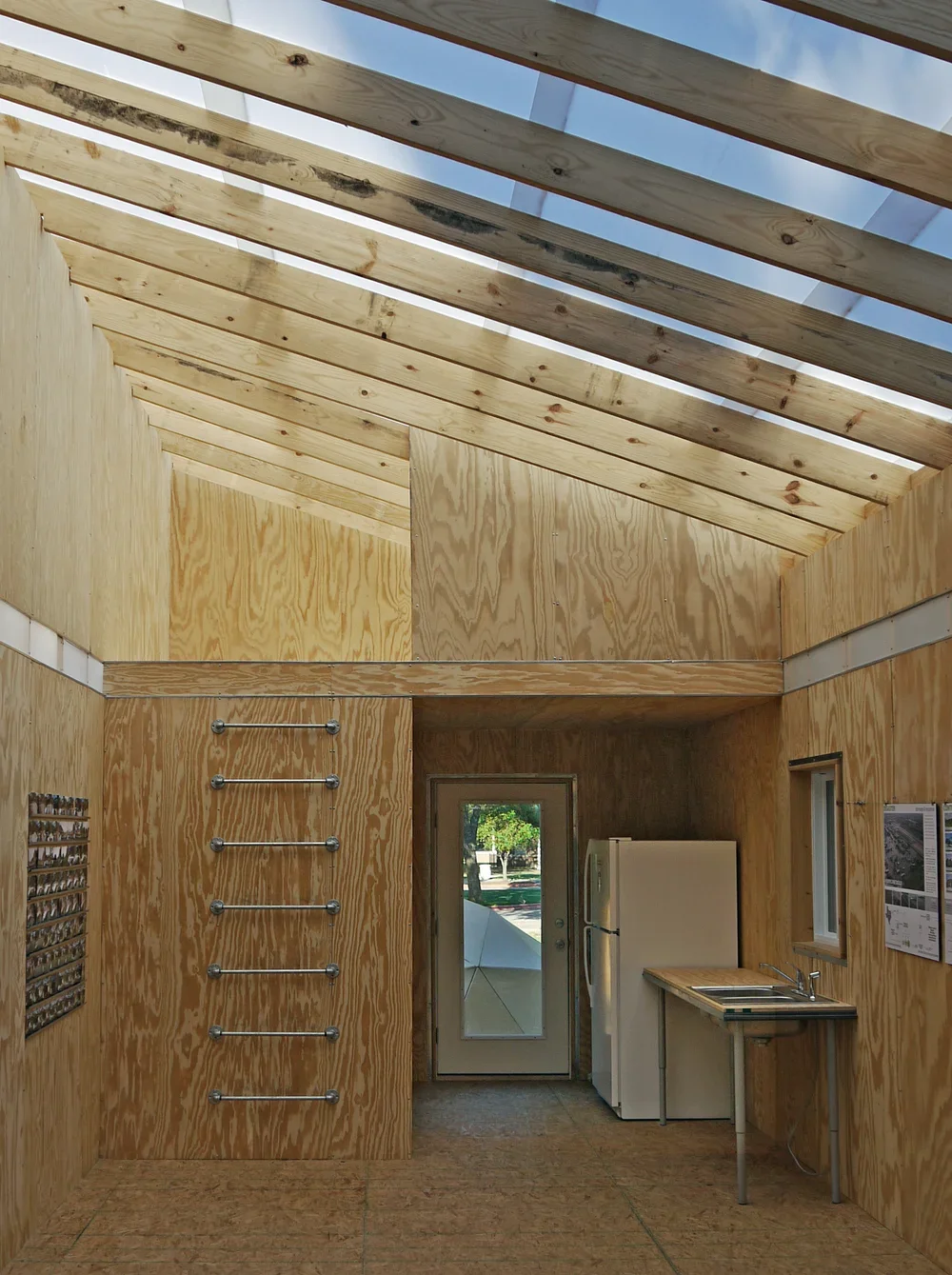
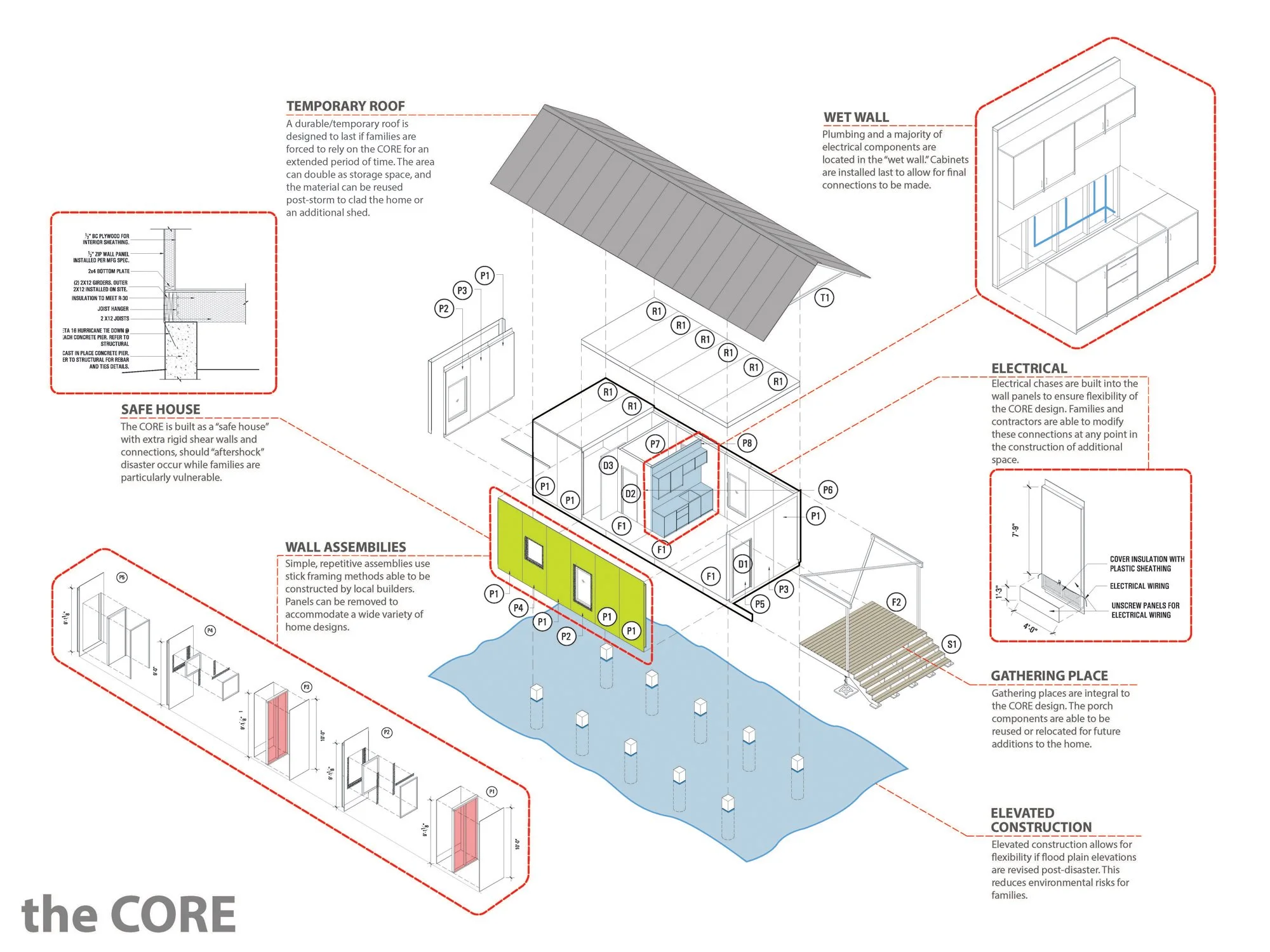
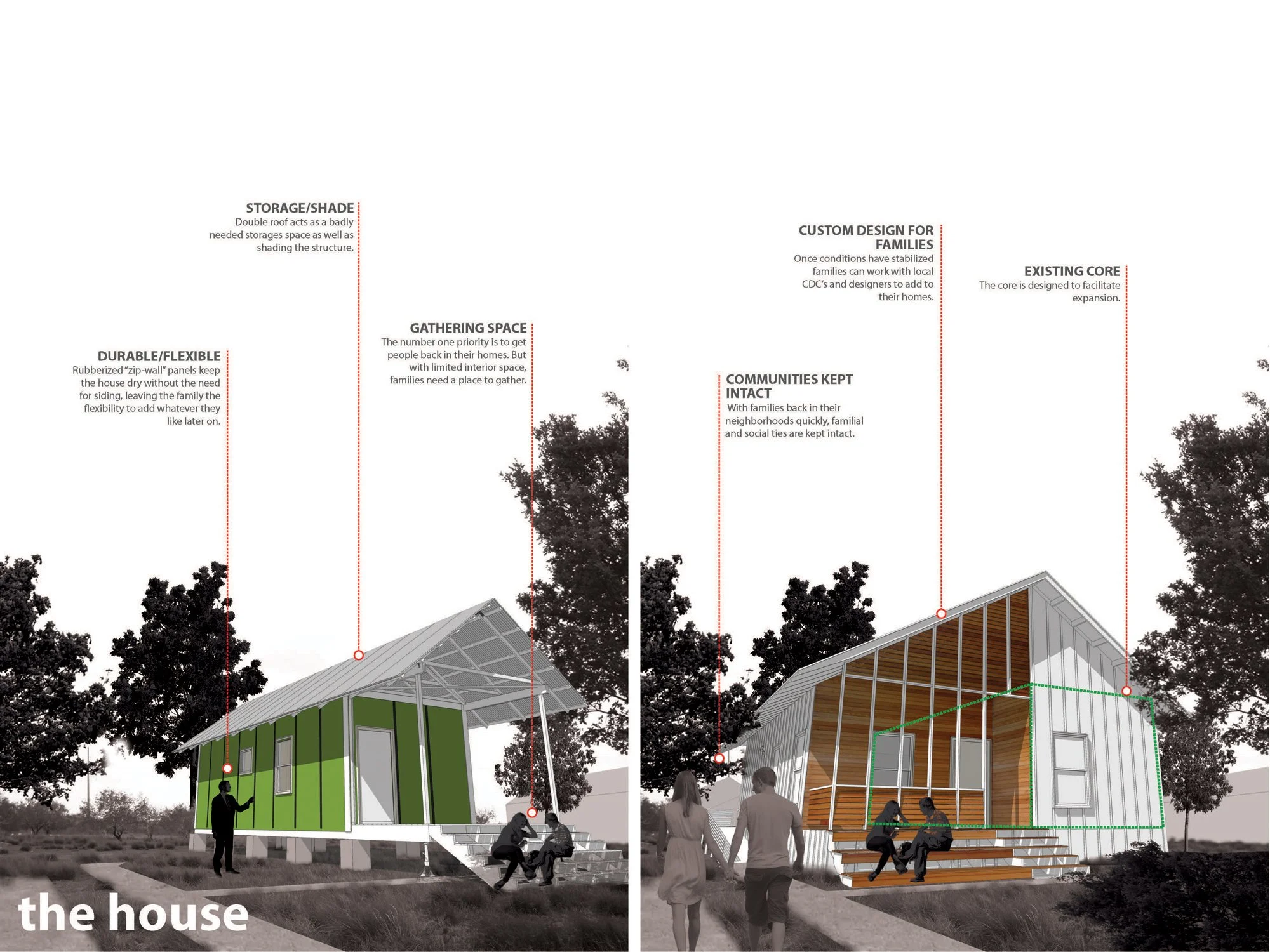
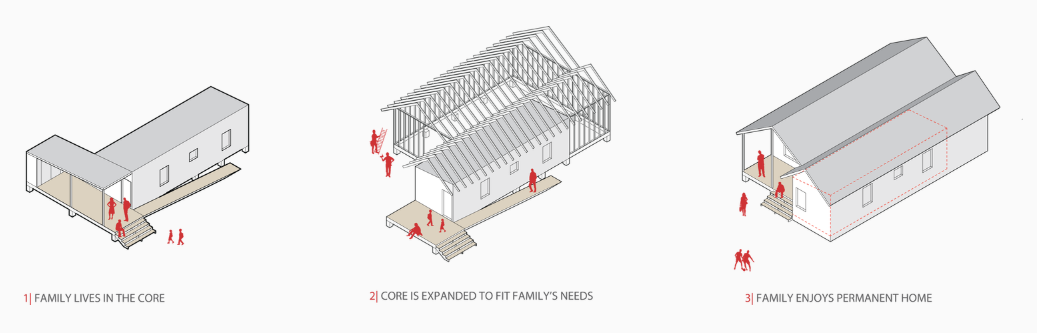
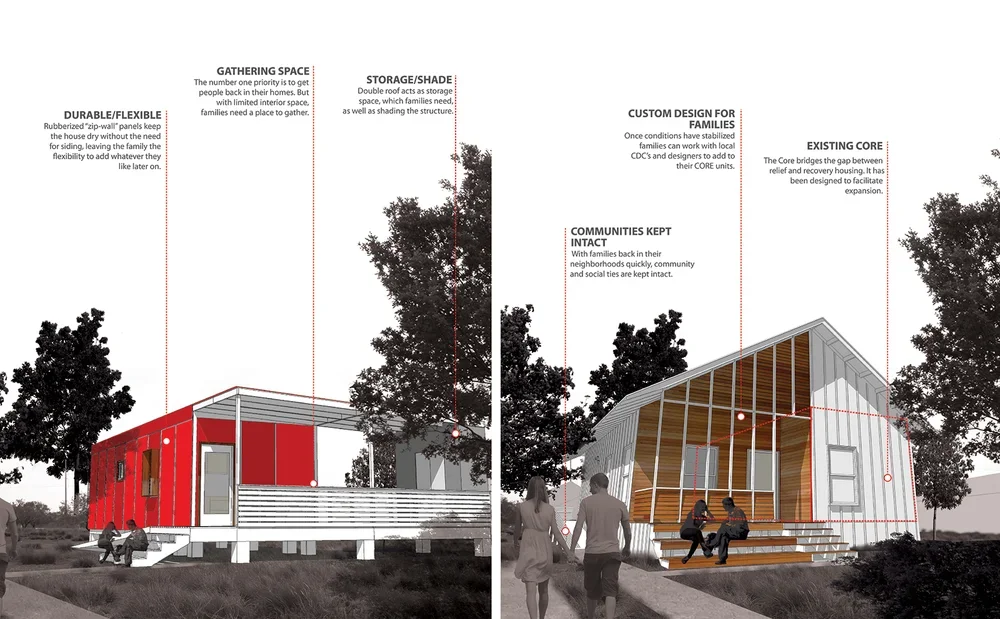
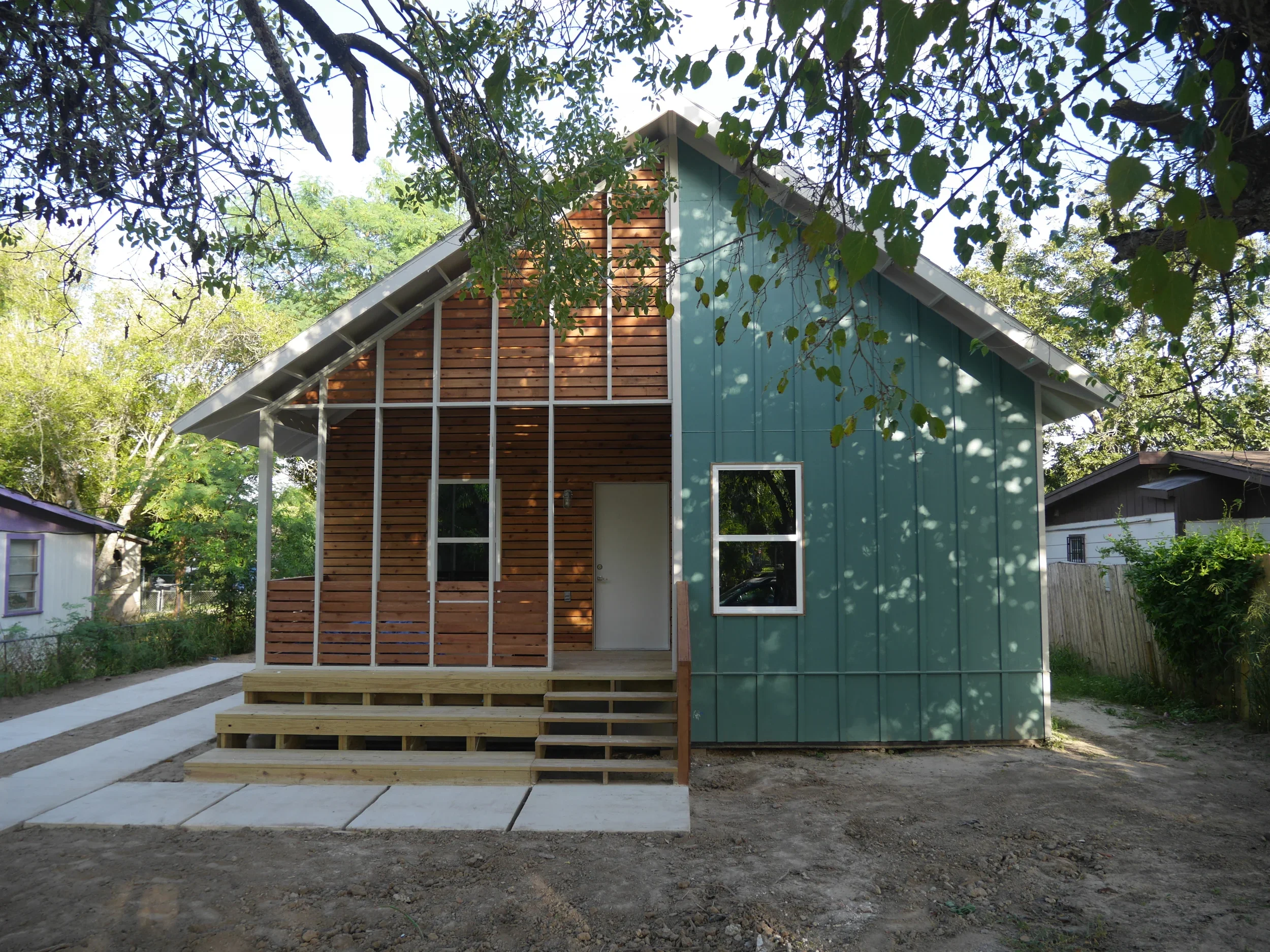
We've worked to adapt RAPIDO's temporary-to-permanent housing model for this new geography and have designed a temporary-to-permanent unit for a family. RAPIDO’s housing model deploys a temporary CORE unit to family’s property weeks after a disaster, which can be expanded into a permanent home through a system of semi-custom designed additions. The purpose of the RAPIDO CORE is to bridge the gap between relief and recovery housing and provide a pathway to meet long-term family needs and preferences.
Our first RAPIDO prototype in Houston will provide the process and the means for a Houston family to become homeowners and allow us to pilot RAPIDO in Houston.
We're also working to design and build an Accessory Dwelling Unit prototype (ADU), which will pilot additional possibilities for post-disaster housing and pre-disaster planning. After a disaster, RAPIDO's ADU allows homeowners whose houses are in need of repairs to remain on their property while the repairs are made. After the homeowner moves back into their primary home, the ADU can be rented out as affordable housing, providing an extra income. The RAPIDO ADU unit can also play a role pre-disaster by providing a safe space on a homeowner's property.
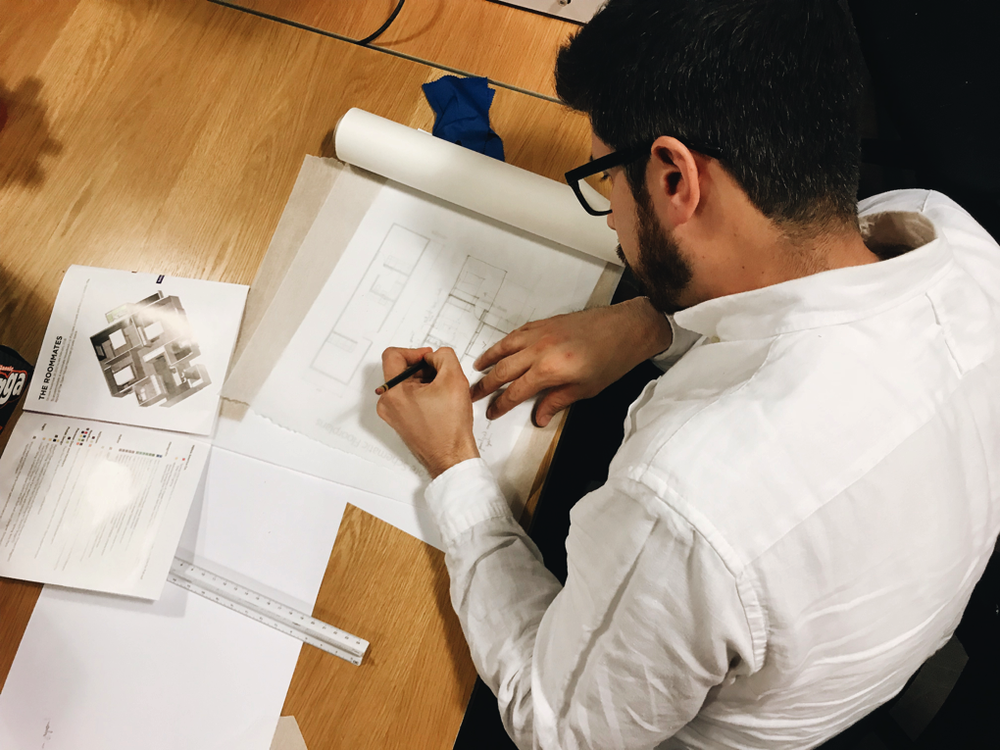
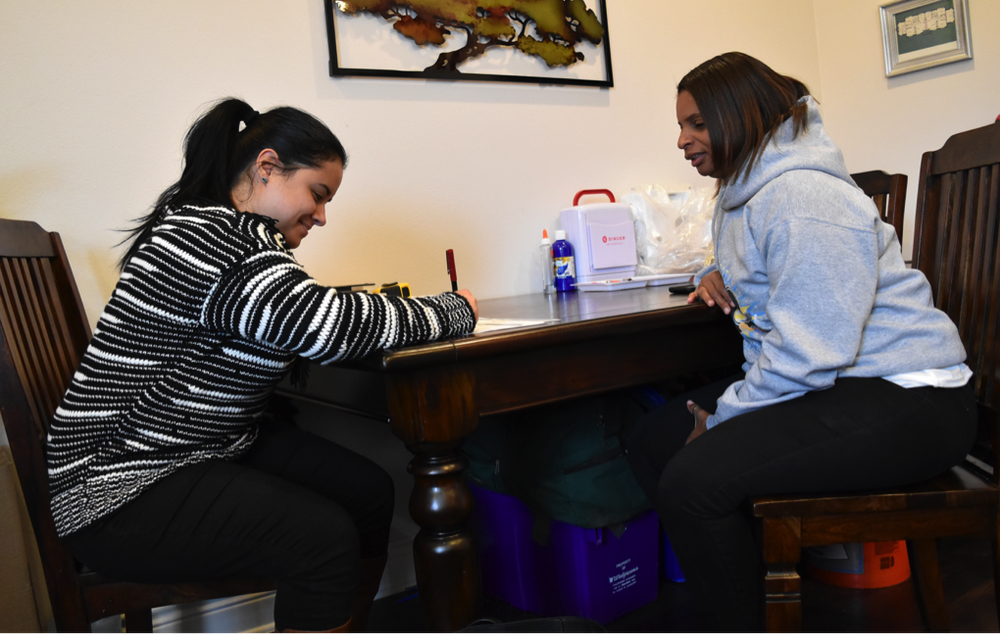
Check out photos below!

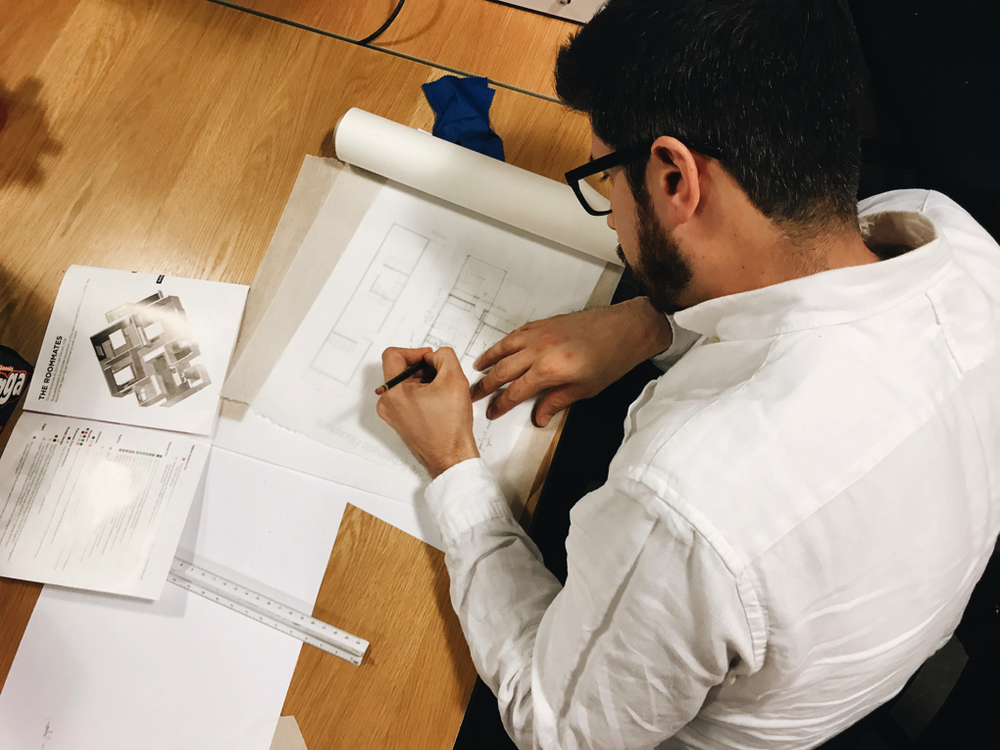
Announcing RAPIDORECOVERY.org
October 19th, 2016
buildingcommunityWORKSHOP ([bc]) is pleased to announce the launch of RAPDIORECOVERY.org in conjunction with our presentation of RAPIDO on Next City's World Stage at UN Habitat III in Quito. RAPIDO is a holistic approach to housing recovery that enables communities to recover for disasters within months instead of years. Through understanding and redesigning the entire U.S. disaster recovery housing process, alongside people who are affected the most, RAPIDO fosters resilience within Texas, empowers local communities, and abates the social and economic impacts of disaster.
RAPIDORECOVERY.org makes it easy to learn more about the RAPIDO model, view work from the RAPIDO Rapid Disaster Recovery Housing Pilot Program, and keep up to date with RAPIDO advocacy efforts in Texas.
UPDATES
Cooper Hewitt to Present "By The People: Designing a Better America."
April 19, 2016
RAPIDO will be one of the exhibits presented in the "By the People: Designing a Better America" at the Cooper Hewitt, Smithsonian Design Museum this fall.
[bc]’s Rapid Disaster Recovery Housing Program, RAPIDO, redesigns the existing disaster recovery system. Relying on a local approach to outreach, case management, procurement, and housing design, construction, and delivery; RAPIDO returns residents to their neighborhoods and onto their land within weeks of a disaster instead of years. Its temp-to-perm housing design responds to the social, cultural, economic and environmental context of the place the system is deployed. RAPIDO partners include Community Development Corporation of Brownsville, buildingcommunityWORKSHOP, La Unión del Pueblo Entero, A Resource in Service Equity, and Texas Low Income Information Services.

ABOUT THE EXHIBIT
Cooper Hewitt, Smithsonian Design Museum will present “By the People: Designing a Better America,” the third exhibition in its series on socially responsible design, from Sept. 30 through Feb. 26, 2017. The first exhibition in the series to focus on conditions in the U.S. and its bordering countries, “By the People” will explore the challenges faced by urban, suburban and rural communities. Organized by Cynthia E. Smith, Cooper Hewitt’s curator of socially responsible design, the exhibition features 60 design projects from every region across the U.S.
Smith conducted more than two years of field research—traveling to shrinking post-industrial cities, sprawling metro regions, struggling rural towns, along border regions, areas impacted by natural and man-made disaster and places of persistent poverty—in search of collaborative designs for more equitable, inclusive and sustainable communities. The exhibition will highlight design solutions that expand access to education, food, healthcare and affordable housing; increase social and economic inclusion; offer improved alternative transportation options; and provide a balanced approach to land use between the built and natural environment.
“As America’s design museum, Cooper Hewitt empowers visitors to see themselves as designers—not just of objects, but also of ideas, strategies and solutions that improve our daily lives,” said Director Caroline Baumann. “‘By the People’ will showcase the innovative and impactful actions generated through design, and inspire creative problem-solving at local, regional, national and even international levels.”
On view in the third floor Barbara and Morton Mandel Design Gallery, the exhibition will be divided into six themes: act, save, share, live, learn and make. To orient the visitor, the complexities of poverty, prosperity, innovation and design in the U.S. will be addressed in an introductory section that will feature a captivating video by Cassim Shepard, an interactive data visualization, “Mapping the Measure of America” and graphics that chart social and economic inequalities.
The exhibition will continue in the museum’s groundbreaking Process Lab, which offers immersive experiences for visitors of diverse ages and abilities, from families with small children to design students and professionals. Cooper Hewitt will invite visitors to address challenges in their own communities using design thinking and propose solutions.
The accompanying 256-page book, By the People: Designing a Better America, will be published by Cooper Hewitt and distributed in the U.S. by Artbook | D.A.P. and worldwide by Thames & Hudson. Designed by Other Means, By the People will contain essays and interviews with featured designers and architects, in addition to highly illustrated project profiles. Retail: $29.95.
In fall 2016 and winter 2017, a series of public programs will inspire conversation about innovative and systemic approaches being developed through design. Planned events include a lecture focused on affordable housing and design (Oct. 13), Designing Resilience (Nov. 10) and Defiant Jewelry with Rebel Nell founder Amy Peterson and a participating artisan (Jan. 26).
“By the People: Designing a Better America” is made possible by the generous support of the Ford Foundation. Additional support provided by New York State Council on the Arts with the support of Governor Andrew M. Cuomo and the New York State Legislature and The Horace W. Goldsmith Foundation. [read more about the upcoming exhibit here]
To see "By the People" visit the Cooper Hewitt from Sept. 30 through Feb. 26, 2017 at:
2 East 91st Street
(between 5th and Madison Avenues)
New York, New York 10128
Weekdays and Sundays, 10:00 a.m.–6:00 p.m.
Saturdays, 10:00 a.m.–9:00 p.m.
Rapido wins SXSW Eco Place by Design Award
October 7, 2015
Learn more about the other SXSW Eco award winning projects.
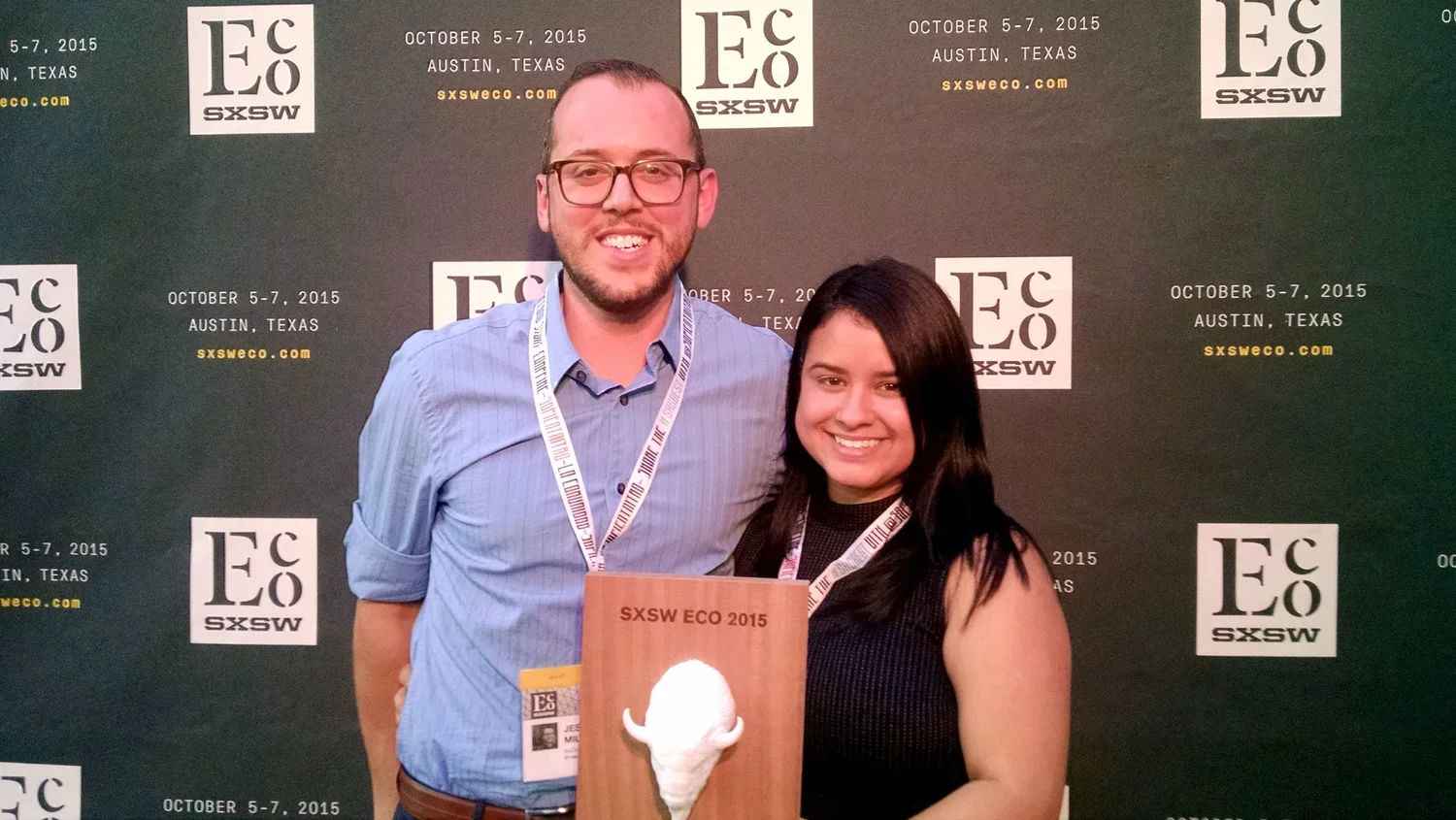
We are very excited to have presented RAPIDO, our disaster recovery housing pilot program, at the SXSW Eco 2015 conference this past Monday, and we are very honored to have been awarded 1st place in the Social Impact category of the Place by Design Competition.
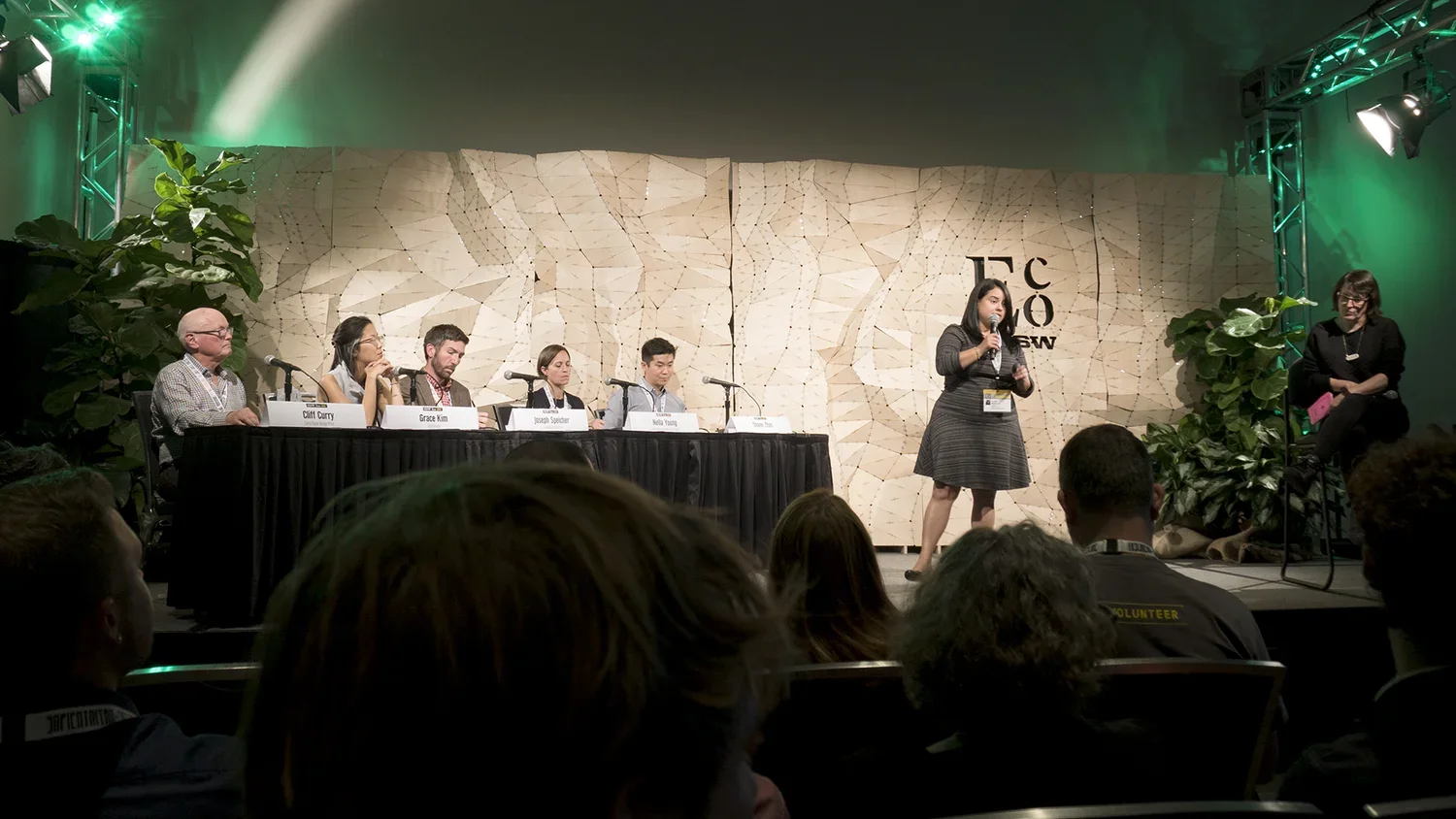
[bc]‘s Elaine Morales shared how the work of RAPIDO has created a great impact in the Rio Grande Valley, and how it can be implemented as a holistic approach to disaster recovery in other communities. The RAPIDO team designed and built 21 prototype homes with families affected by Hurricane Dolly in 2008, as well as designing a comprehensive system that empowers local teams to better prepare, respond and recover from natural disasters without sacrificing home design and quality. The audience feedback to our work was amazing and we were thrilled to have been part of the event and share experiences with entrepreneurs, designers and the general public on how to better serve the places we live in and work with.
“The Rapido model starts recovery activities prior to a disaster. We call it precovery. Precovery means pre-designing to increase the variety and quality of home designs available, pre-procurement to allow housing recovery to start at the earliest, and preparedness and training to build reliable teams that support local jurisdictions and assist families through the recovery phase. By investing in precovery activities communities will be better prepared to recover.” - [RAPIDO Place by Design Competition pitch]
The SXSW Eco 2015 Place by Design Competition validated the need of changing the culture of design practice and academia by implementing an experience based learning approach within the design process through listening to what communities have to say, learning to ask the right questions, and measuring impact.
You can see all of the award finalists here and learn about some great place making efforts from around the world.
DRH Program Report
February 18, 2015
We did it! After over a year of research, discussions, writing, diagramming, and even more editing, we delivered the Disaster Recovery Housing program report to the Texas General Land Office this week. The report is the policy component of the RAPIDO pilot program and an outgrowth of lessons learned through the pilot.
The report is the combination of a set of policy recommendations that outlines high level policy change recommendations, a technical guide that serves as a step-by-step manual for local jurisdictions who adopt the program, and a program comparison that details post disaster housing pilot programs and common challenges.
In 2008, the Lower Rio Grande Valley experienced major devastation at the hand of hurricanes Dolly and Ike. Wind and flood damage in the four county area topped 1 billion dollars; however, in 2013 hundreds of families were still living in homes with flood and wind damage, ultimately triggering a second round of disaster recovery. The purpose of the DRH program is to develop a system that would be able to respond to housing recovery faster, cheaper, and with greater choice. Our program utilized the innovative temporary-to-permanent design tested in the RAPIDO pilot to rehouse families affected by a disaster within 120 days of disaster response.
Disaster recovery planning and preparedness are also key elements of the policy recommendations and technical guide. We believe that developing a disaster housing recovery plan prior to a disaster will remove many of the barriers that contribute to housing recovery spanning into years instead of months. Pre-disaster planning affords the local jurisdiction an opportunity to identify community priorities, understand disaster risks, and develop a response that supports the local context.
While this is a big moment for [bc], the development of the DRH program report would not be possible without the RAPIDO team and partners. This report was developed in conjunction with the Community Development Corporation of Brownsville and Shannon Van Zandt’s team at the Hazard Recovery and Reduction Center at Texas A&M University we would also like to thank our partners LUPE, ARISE, and Texas Low Income Housing Information Services, along with our remarkable team of advisors. We look forward to seeing what the future holds for the DRH program, the CORE temp-to-perm housing model, and possible future legislation. Disasters will happen, and the DRH program is a Texas solution that promotes a local response to rebuilding our communities thoughtfully.
![[bc] Planning Associate Lisa Neergaard assess the inside of a RAPIDO pilot home.](https://images.squarespace-cdn.com/content/v1/663949dff75d7e173ed082f6/1760716993731-ACP9P94BAPK9GH2JOOJP/P1000888.webp)
Community Organizers in Disasters
October 10, 2014
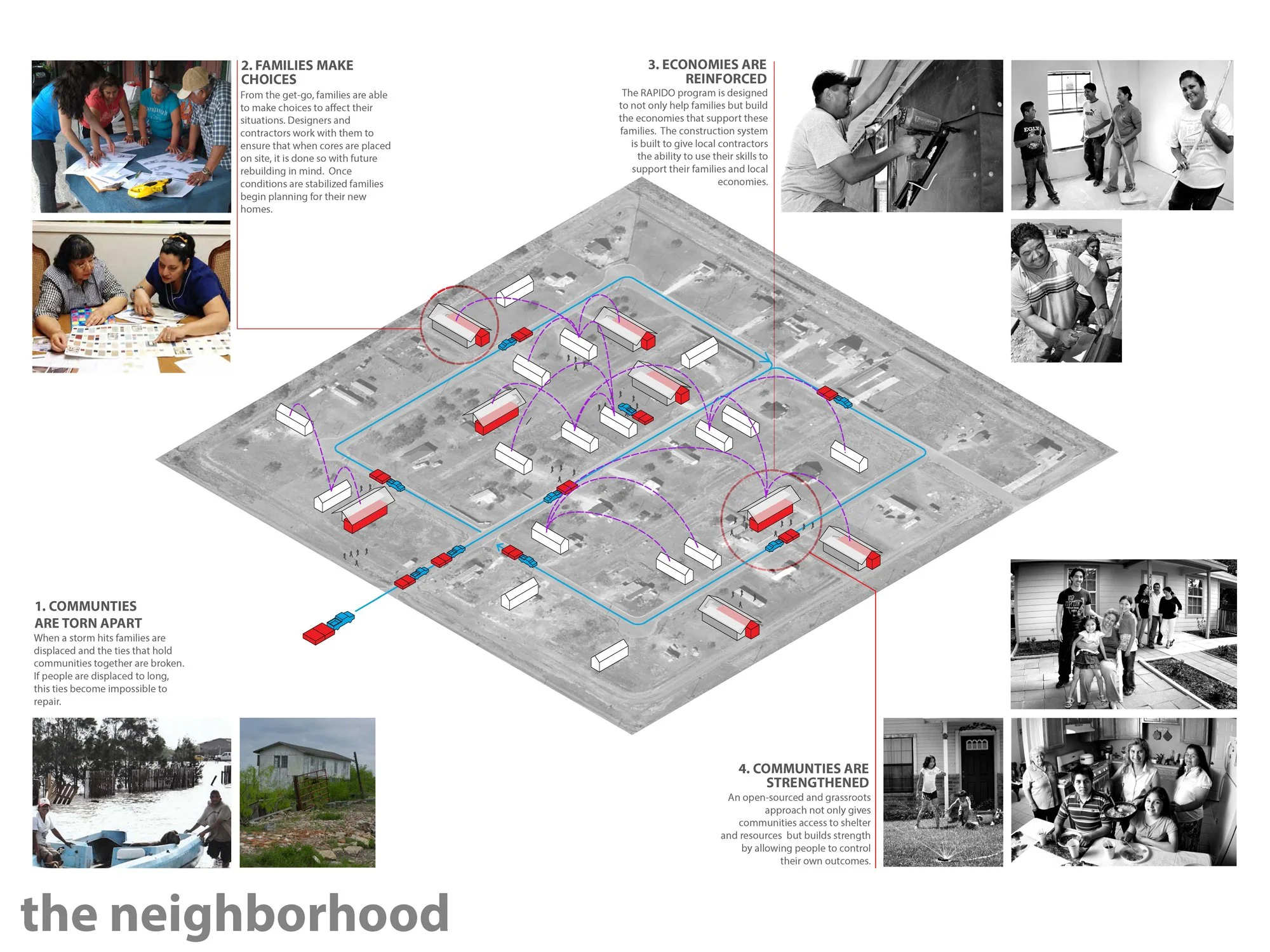
Community organizers from LUPE and ARISE in Hidalgo County and the Community Development Corporation of Brownsville in Cameron and Willacy Counties have proved to be a great asset for post-disaster response in vulnerable areas - especially where trust and social ties are already in place. During the outreach period of the RAPIDO pilot, the Outreach team became more than just a point of contact for the program. Navigators demonstrate that activities such as case management and social services are essential in the recovery process for families. The Navigators were the face of the program during the application period, providing confidence and support through the process.
As part of the policy development for RAPIDO the Policy team will soon deliver three main documents: a program comparison report; a technical guide; and policy recommendations. Key outcomes will include understanding and documenting statutes and regulations that affect in the implementation of RAPIDO at the local, state and national government levels. The Policy team is led by Shannon Van Zandt and the Center for Housing & Urban Development at Texas A&M University. The Outreach, Eligibility and Design and Construction teams communicate project progress and challenges regularly to the Policy team in order to identify major policy changes needed in order to implement the RAPIDO plan.
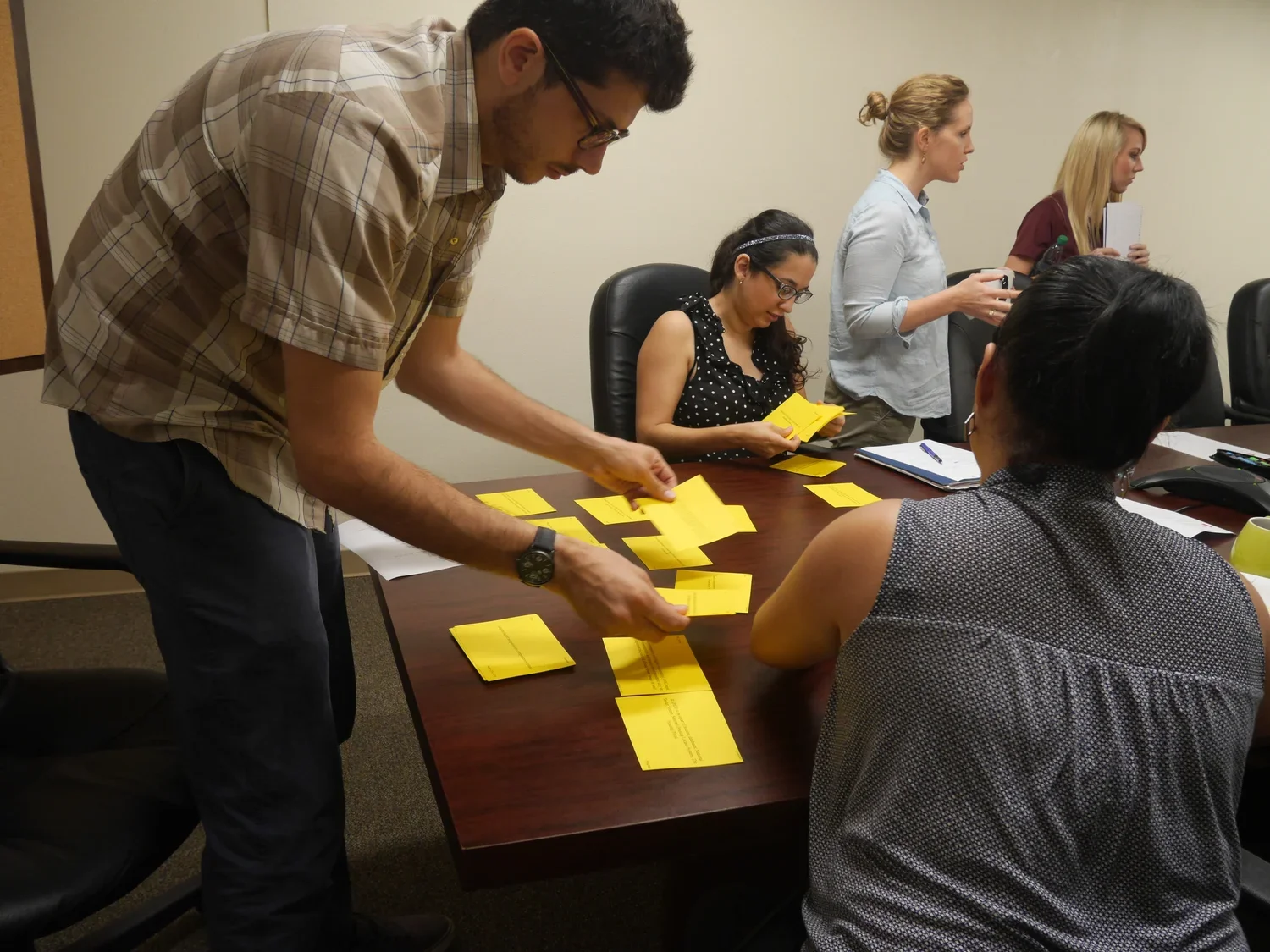
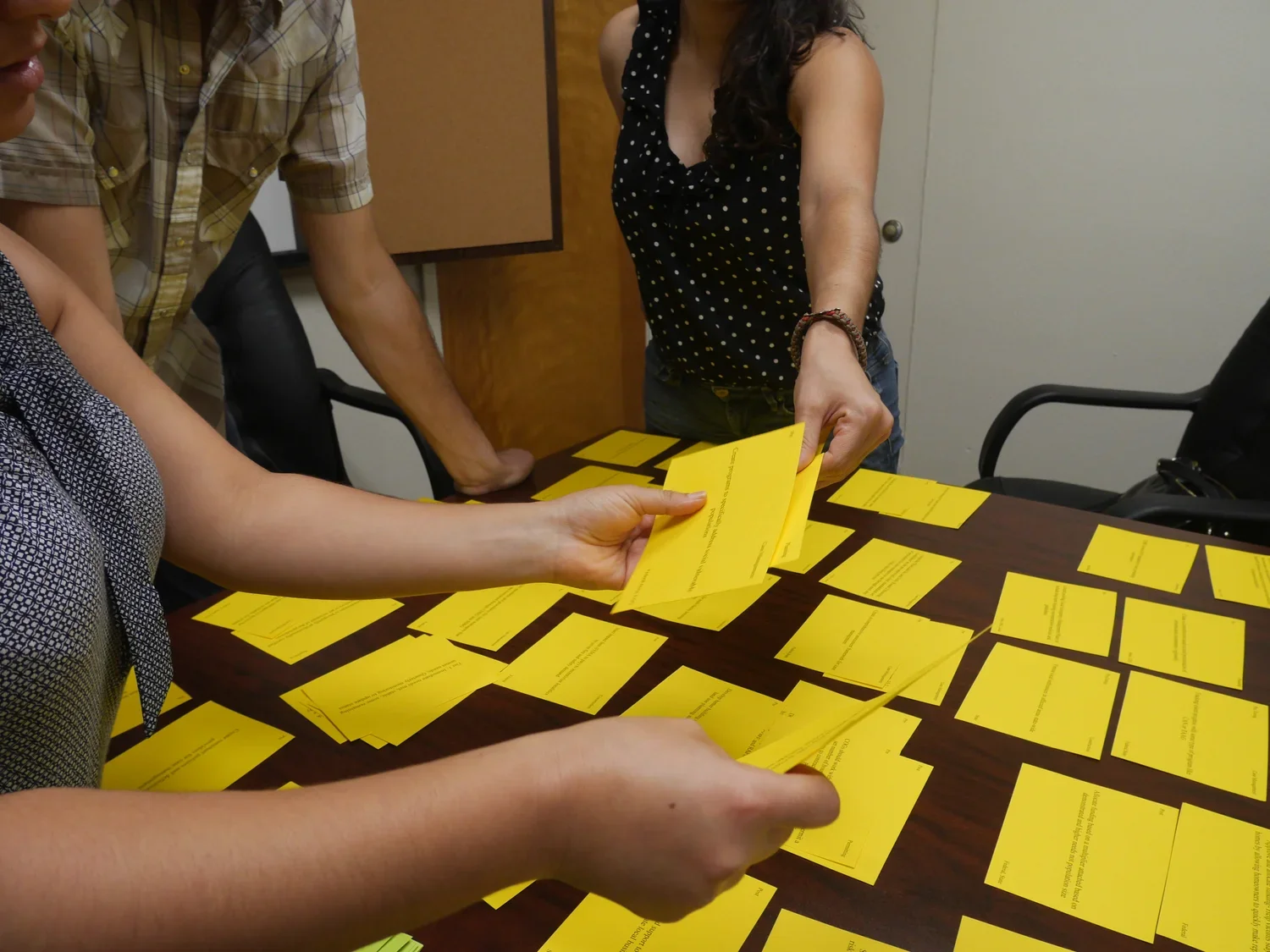
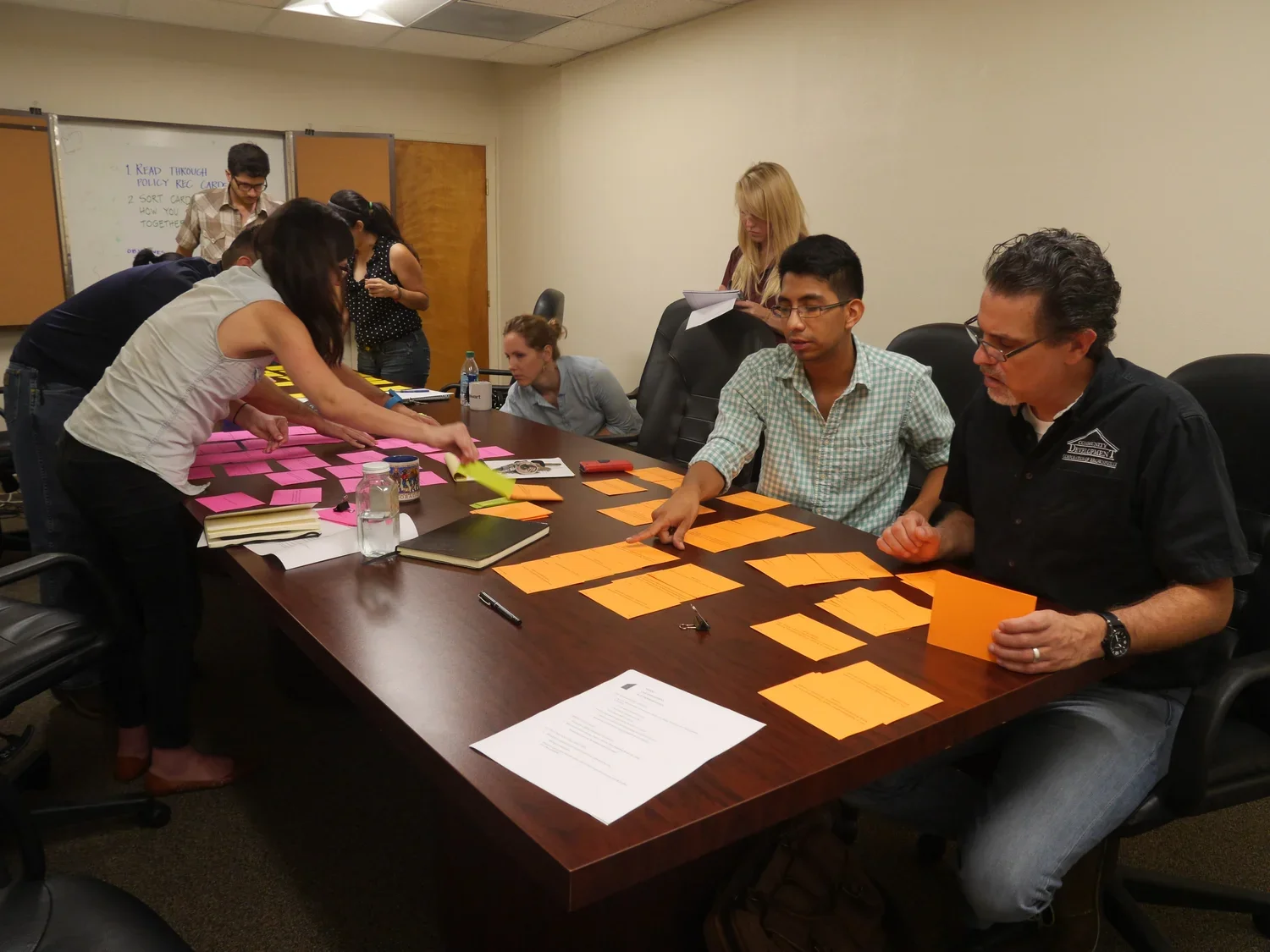
![[bc] staff and RAPIDO partners in the Rio Grande Valley help put together the DRH guide. (Copy)](https://images.squarespace-cdn.com/content/v1/663949dff75d7e173ed082f6/1760716995271-Z0T015PHGM5KMDF625MQ/P1000985.webp)
RAPIDO: Redefining Disaster Recovery
October 1, 2014
Rapid recovery after natural disasters, especially returning families to safe, quality permanent homes, has traditionally been very difficult, poorly executed, and expensive. The Lower Rio Grande Valley, one of the poorest areas in the country, and often hit by massive flooding, is the pilot site for a new and innovative rapid recovery model.
Based on a grant awarded by the Council of Governments and the Community Development Corporation of Brownsville (CDCB), along with project partners La Unión del Pueblo Entero (LUPE), ARISE, Texas Low-Income Housing Information Service and the Hazard Reduction & Recovery Center, [bc] is working to deliver 20 low cost, rapid deployment post-disaster housing prototypes, as well as technical manuals and a set of policy recommendations to be presented to the Texas State Legislature. Partners and experts meet monthly to discuss 4 primary components of RAPIDO: Outreach, Case Management, Design and Construction and Policy.
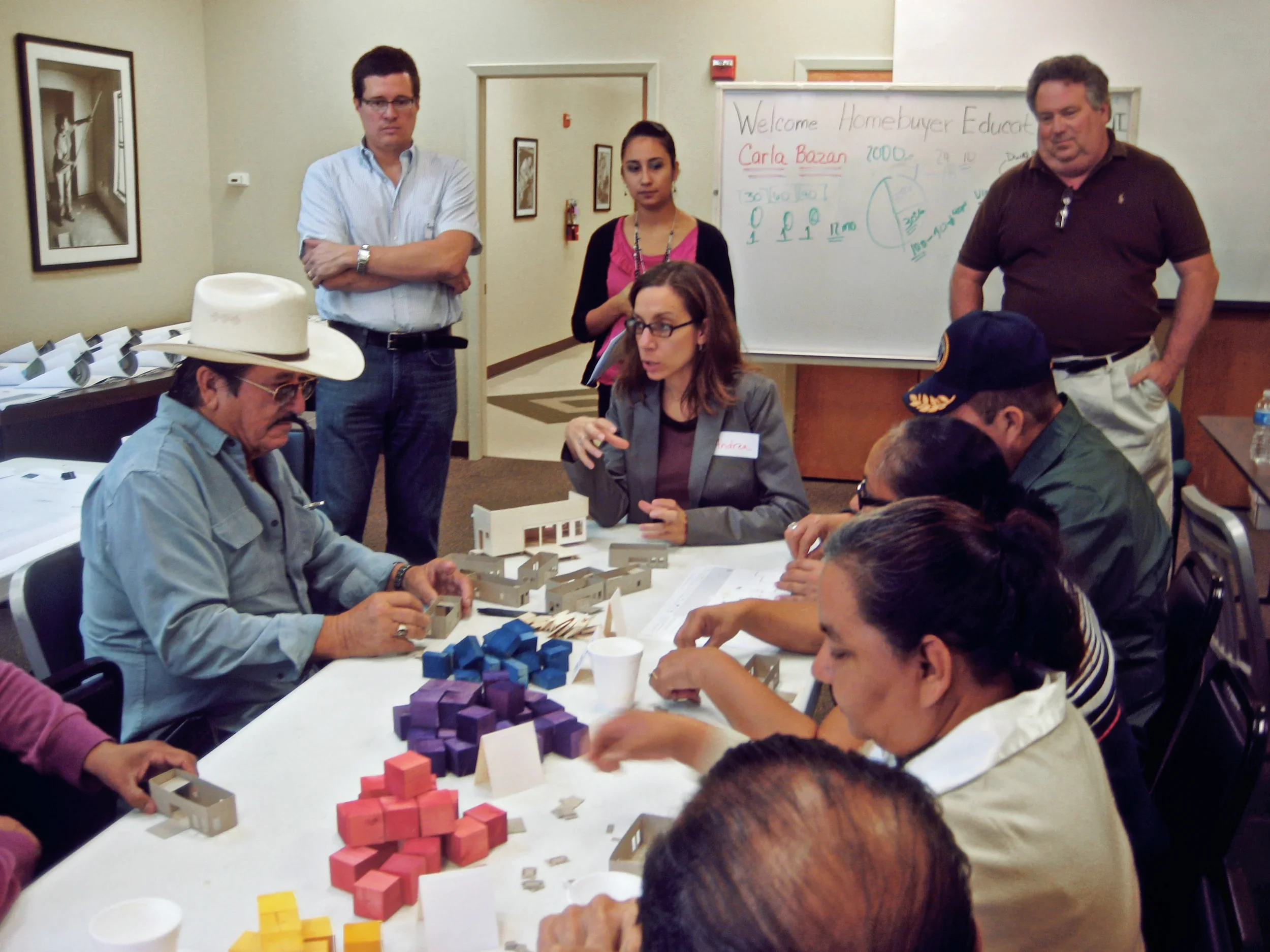
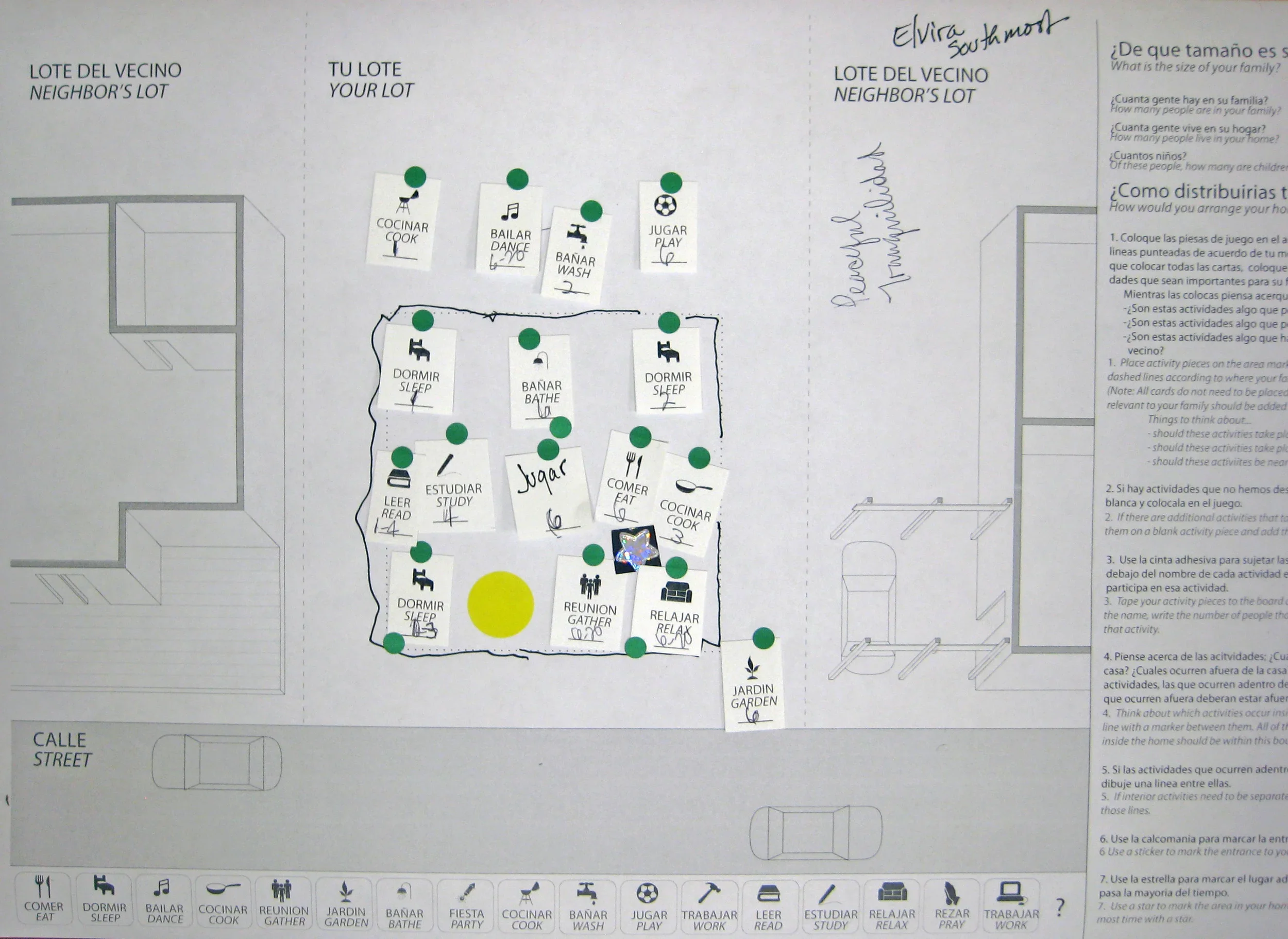
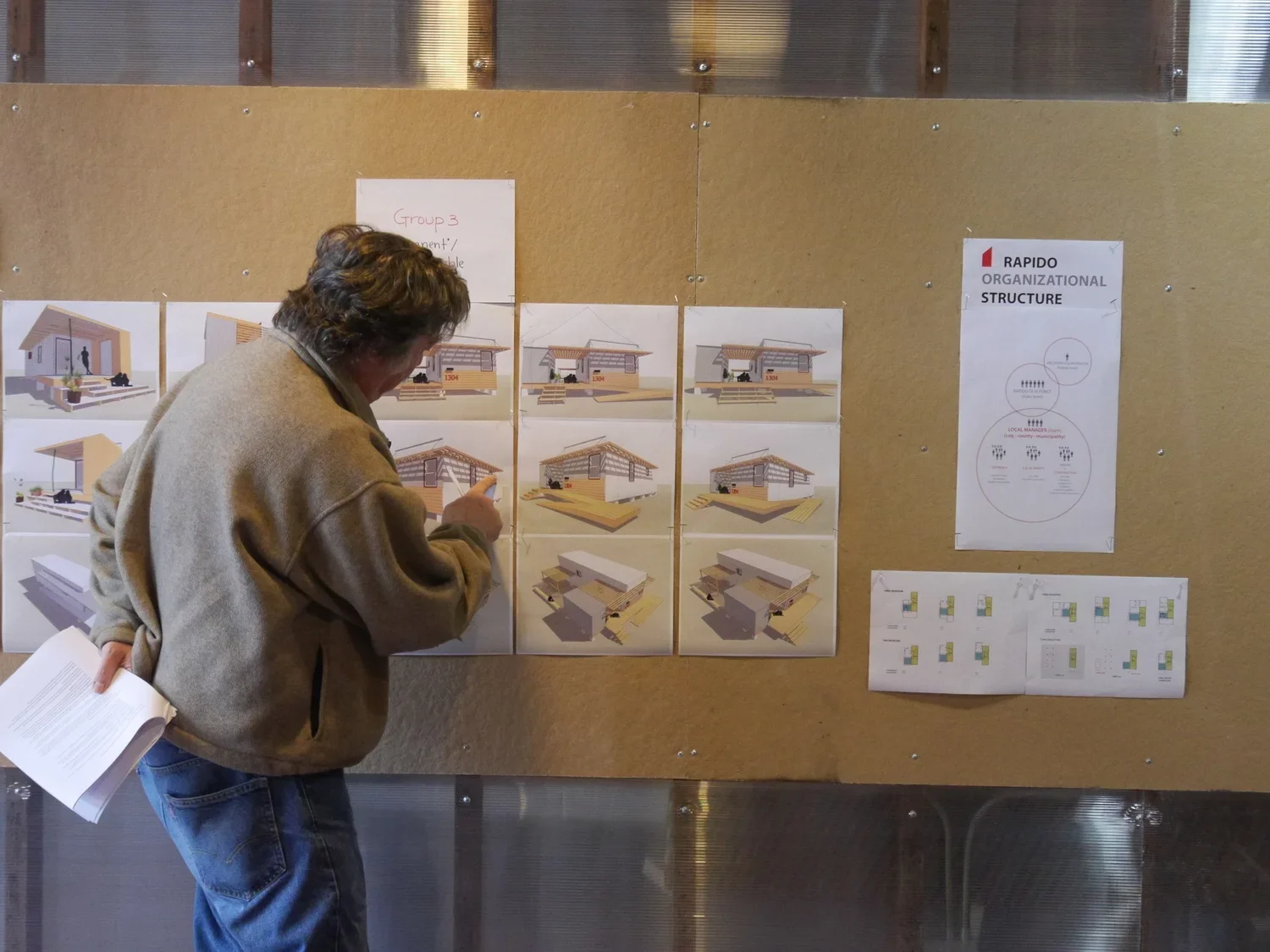
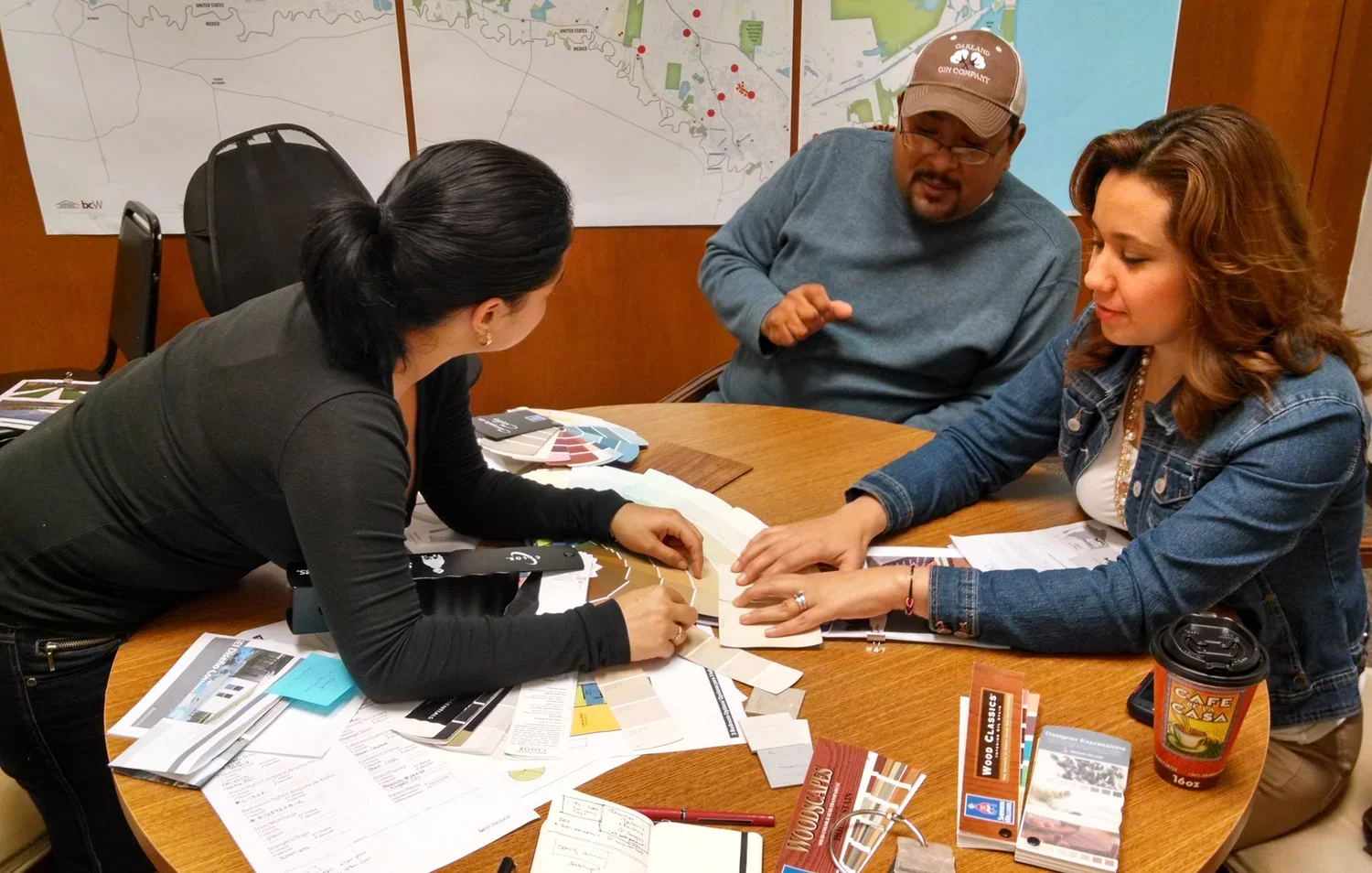
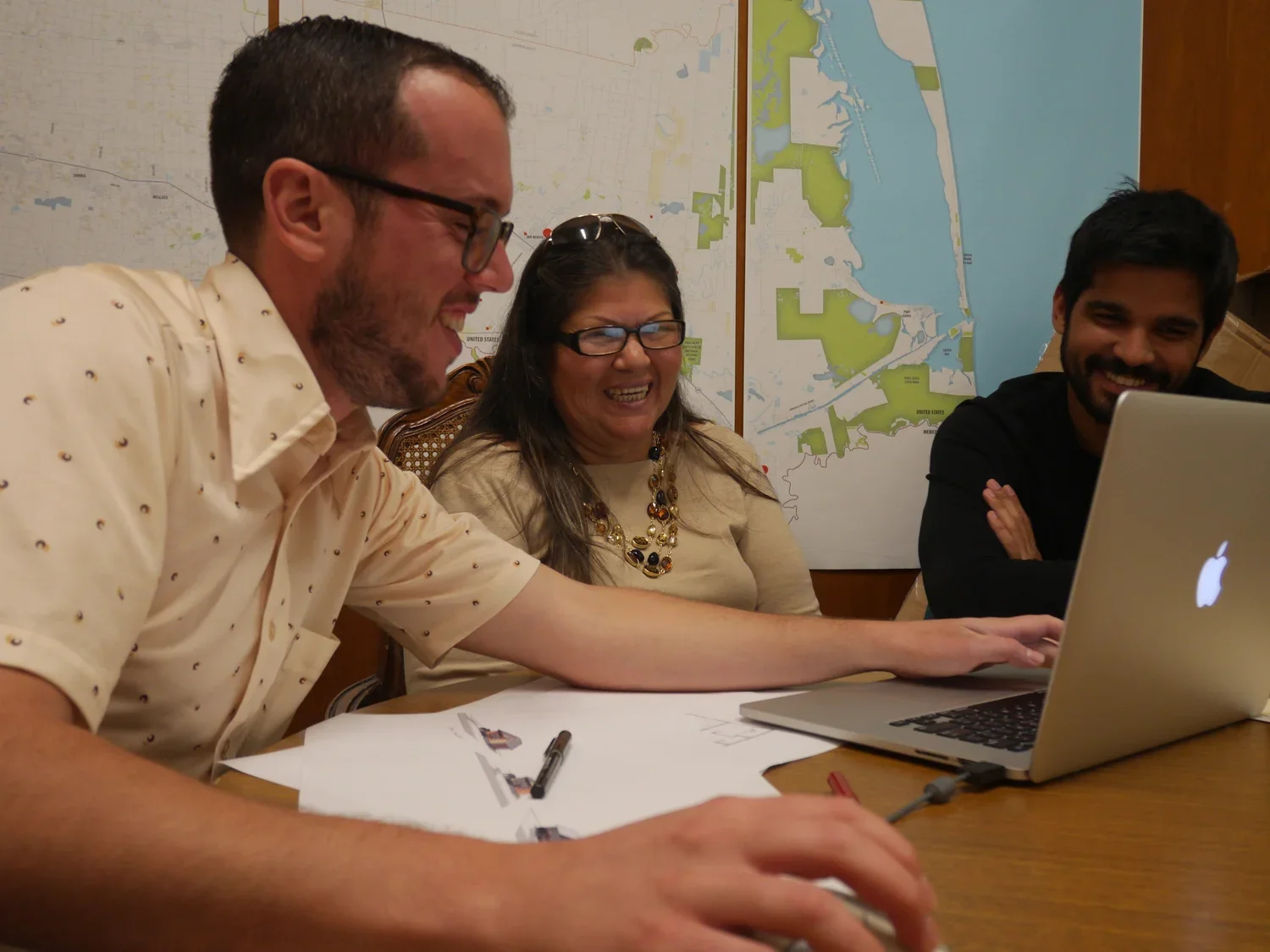
[bc] is leading the design for RAPIDO, with CDCB managing the eligibility and construction process. [bc] has established an engaged design process that gives low-income families choices and the flexibility to decide important characteristics of their new home. Through two design meetings, [bc] led the families through a set of exercises that define their needs and desires. Based on these preferences personalized designs were prepared for each family.
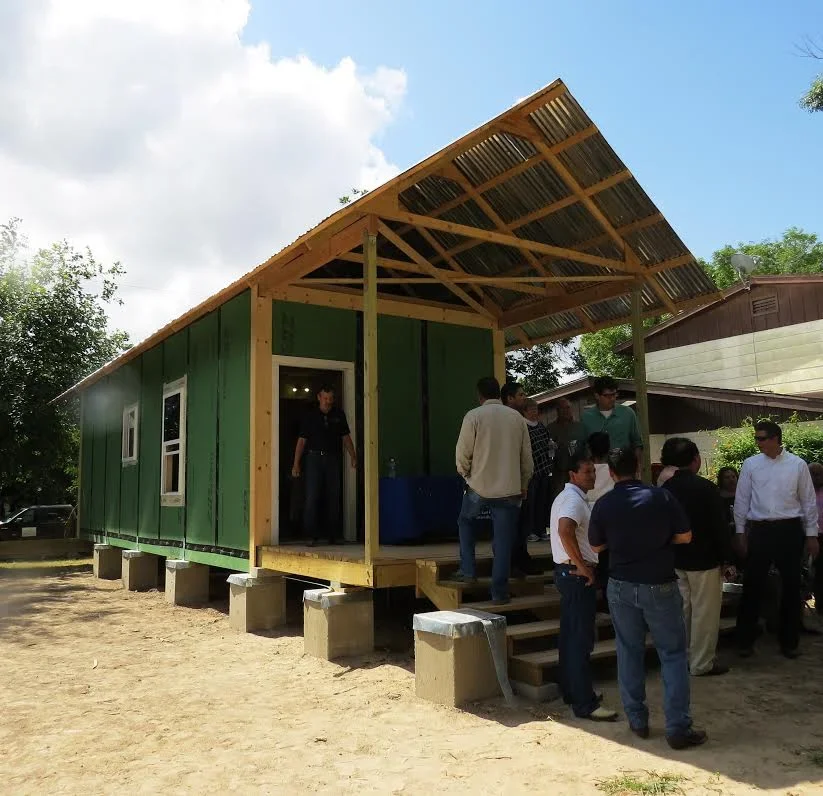
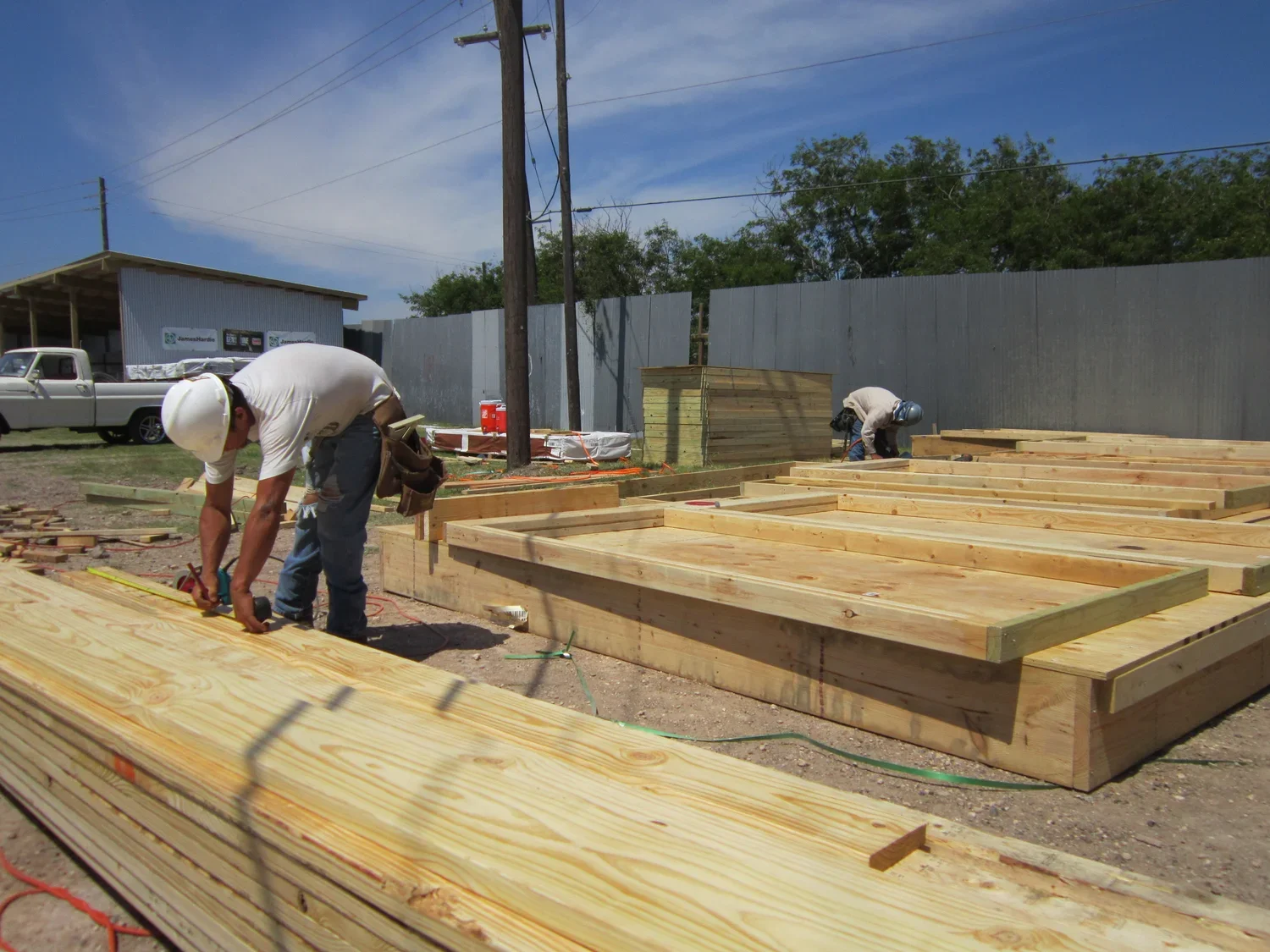
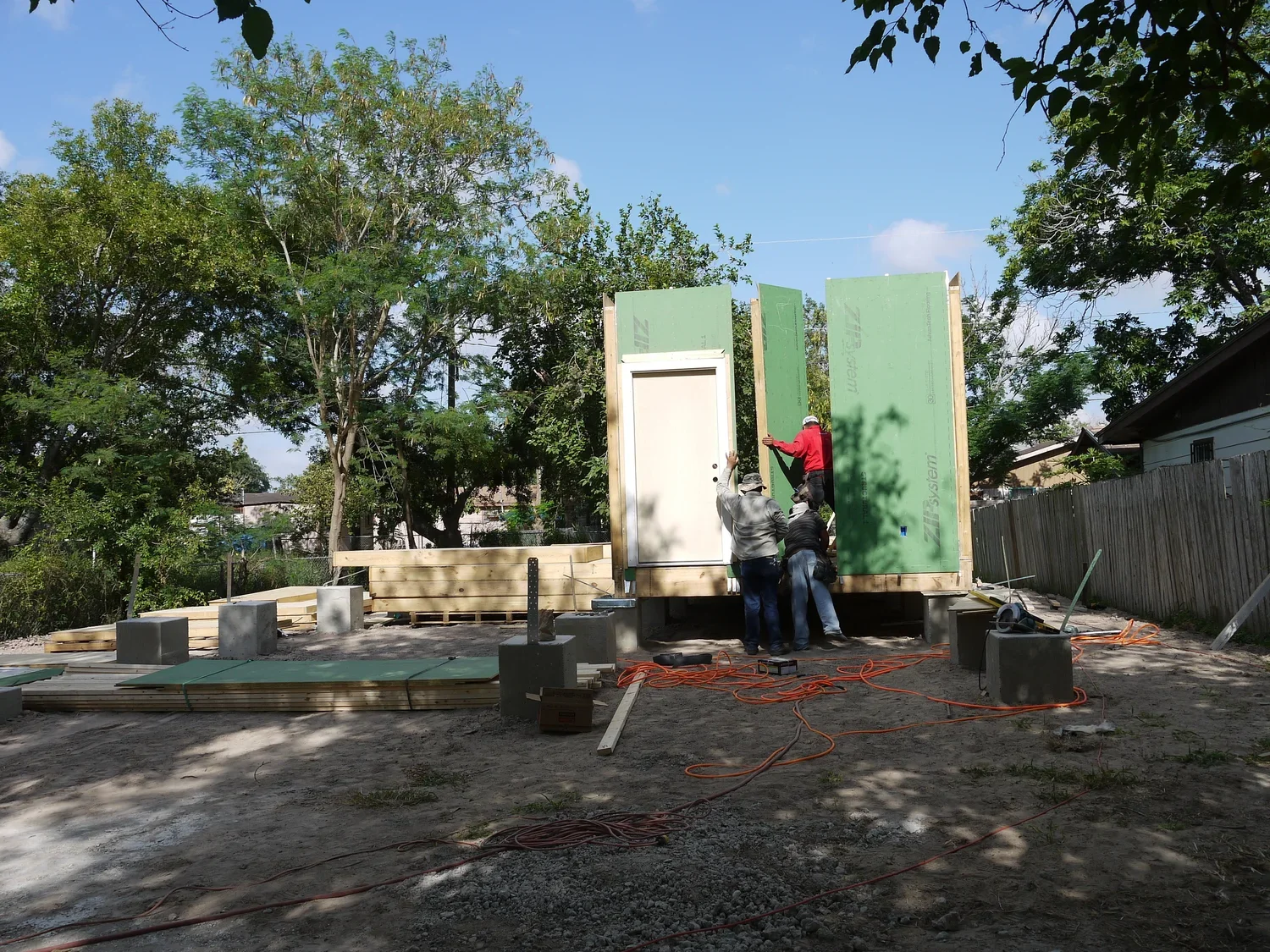
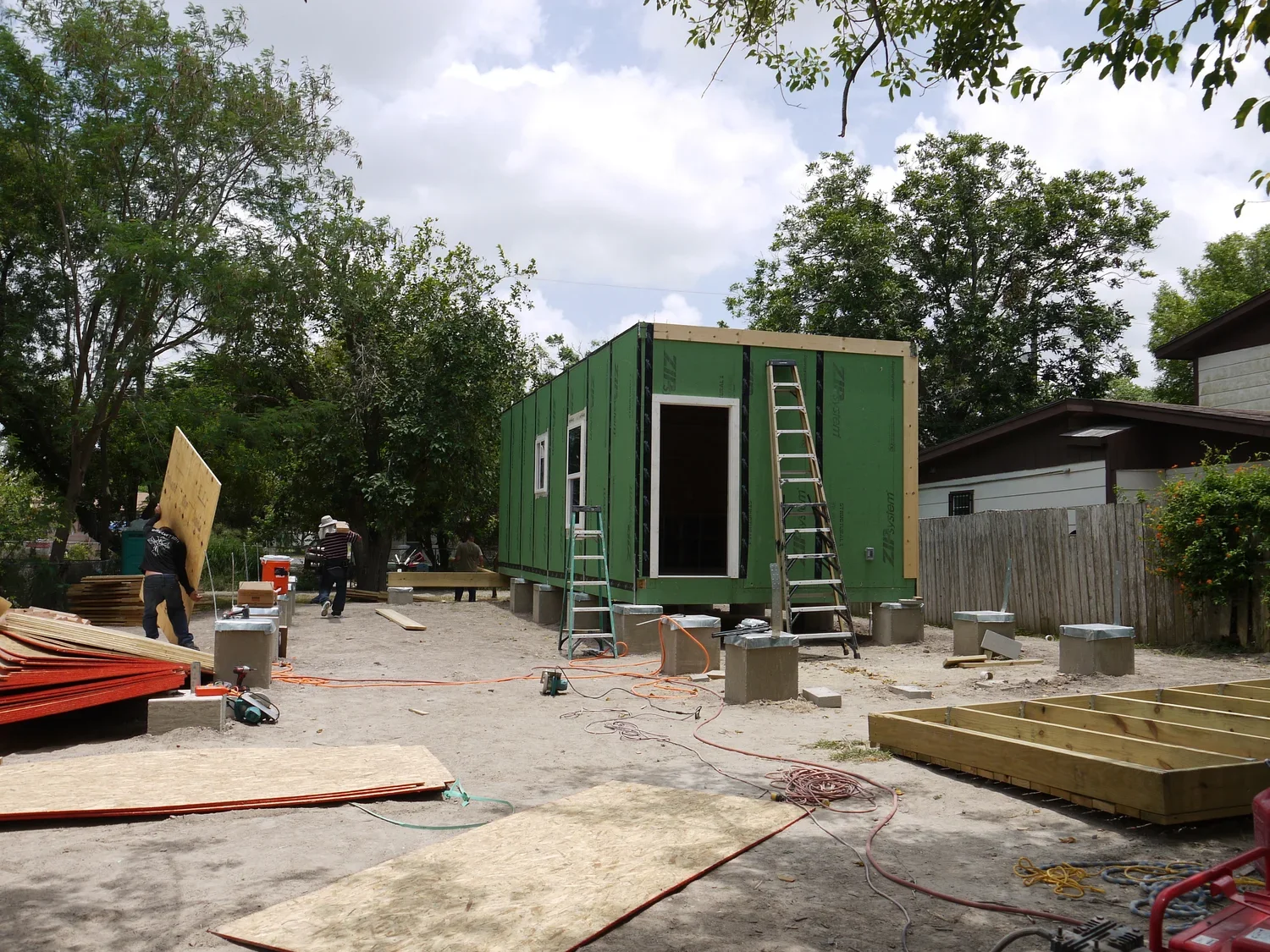
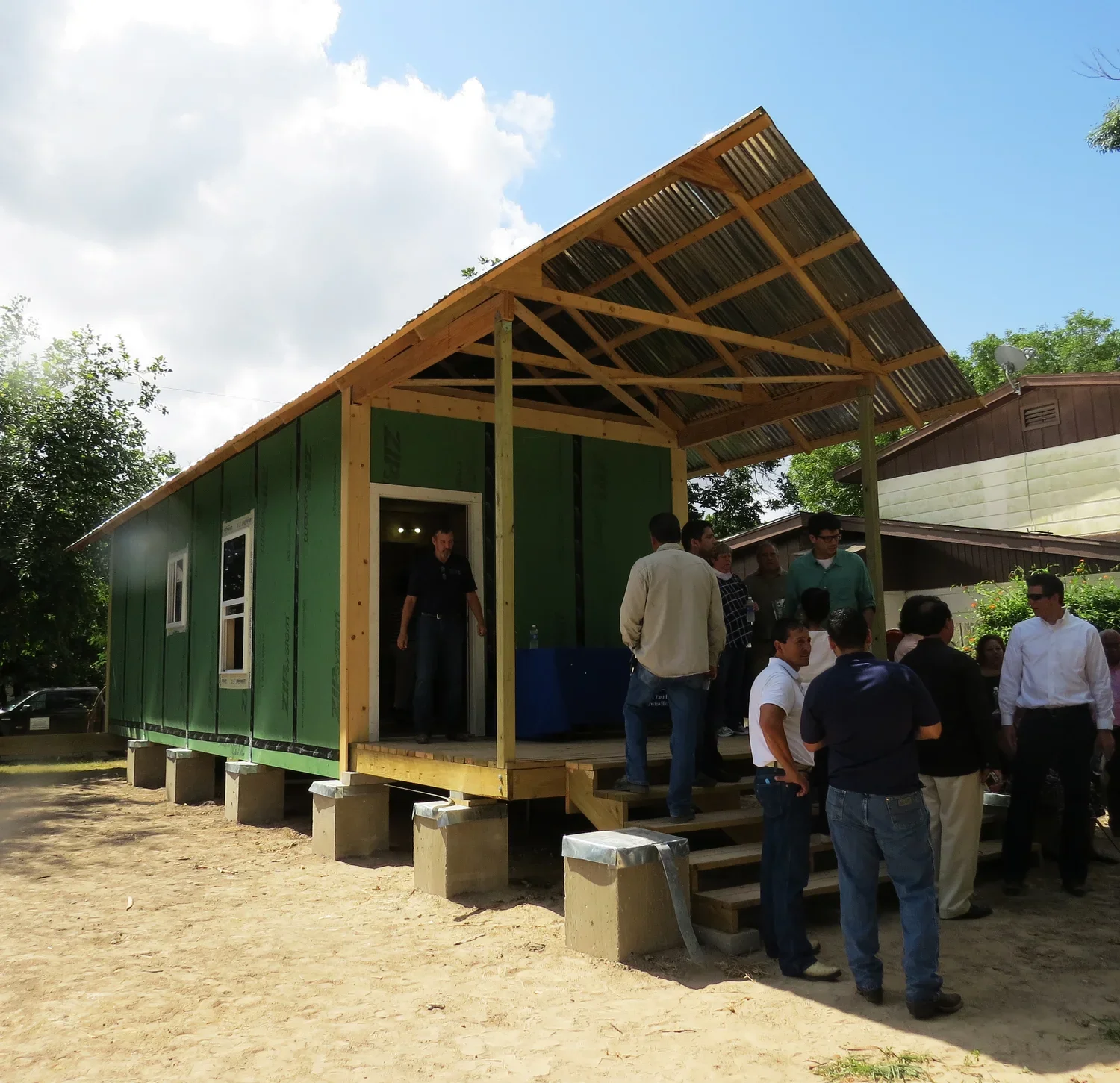
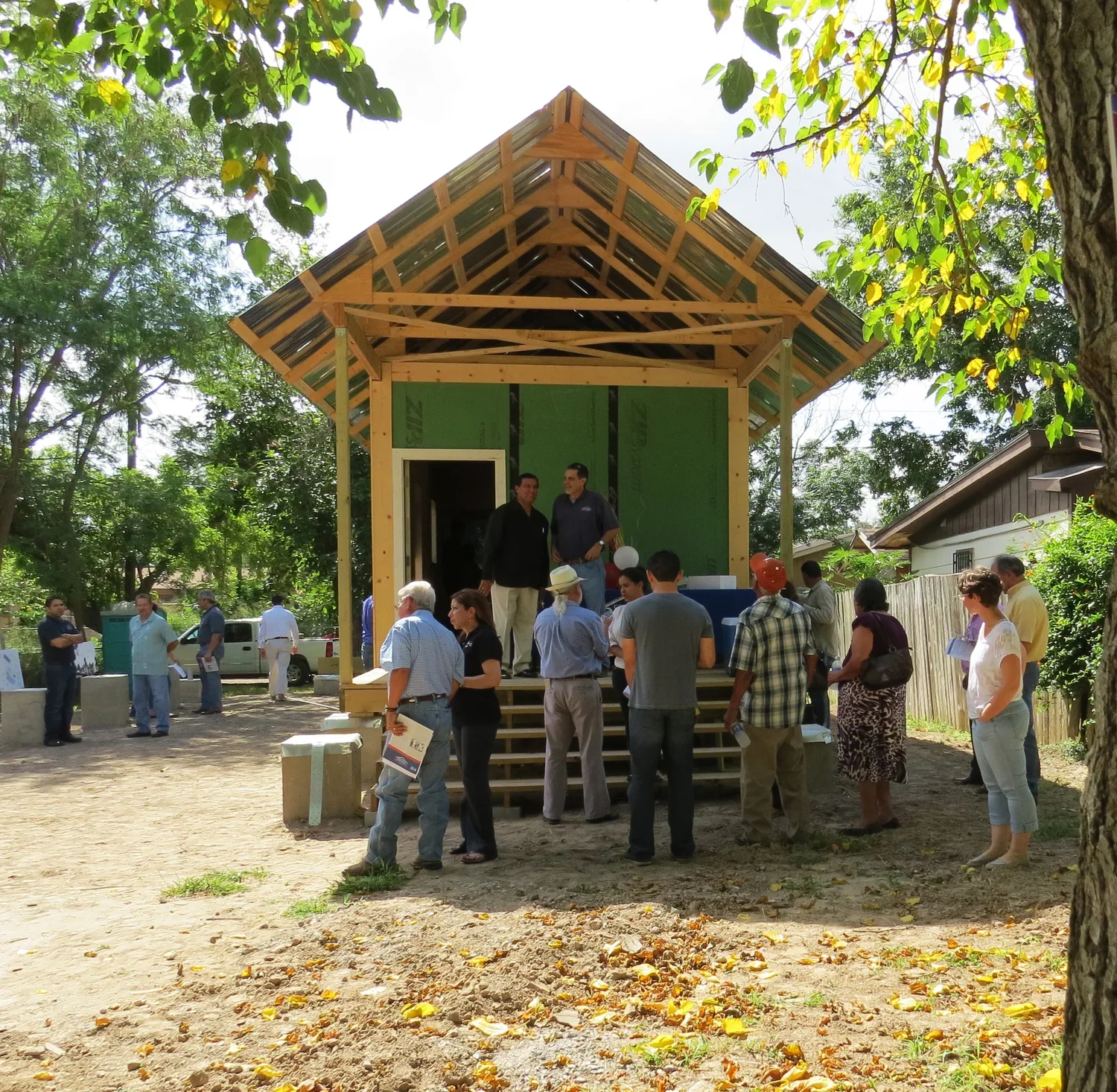
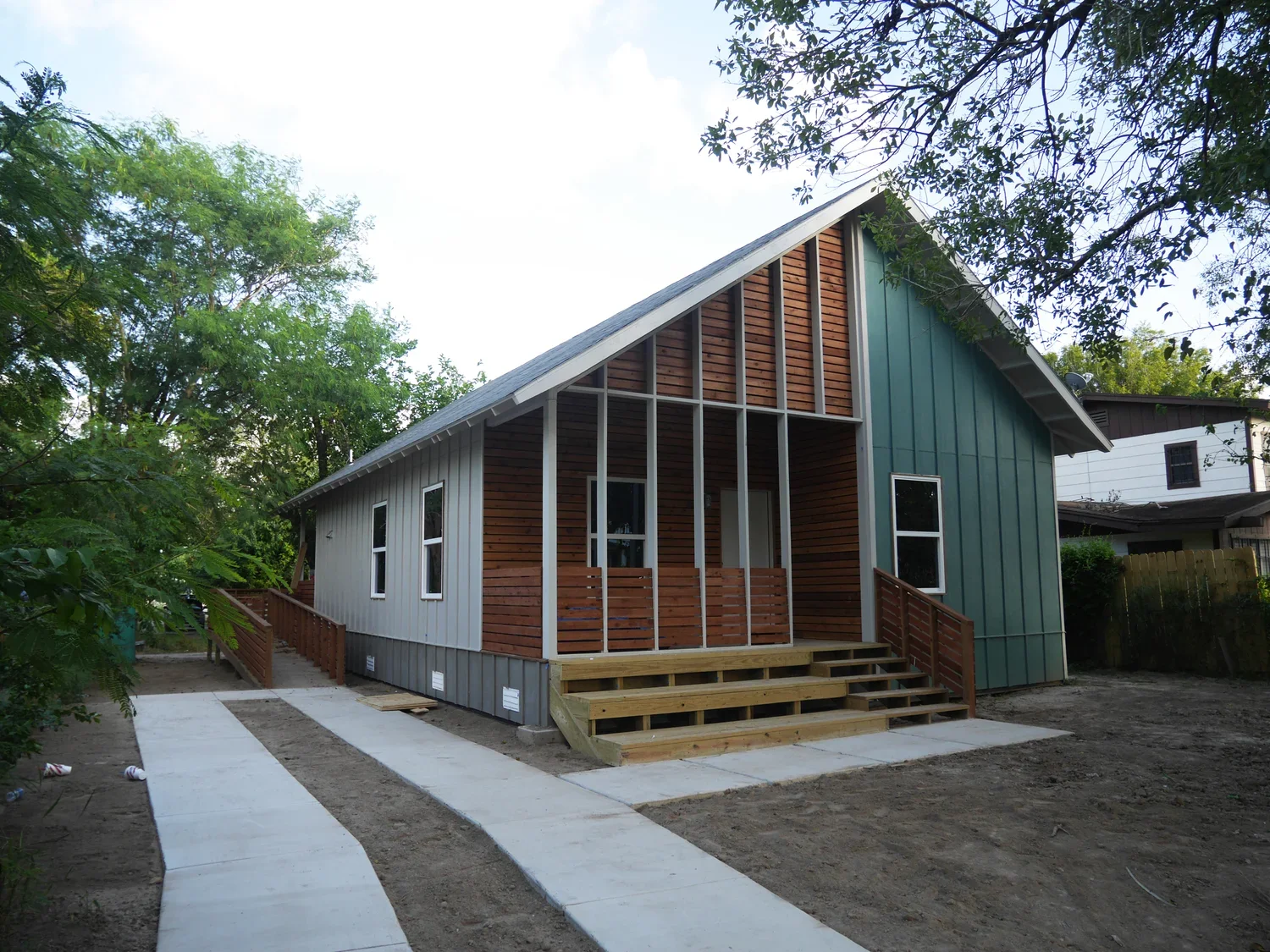
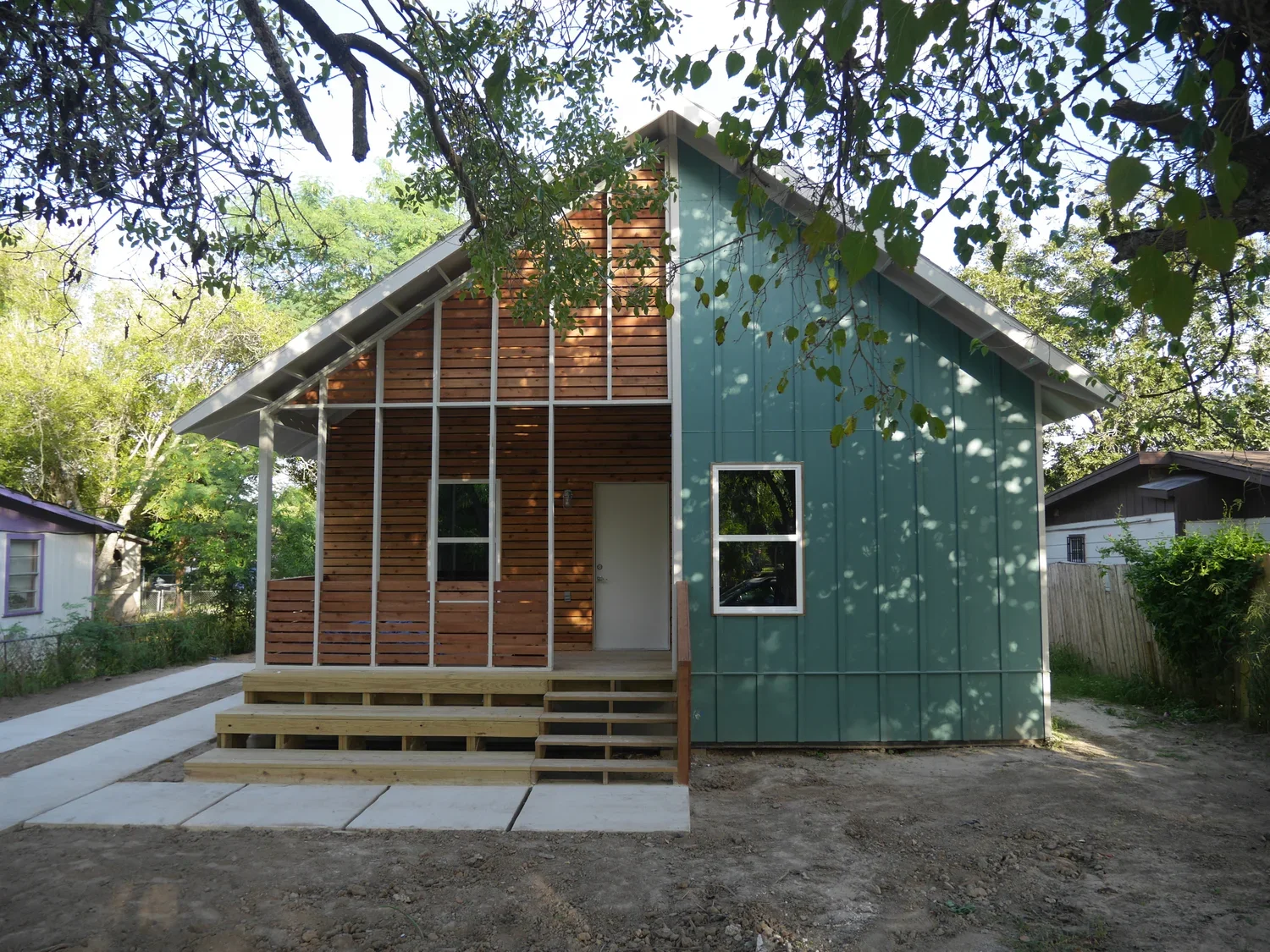
A key part of the pilot is to explore different possibilities for the implementation and scaling of the plan statewide. RAPIDO is experimenting with the transition of a temporary unit (CORE) to a permanent house (Expanded Home). CORE’s have being built at El Clavo Lumber Yard in Brownsville, and the first RAPIDO home expansion was built at Carolina St, Brownsville in a CDCB-owned lot. The process has helped to train local builders on the RAPIDO strategy and also was a good opportunity to share the RAPIDO plan and the program goals to local groups and the local community.

What's New with Rapido?
April 2, 2014
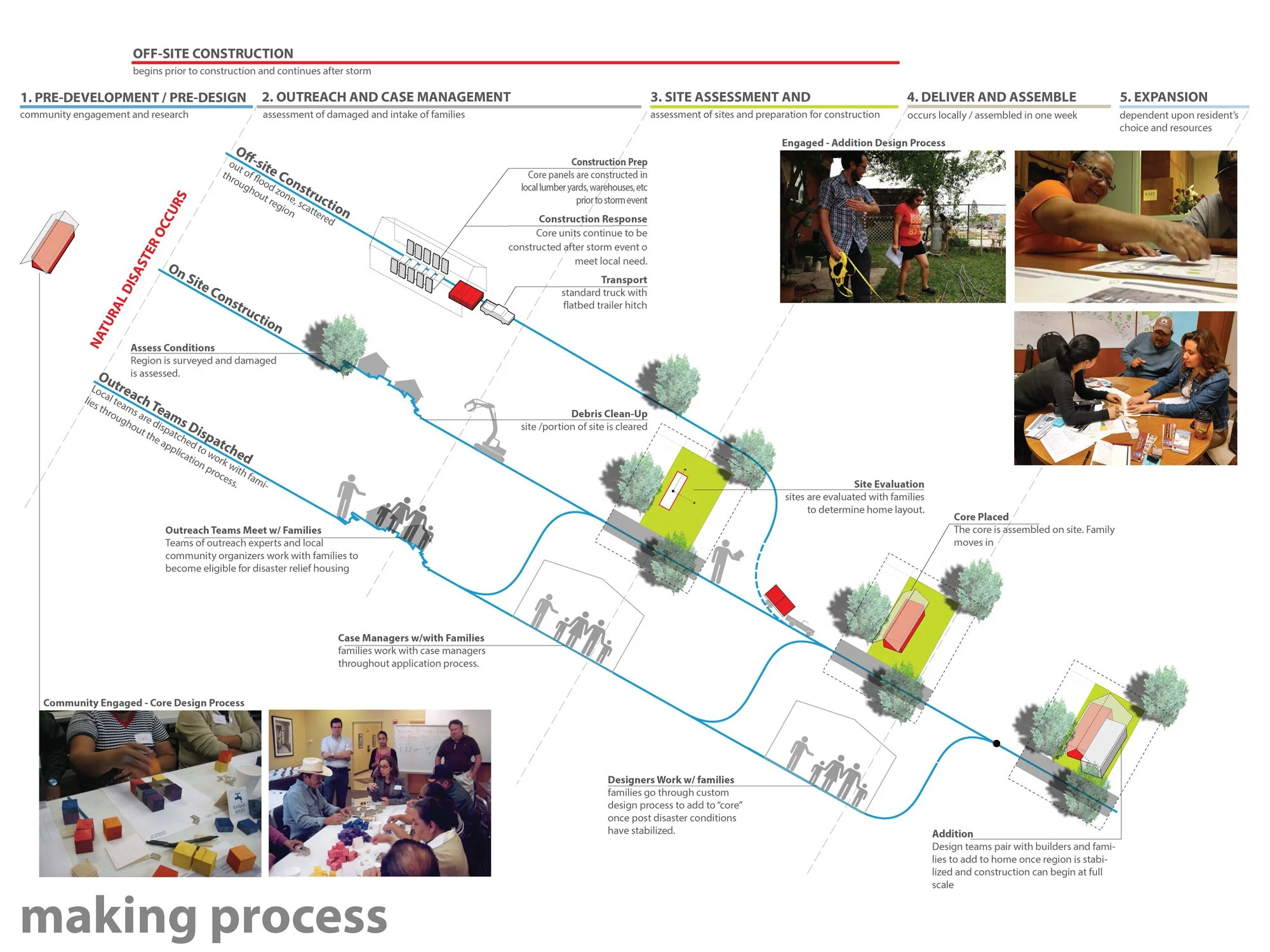
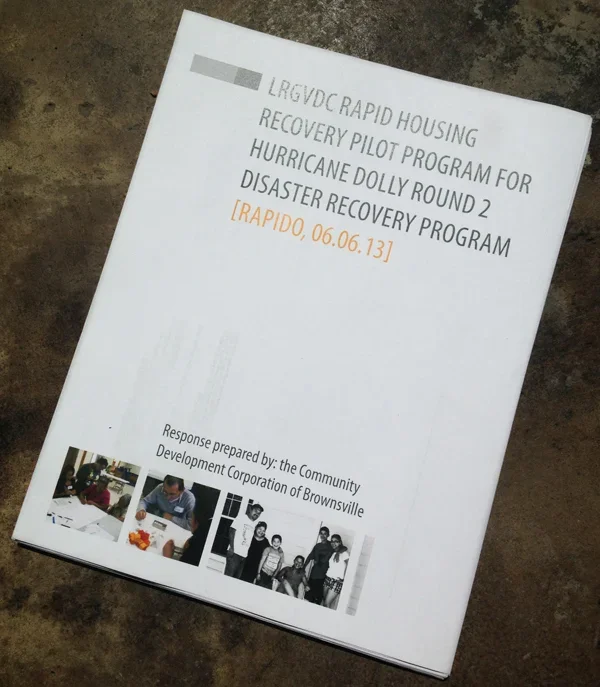
6 years have passed since Hurricane Dolly hit the Texas Gulf Coast, making landfall and causing $1.35 Billion USD in damage. As one of the poorest areas in the United States, the Rio Grande Valley was already a risk population economically and environmentally. The insecurity increased as an under prepared disaster recovery management system left many families still struggling to this day. The Lower Rio Grande Rapid Housing Recovery Pilot Program (RAPIDO) proposes a local approach when responding to a natural disaster. The structure of the plan will be replicable across regions, while components of the plan will allow for local adaptation and implementation as needed. The overarching program design principle is predicated on local residents, organizations, professional firms, builders and municipal leaders, working with some guidance from outside experts to design and implement a Statewide plan proposal. RAPIDO’s program goals are two-fold: (1) Have a system up and ready to conduct outreach and intake within 20 to 30 days of a disaster and (2) Have a family back in their home on their property within 120 days of client application.
RAPIDO rethinks the actual reconstruction model to increase the availability of affordable housing and improve the quality of housing built after a disaster. The design process examines not only architectural issues but every level of the process, specifically the social, economic and political contexts that make up a disaster scenario. RAPIDO is understanding, and re-designing the entire process in order to integrate the relief and recovery phases allowing a rapid response. RAPIDO’s construction strategy is phased in two parts. In phase one families will receive a standardized “CORE” home that contains essential living facilities, Families will reside in their core until resources and time allow for expansion, at which point (second phase) homes will be added on to accommodate long-term family needs and desires. The pilot program will build 20 prototype units for residents of Willacy, Cameron and Hidalgo County affected by Hurricane Dolly (2008).
RAPIDO: Redefining Disaster Recovery
June 14, 2013
Rapid recovery after natural disasters, especially returning families to safe, quality permanent homes, has traditionally been very difficult, poorly executed, and expensive. The Lower Rio Grande Valley, one of the poorest areas in the country, and often hit by massive flooding, is the pilot site for a new and innovative rapid recovery model.
Based on a grant awarded by the Council of Governments and the Community Development Corporation of Brownsville (CDCB), along with project partners La Unión del Pueblo Entero (LUPE), ARISE, Texas Low-Income Housing Information Service and the Hazard Reduction & Recovery Center, [bc] is working to deliver 20 low cost, rapid deployment post-disaster housing prototypes, as well as technical manuals and a set of policy recommendations to be presented to the Texas State Legislature. Partners and experts meet monthly to discuss 4 primary components of RAPIDO: Outreach, Case Management, Design and Construction and Policy.
[bc] is leading the design for RAPIDO, with CDCB managing the eligibility and construction process. [bc] has established an engaged design process that gives low-income families choices and the flexibility to decide important characteristics of their new home. Through two design meetings, [bc] led the families through a set of exercises that define their needs and desires. Based on these preferences personalized designs were prepared for each family.
A key part of the pilot is to explore different possibilities for the implementation and scaling of the plan statewide. RAPIDO is experimenting with the transition of a temporary unit (CORE) to a permanent house (Expanded Home). CORE’s have being built at El Clavo Lumber Yard in Brownsville, and the first RAPIDO home expansion was built at Carolina St, Brownsville in a CDCB-owned lot. The process has helped to train local builders on the RAPIDO strategy and also was a good opportunity to share the RAPIDO plan and the program goals to local groups and the local community.
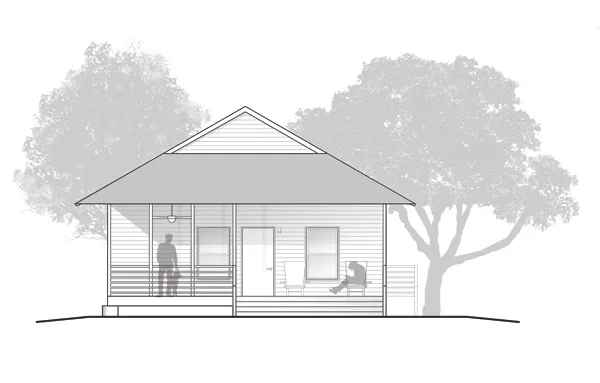

Rapido
September 5, 2012
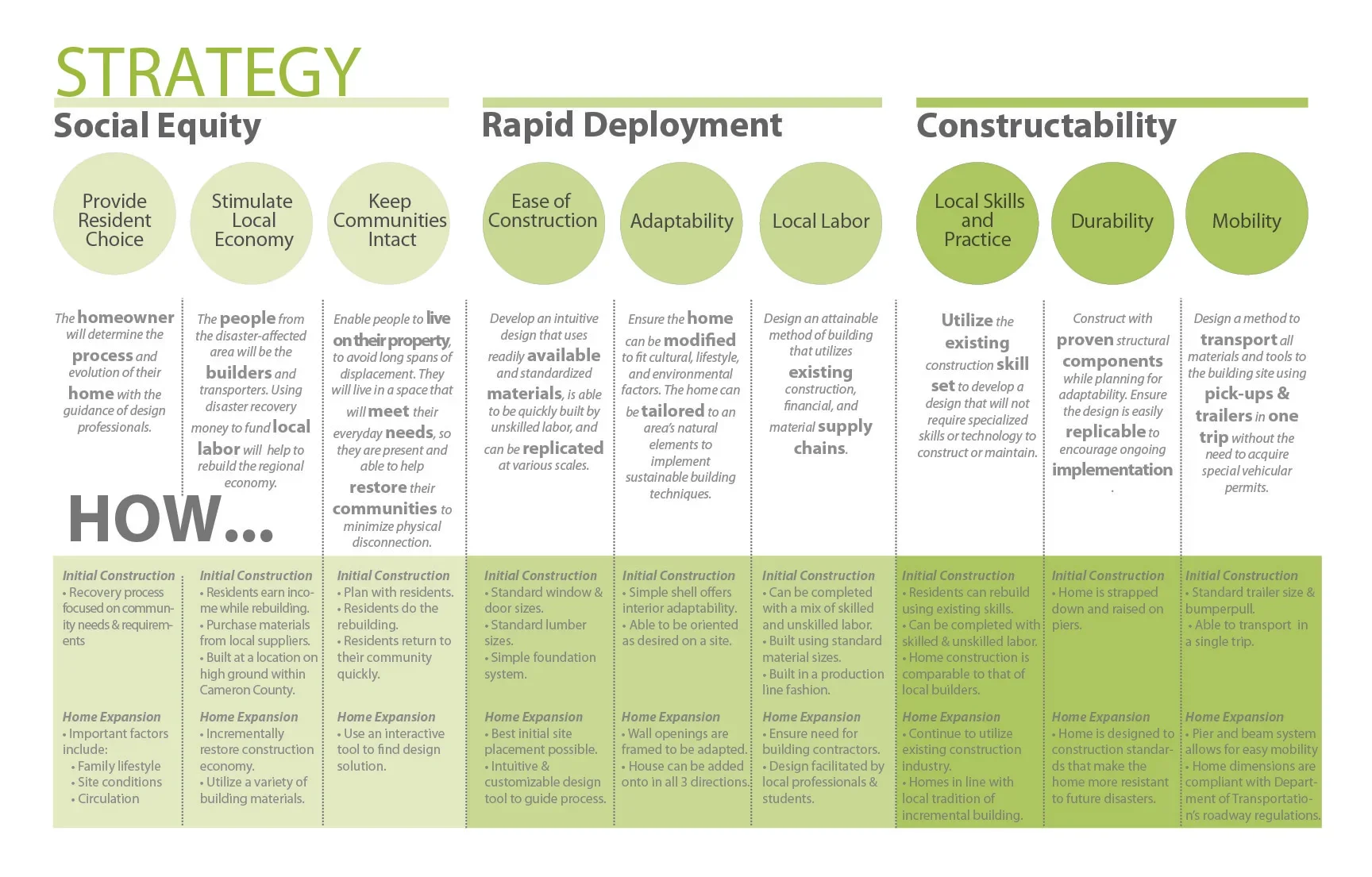
On July 23rd, 2008, Hurricane Dolly made landfall in Texas’ Lower Rio Grande Valley causing widespread flooding and sustained winds of over 120mph. Low income residents in Cameron and Hildago Counties were hit hard, losing over $152 million dollars in housing related damages and contributing to a sum LRGV loss of $1 billion. As a result, the Texas Natural Disaster Housing Reconstruction Committee assembled a plan to design a statewide rapidly deployable replacement housing system for victims of federally declared natural disasters. Rapido is bcW’s response to the state’s initiative, addressing issues of social equity, rapid deployment, and constructability.
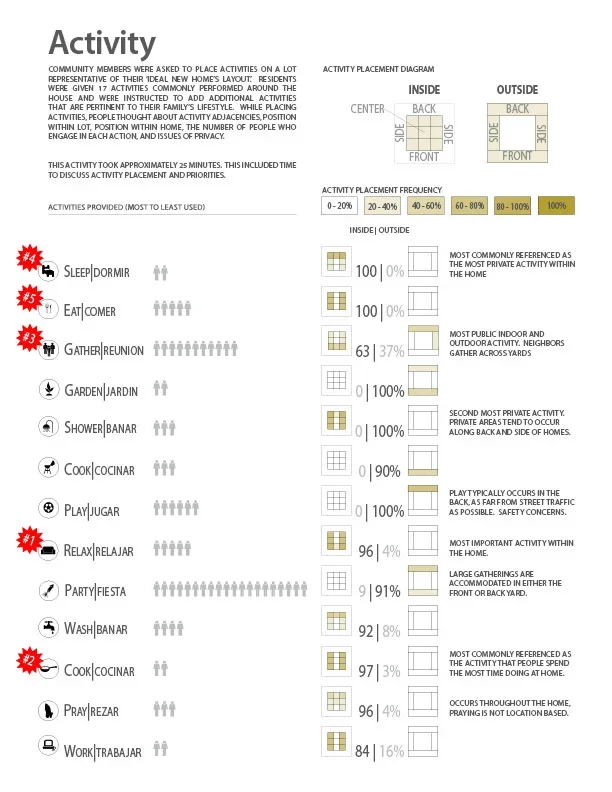
bcWORKSHOP’s disaster reconstruction strategy engages residents throughout the reconstruction process and contributes to the sustainable growth of place by enabling communities to recover quickly and allowing families to rebuild thoughtfully. Prior to beginning design work, bcW held several community workshops with Cameron County residents to determine what functions are most essential to one's home life after a disaster occurs and to prioritize home activity adjacencies.
Informed by resident input, a two-phased construction strategy was developed to enable rapid response after a disaster. In phase one, qualified families will immediately receive a standardized phase one home that contains essential living facilities. Phase one homes will be constructed from a wet core module and a flat packed wall, roof, and floor panel system. The module and flat-pack panels will be individually built off-site and quickly assembled on site. Families will reside in their “phase one home” until resources and time allow for expansion, at which point homes will be altered to accommodate long-term family needs and desires (site built phase two home). Between phase one and phase two, families will receive an expansion kit-of-parts catalogue and design consultation to help guide them in making informed decisions regarding home expansion. Individual design consultations will enable clients to personalize their space to meet their family needs and desires. Reconstructing in this manner creates communities of varied housing stock and visual interest as well as contributes to the long-term growth of Cameron County as a place.
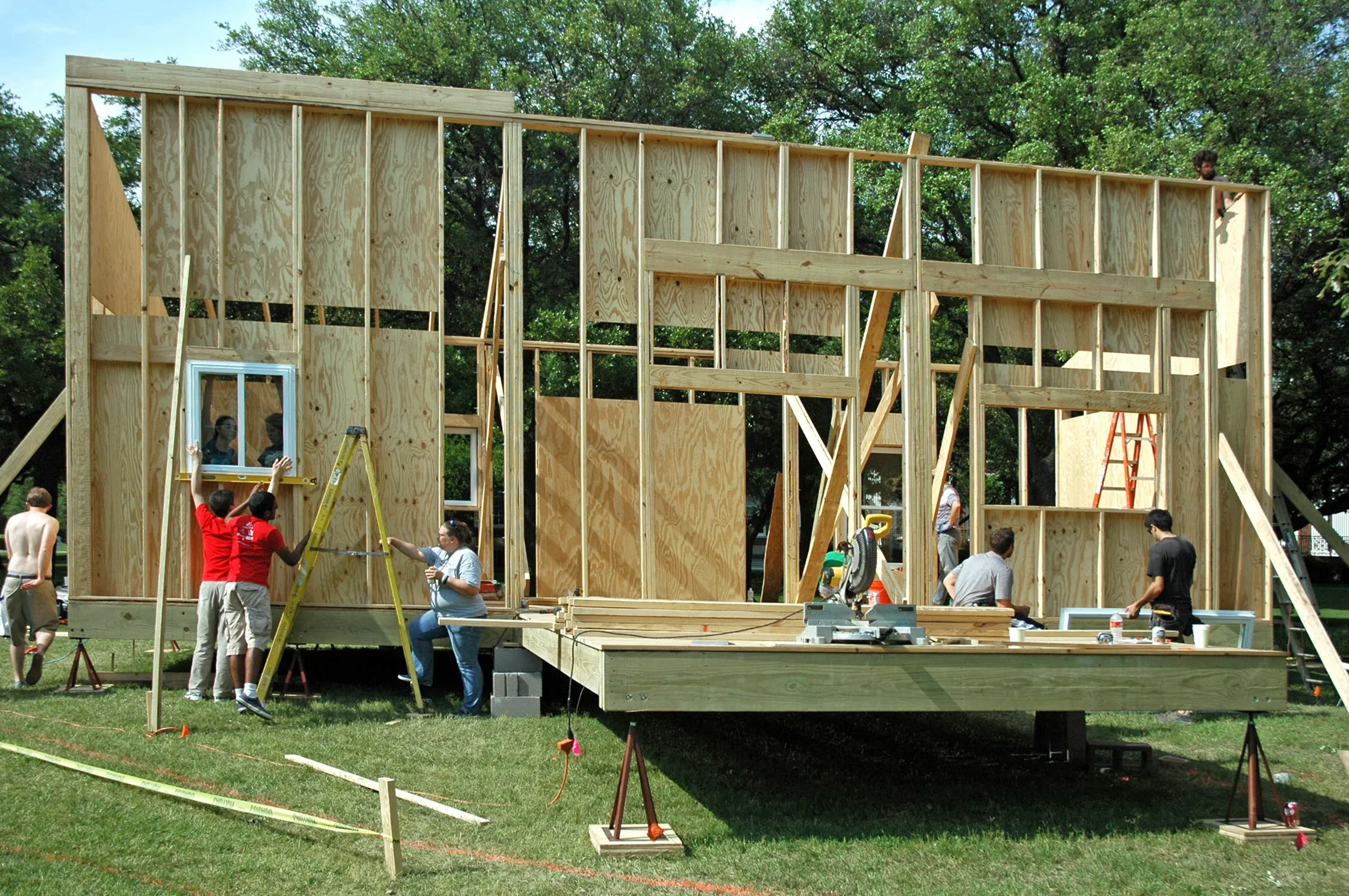
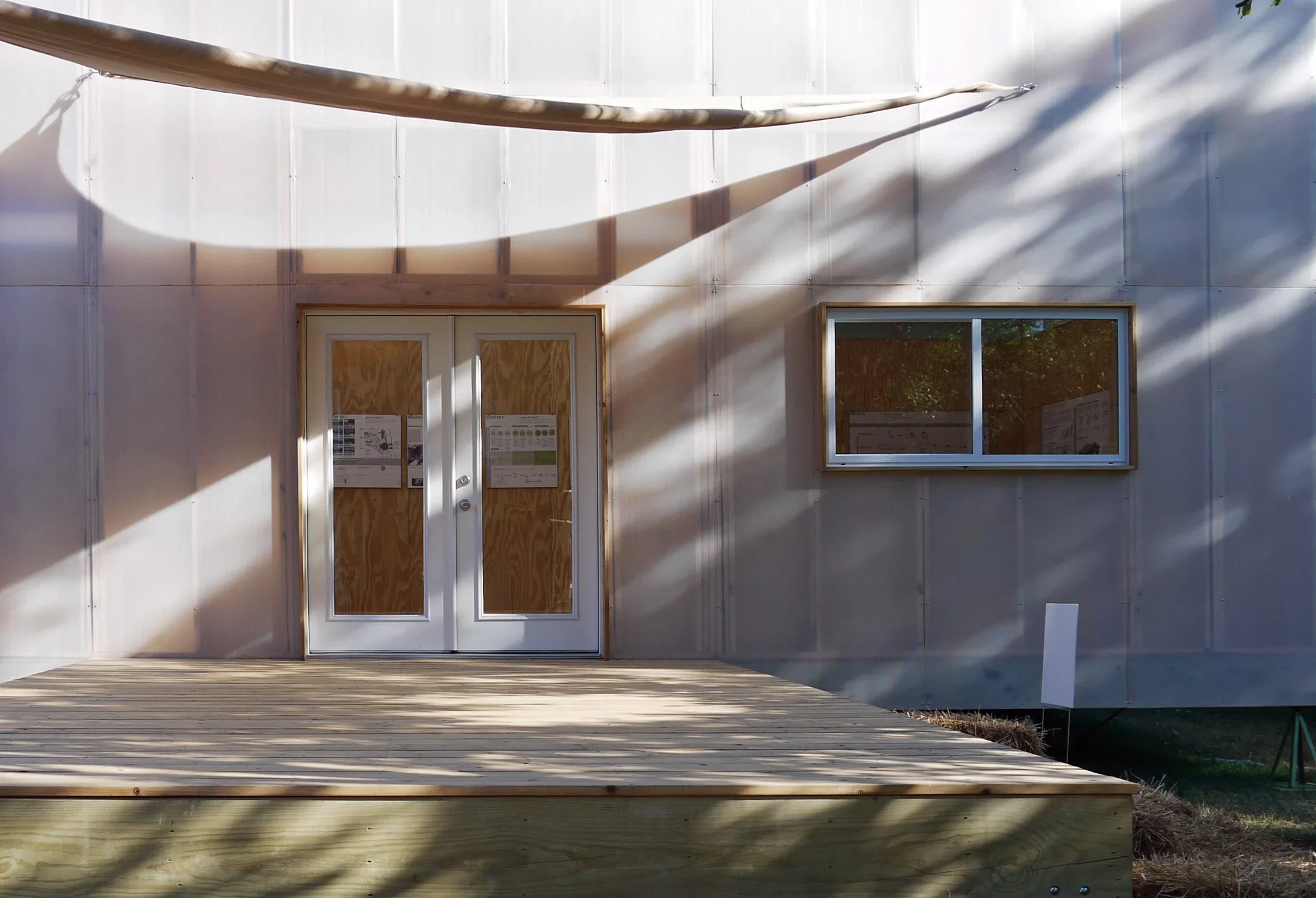
bcWORKSHOP, in partnership with the Community Development Corporation of Brownsville, will be demonstrating and testing bcW’s Rapido strategy through the construction of several prototype homes for families affected by Hurricane Dolly. Prior to prototyping in the LRGV, bcWORKSHOP demonstrated its first Rapido prototype at SMU’s Engineering & Humanity Week, April 15th-20th 2012. E&H week provided an opportunity to directly test Rapido’s construction process, deployment method, and performance to further inform future prototype designs.
Design of the second Rapido prototype is currently underway based on analysis and feedback received from round one prototyping.